
If it’s good enough for the bonnie banks o’ Loch Lomond, it’s good enough for Wall Street—at least when it comes to the dollar’s tug-of-war with gold and silver.
Gold and silver generally values typically have an inverse relationship with the value of the dollar. When the greenback takes the high road, the two precious metals tend to take the low road—and vice versa.
Gold is currently trading at $5,383.90 per ounce and silver at $115.42 per ounce, both at historic highs, while the U.S. dollar has weakened to its lowest level in roughly four years.
All three came up during the January 28 edition of TheStreet Pro’s Stocks & Markets Podcast with host Chris Versace and Bob Lang, market technician and TheStreet Pro contributor.
“In the short term, the dollar tends to have a lot of volatility around it,” Lang said. “And that’s just normal machinations of the movement of currencies back and forth. When the dollar is weak, obviously the euro and the yen are stronger and vice versa. So, when the dollar peaked just a little after the election, it started to come down a little bit.”
“And that’s when we started seeing a little bit more energy coming into these precious metals,” he added. “And of course, if you’ve been watching the metals lately, they’ve gone parabolic, especially silver and gold.”
Gold and silver prices climbed as investors have searched for safe-haven assets amid escalating geopolitical tensions, persistent inflation, and market sentiment.
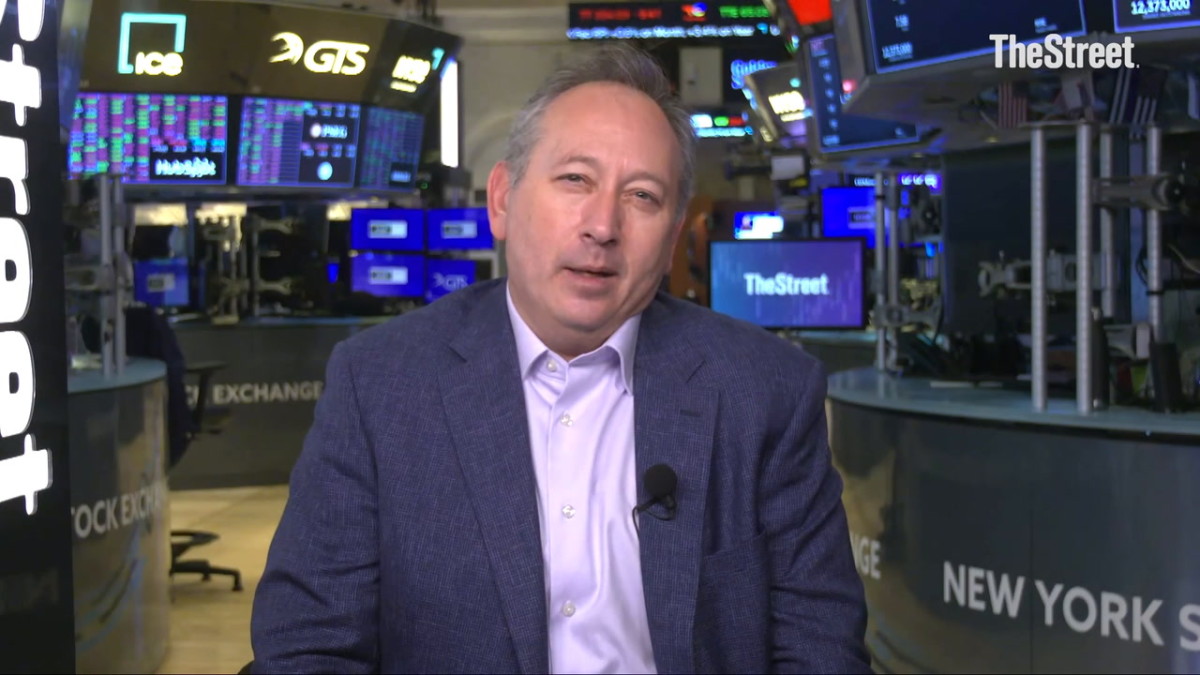 TheStreet Pro’s Bob Lang says gold’s rise has been parabolic.
Gold surge is historic, expert says
Industrial demand, particularly for solar panels and electric vehicles, is helping drive silver higher, alongside heavy investor buying and a tight supply.”
“Short-term, there’s a lot of volatility and a lot of big movements up and down,” Lang said. “But on the long-term horizon, I think the dollar is stable. It’s strong.”
More on gold:
- Market uncertainty resets silver, gold bets
- Billionaire Dalio sends 2-word warning on markets
- Every major analyst’s gold price forecast for 2026
“But wouldn’t the President want to see a bit of a weaker dollar, kind of makes the U.S. goods more competitive in overseas markets?” Versace asked.
“Sure, but over a long period of time, Chris, you don’t want to see a weak currency,” Lang replied. “It tells you a lot about your economy; over the long term, a strong dollar is what you want.”
Lang noted that economist and TV commentator Larry Kudlow, who served as the Director of the National Economic Council under President Donald Trump from 2018 to 2021, wants the dollar to be the number one currency in the world.
“And why not?” Lang said. “We’re the reserve currency of the world. The dollar should be the strongest currency out there, and people should be jealous that we have the strongest currency. “So, I do think that over a long period of time, it tells you a lot about your economy and tells you a lot about your society. “
“And the strength of the dollar gives us much more buying power elsewhere in the world.”
He added that a weaker dollar brings inflation, “so we have to be careful about how much weakness we have in the currency.”
Regarding gold, Lang stressed that the current parabolic surge is historic.
“We haven’t seen anything like this, not even back in the late ’70s, Chris, when gold hit those all-time highs of like $808 an ounce and came back down and spent like a decade and a half in the $200 range,” he said.
Analyst advises buyer beware
“People kept saying it was going to hit $5,000,” Lang continued. “They’d been saying that for 15 to 20 years, and finally it got there—and I think it surprised the heck out of everybody this past week.”
Versace said he was concerned about the individual investor during this volatile period.
Related: Major bank revamps gold price target for 2026
“We get these very ‘clickbaity’ headlines that really try to suck people in,” he said. “And it can pull people into investments that may have had significant runs. Maybe they’re getting a little frothy. At the same time, we’re also seeing other clickbaity headlines that I think cause worry.”
Lang agreed, noting that in this social media age, “there’s just too much misinformation and disinformation out there and deception out there.”
“And I think people are, to a certain extent, using AI models to try and create some interest and create some controversy and some confusion,” he said. “A lot of confusion out there. You see a lot of it out there every single day. And I think that that’s a problem.”
He advised investors to follow the mantra, “caveat emptor”—let the buyer beware.
“You’ve got to be careful,” he said. “It’s very easy to get enthusiastic and excited when you see some of these things racing higher, like gold and silver. Go back to the 1840s when they had the California Gold Rush. Everybody and their mother were going over there when they heard everybody was mining gold.”
“We’re in 2026, and it’s no different today than it was 180 years ago.”
Related: Stocks & Markets Podcast: Powell, Trump and the fight over Fed independence