
There’s a reason that the most successful fast-food chains speak to the broadest possible audiences. Chains like Burger King, McDonald’s, Taco Bell, and Pizza Hut offer very basic food that a ton of people like to eat.
Once you narrow down your focus, you limit your audience.
Related: Popular Tex-Mex chain unveils menu change customers will love
That’s why it’s very difficult for any fast-food chain to offer products that serve people with limited diets. It always seems like a good idea to broaden your customer base by adding gluten-free, vegan, or vegetarian options.
In reality, it’s very hard to sell enough of these products to justify their place on the menu. That’s why a few years ago, when Beyond Meat was all the rage, a number of fast-food chains partnered with them.
Dunkin’ had a very high-profile partnership with the plant-based meat brand, as did a handful of other companies. Most of those products have quietly gone away.
We have also seen high-profile failures, like the McDonald’s McPlant. The reality is that while some people must stick to a certain diet, others are simply striving for a certain lifestyle and might deviate from those choices when eating out.
If it’s hard to successfully add an alternative-diet item to a menu, it’s nearly impossible to build your entire menu around that.
💵💰Don’t miss the move: Subscribe to TheStreet’s free daily newsletter💰💵
So even if McDonald’s figured out how to make a plant-based Big Mac taste exactly like the meat-based version, it would still be a tough sell.
Every effort to offer healthier, standalone fast-food offerings has been a difficult path. The audience for these are very limited, and the chances for success are small.
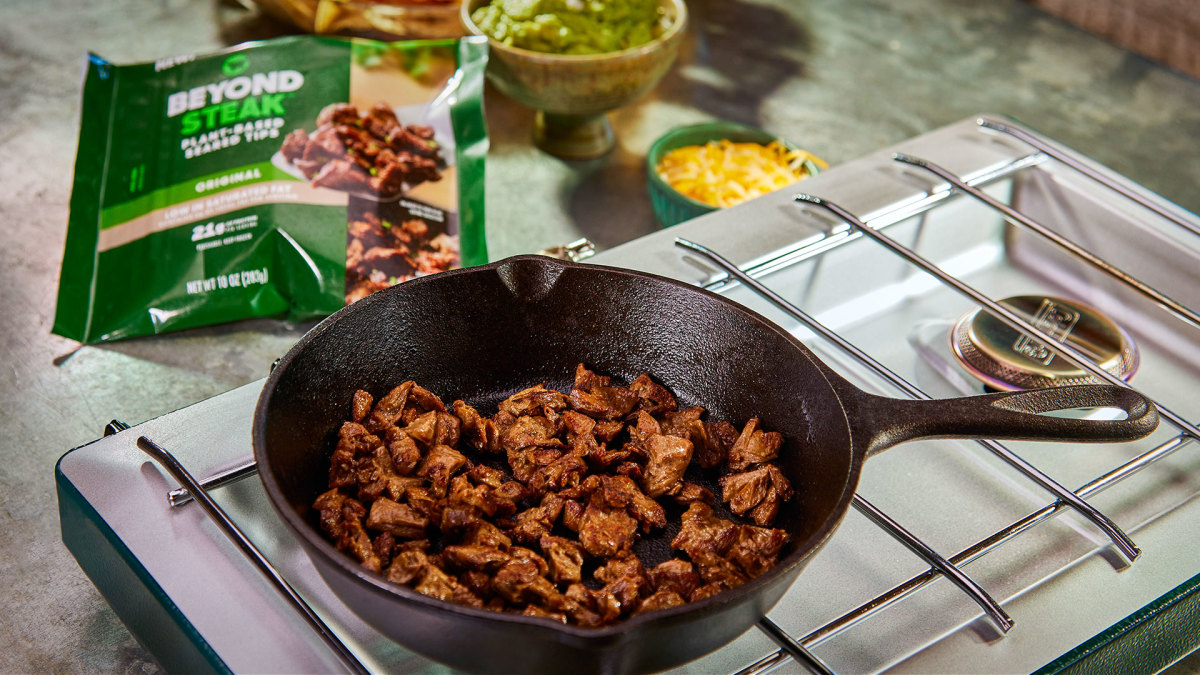 Beyond Meat remains a niche product.
Image source: Beyond Meat
Celebrity burger chain fails
Celebrity alcohol brands have generally connected with the public because they are relatable. Ryan Reynolds seems like a good guy, and his gin tastes like gin.
Sammy Hagar may not be quite as relatable or seem like someone you can hang out with, but he does seem like someone who would do a tequila shot with you. These are approachable products that are very similar to other brands, and the famous person serves as the differentiator.
Using celebrities to endorse products that are less mainstream has a more dubious track record. That’s at least partially why Neat Burger, a plant-based burger chain endorsed and supported by Formula 1 racer Lewis Hamilton and actor and playboy Leonardo DiCaprio, never seemed like that good of an idea.
Plant-based burgers have always been a hard sell with a limited audience, and having famous people who are not particularly approachable endorse them doesn’t really help.
Bankruptcies:
- Popular restaurant and bar chain files for Chapter 11 bankruptcy
- Popular athletic shoe chain files for Chapter 11 bankruptcy
- Award-winning cosmetics brand files for Chapter 11 bankruptcy
That’s at least partly why the chain, which spanned three countries, has officially closed its locations in the United States and the United Kingdom.
Two locations in Milan remain open, at least for now.
People like meat-based burgers
TheStreet first reported these closings in late April. The chain has now confirmed that all of its locations in the United States and United Kingdon have shut down. And while its website remains up, it’s no longer functional.
Before its near-demise, Neat Burger had a simple mission (the choice to not capitalize was theirs).
-
it’s good mood plant-based food.
-
it’s better for the planet.
-
it’s our commitment to doing things differently.
The chain also embraced the idea that somehow meat eaters would regularly and willingly eat there.
Related: Fast-food chicken chain faces Chapter 11 bankruptcy, liquidation
“We’re feeding a positive change in global eating habits, catering to diverse tastes and preferences with our menu of sustainable, plant-based food,” the company shared on its website. “Based on the ethos of simplicity, honesty, and transparency, we’re cooking from scratch using whole ingredients, made in house or sourced from chefs we know and partners we trust. Neat is a place where vegans, veggies, and meat-eaters alike can come together to enjoy a meal.”
It may have been all that, but the audience never fully materialized, and now the chain has mostly closed. Food with a mission has generally been a tough sell to Americans, and this chain did not buck that trend.