
There are millions of older Americans today who collect a monthly Social Security check in retirement. And without those benefits, many would not be able to manage their expenses.
Retiring on Social Security alone is no easy feat, though.
Related: Warren Buffett sends blunt message on Social Security
Average earners can expect Social Security to replace about 40% of their pre-retirement wages. Most retirees need roughly twice that amount of income to keep up with their expenses — especially these days, with inflation staying stubbornly elevated.
Thankfully, many retirees do manage to secure income outside of Social Security. That income can come in the form of an IRA or 401(k) balance, a pension, investments, or earnings from part-time work.
💵💰Don’t miss the move: Subscribe to TheStreet’s free daily newsletter💰💵
There’s a downside to having income outside of Social Security, though. Retirees with other income streams often pay taxes on their Social Security benefits due to an outdated rule.
Recently, the One Big Beautiful Bill Act (OBBBA) was passed, and with it came a big tax break for seniors. But financial guru Suze Orman warns that this change doesn’t necessarily mean that retirees will get out of paying taxes on Social Security.
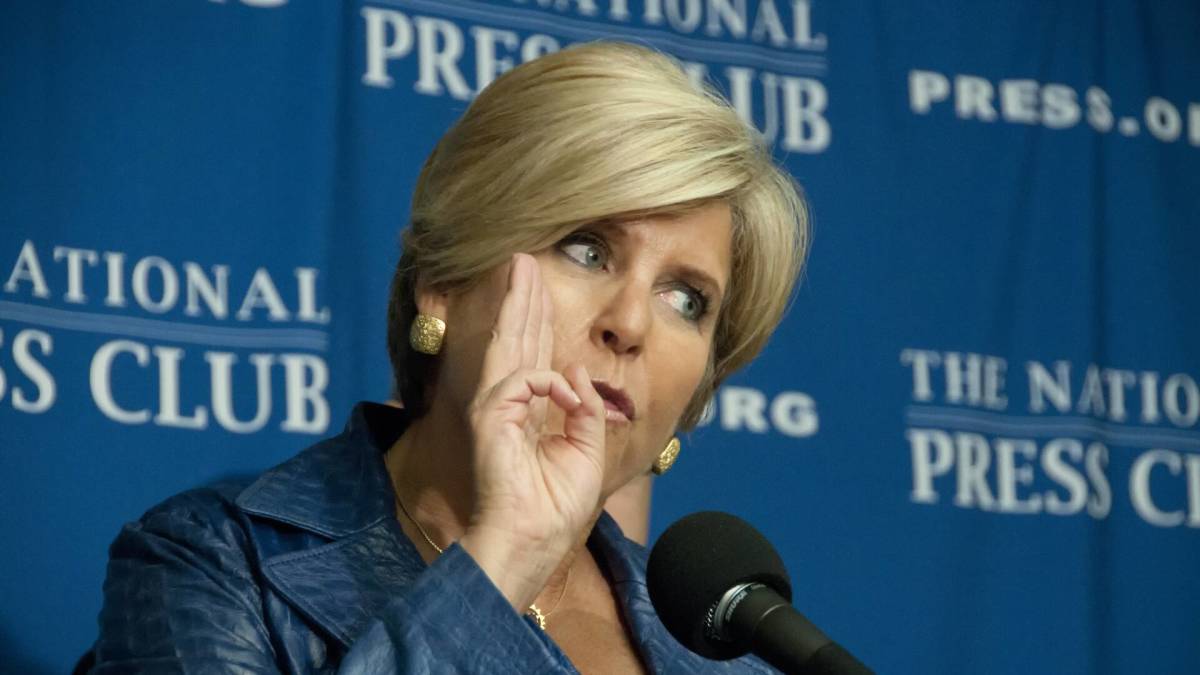 Suze Orman gives new Social Security reality check.
Shutterstock
How the new tax rules work for seniors on Social Security
President Trump has been trying to do away with taxes on Social Security benefits since taking office. But there’s been pushback.
The reality is that Social Security relies on the taxes collected on benefits for revenue.
Related: Some seniors in line for huge Social Security tax break
As it is, Social Security is facing the strong possibility of benefit cuts in under a decade as the program’s trust funds are continuously tapped. If taxes on Social Security were to be eliminated, it could drive the program even closer to insolvency.
Instead, what lawmakers did was provide a $6,000 bonus tax deduction for Americans 65 and older — a deduction that will, in many cases, spare retirees who otherwise would’ve paid taxes on their Social Security from losing that portion of their benefits.
However, Orman insists that the new rules enacted under the OBBBA do not come close to exempting all retirees from being taxed on Social Security. And many seniors will, inevitably, get left out in the cold.
Social Security taxes are still a grim reality for many retirees
Social Security taxes apply to single tax-filers with a combined income of more than $25,000, or $32,000 for joint tax-filers.
Combined income is the total of:
- Adjusted gross income
- Tax-exempt interest income
- 50% of yearly Social Security benefits
If a threshold of $25,000 for single retirees or $32,000 for couples seems absurdly low, it is. But these thresholds were established decades ago and were never adjusted for inflation.
Related: Dave Ramsey raises red flag over Social Security
There’s a reason for that. Lawmakers want retirees who can afford taxes on Social Security benefits to keep paying them. The program needs that critical revenue to survive.
For this reason, Orman cautions Social Security recipients not to fall into the trap of assuming that they’re automatically exempt from paying taxes on their benefits.
“The rules on taxation of Social Security benefits were not changed,” she said recently on her podcast. Moreover, Orman stressed that the rules and thresholds for combined income have not budged under the OBBBA.
Put another way, the new $6,000 tax break for seniors is not tied to Social Security in any way.
Another hidden surprise? Not all seniors will get that $6,000 deduction, since it phases out at higher income levels.
Not only that, but the $6,000 deduction is only in place until 2028. Beyond that point, who knows?
More on retirement:
- Dave Ramsey offers urgent thoughts about Medicare
- Jean Chatzky shares major statement on Social Security
- Tony Robbins has blunt words on IRAs,401(k)s
The White House has touted its recent $6,000 tax break as “the largest tax break in history for America’s seniors.”
But Orman says Social Security recipients shouldn’t be fooled. Many will ultimately continue to be taxed on their benefits. And even those who get the aforementioned tax break may soon enough see it go away.
Related: Warren Buffett sends White House blunt message on the economy