
The One Big Beautiful Bill Act (OBBBA), passed into law in July, introduces changes to federal tax policy that will influence the overall cost landscape for vehicle purchases in the U.S.
While details vary, its provisions are expected to impact a wide range of American car buyers across different markets and price points.
Personal finance author Suze Orman identifies what she sees as three key provisions for households considering car purchases in the near future.
In her August 28 “Financial Solutions for You” newsletter, Orman offers a word of warning for potential car buyers.
Related: Suze Orman reveals key information on Costco, Walmart, IRAs
“By the time you read this, I expect we may already be pummeled with advertisements touting the tax breaks if you buy now,” Orman wrote. “Car lots will have plenty of signs touting cars made in America. Slow down, my friend.”
“A tax break is not a reason to make such a big investment. If you absolutely need a new car, then yes, taking these new car-related tax rules into account makes sense,” she continued.
“But what I have no patience for is you using these rules as a rationalization to buy a new car.”
Suze Orman calls out three provisions of the law for car buyers
In the newsletter, Orman makes the following major observations for Americans planning on buying a car:
- The federal tax credit for buying an electric vehicle ends on September 30th. “Right now, you can claim a $7,500 federal tax credit when you buy a new EV, or $4,000 for a used EV. Any electric vehicle purchased or delivered after September 30, 2025 will not be eligible for any credit.”
- The federal tax credit for buying and installing an EV charging station at home will end on June 30, 2026. “Up until that date, you can receive a credit for up to 30% of the cost, with a maximum credit of $1,000.”
- Interest payments on car loans may (temporarily) be tax-deductible. “Between this year and through the 2028 tax year, if your income is below $100,000 ($200,000 for joint filers), you may be able to deduct up to $10,000 a year in interest costs for a car loan, but only if the car is new, made in America, and is under 14,000 pounds. You can claim the deduction even if you file a federal tax return and take the standard deduction.”
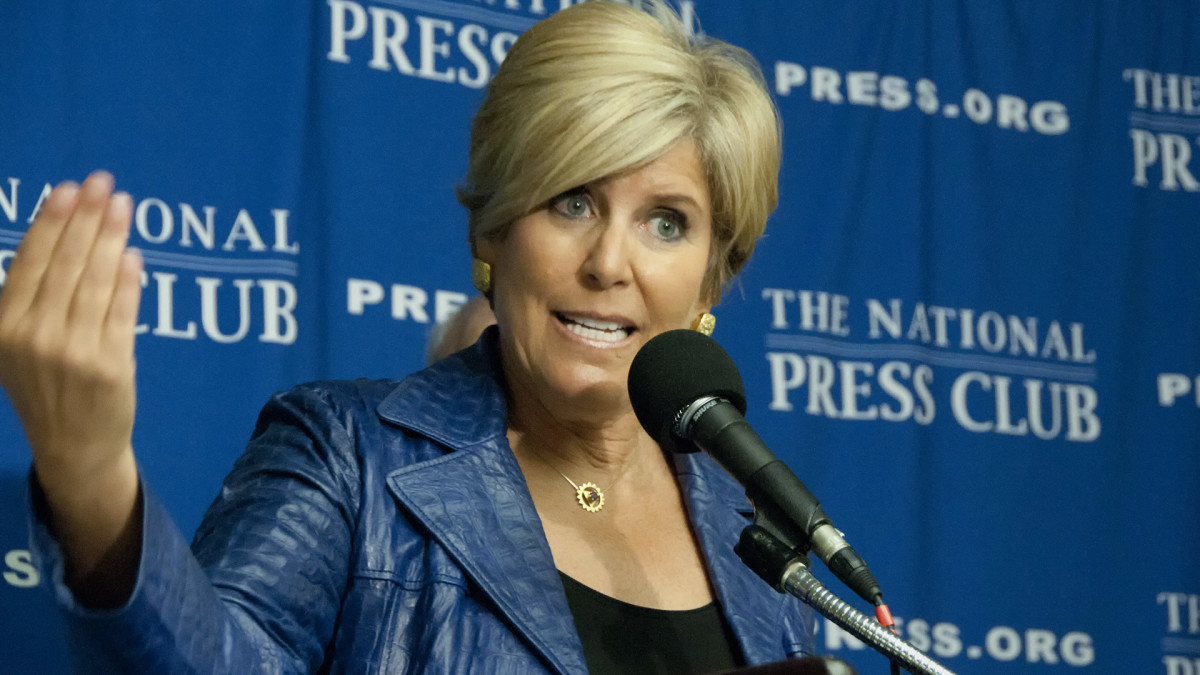 Personal finance author Suze Orman urges Americans to exercise patience on buying a car when considering the implications of the new tax bill on auto purchases.
Image source: Shutterstock
Suze Orman cautions Americans on car expenses
Orman acknowledges that owning a car is a modern-day necessity, but urges Americans to treat the task with an appropriate level of financial awareness and care.
A car may be a need, but it is a very expensive need. The average new-car loan payment is more than $700 a month. The goal should always be to drive your car for as many years — and miles — that it is reliable. Yet so many households trade in for a new car every three to five years. That’s financially irresponsible.
More on personal finance:
- Dave Ramsey sends strong message on housing costs
- Scott Galloway sends strong message on retirement, Social Security
- Tony Robbins makes key statement on IRAs, 401(k)s
Orman puts a number on how many miles she believes a car should last.
As long as the car is in good condition — maintenance is key — you should be able to count on it for at least 150,000 miles. Being able to continue driving your car long after you have paid off any loan is the best financial move. Those are years you can put more money into a savings account for your eventual purchase of another car.
She has a major recommendation about a mindset prospective car buyers should avoid.
“Please don’t use the new tax rules regarding car purchases as a reason to trade in a perfectly good car that has more years to get you where you need to go,” Orman wrote.
U.S. auto sales saw modest growth in 2024
Attributing modest growth in 2024 to inflation, a WalletHub report found that U.S. auto sales rose just over 2% from 2023.
Related: Tony Robbins sends warning message to Americans on IRAs, 401(k)s
The report also offered some other important observations.
- Early forecasts projected continued growth in 2025, with new vehicle sales potentially reaching the highest levels since 2019.
- Recent developments, including tariffs and broader economic uncertainty, have negatively impacted that optimism.
- Despite sluggish market growth in 2024, auto-loan balances still rose notably.
- The Federal Reserve Bank of New York report on Household Debt and Credit shows a $13 billion increase in auto-loan balances in Q2 2025.
Report: Many Americans spend too much on cars
The WalletHub report examined data from a large number U.S. cities on how much money Americans spend on cars. An analyst for the company, Chip Lupo, provided a statement that accompanied the findings.
Many Americans are overspending on cars; in over 160 cities, the average resident’s auto loan debt is the equivalent of half or more of their yearly income. Residents dealing with these expensive loans on top of debt from credit cards, personal loans, student loans and mortgages are at risk of falling behind on payments and having their vehicles repossessed. Buying less-expensive, used vehicles or saving up money to minimize loans can help prevent unsustainable auto loan debt.
Related: Dave Ramsey has blunt words for Americans buying a car