
Running a restaurant involves more than supervising employees and making sure customers receive their orders on time. Managers are responsible for staffing, food quality, customer satisfaction and keeping daily operations running smoothly.
Yet earning a six-figure salary remains uncommon in the profession. According to the Bureau of Labor Statistics, the median annual wage for food service managers was $69,390 in May 2025, while the highest-paid 10% earned more than $107,640.
Employee retention is another challenge. The accommodation and food services industry recorded a 3.5% quits rate in August 2026, compared with 2.1% across the private sector, according to BLS data.
As businesses increasingly seek to improve performance and retain experienced employees, some major companies are offering managers higher compensation tied to the results they deliver.
Sweetgreen is taking that approach a step further.
The fast-casual salad chain has unveiled a new incentive program that could allow its highest-performing restaurant managers to earn more than $200,000 annually.
Sweetgreen introduces new $200,000 compensation plan
In a recent announcement, Sweetgreen introduced its Head Coach Incentive Plan, which takes effect in the first quarter of fiscal 2027.
The program rewards restaurant general managers, known internally as Head Coaches, based on their experience, restaurant sales and overall performance. The compensation package combines higher base salaries at larger restaurants, revenue-sharing bonuses for exceeding sales targets, and performance-based company equity.
Read more: Sweetgreen taps Shake Shack chef as cheaper meals reshape sales
“Great leaders build great teams, and great teams build a great business. As we approach 300 restaurants, we’re betting big on our Head Coaches,” said Jonathan Neman, co-founder and CEO of Sweetgreen.
Under the new plan, eligible managers at higher-volume restaurants could see their base salaries increase by up to 45%, according to a Nov. 2 HR Brew interview with Neman.
The salary increases will take effect in the first quarter of 2027, while performance-based bonuses will begin accruing Jan. 1 and be paid quarterly. However, not every manager will qualify for the highest compensation.
Sweetgreen Chief Operating Officer Jason Cochran told Restaurant Dive that approximately 10% to 12% of Head Coaches meet the criteria, which include at least three years of tenure and overseeing a high-volume restaurant.
Managers who maximize the program’s benefits could see their total compensation increase by up to 50%, the company told the publication.
The company is also expanding its Head Coach Restaurateur Program, which provides additional training, mentorship and higher base salaries to selected managers. Participants can receive a $10,000 bonus for every employee they develop into a Head Coach, with no cap on the number of bonuses.
Sweetgreen is introducing regional training managers to strengthen training and operational consistency, as well, Cochran told Restaurant Dive.
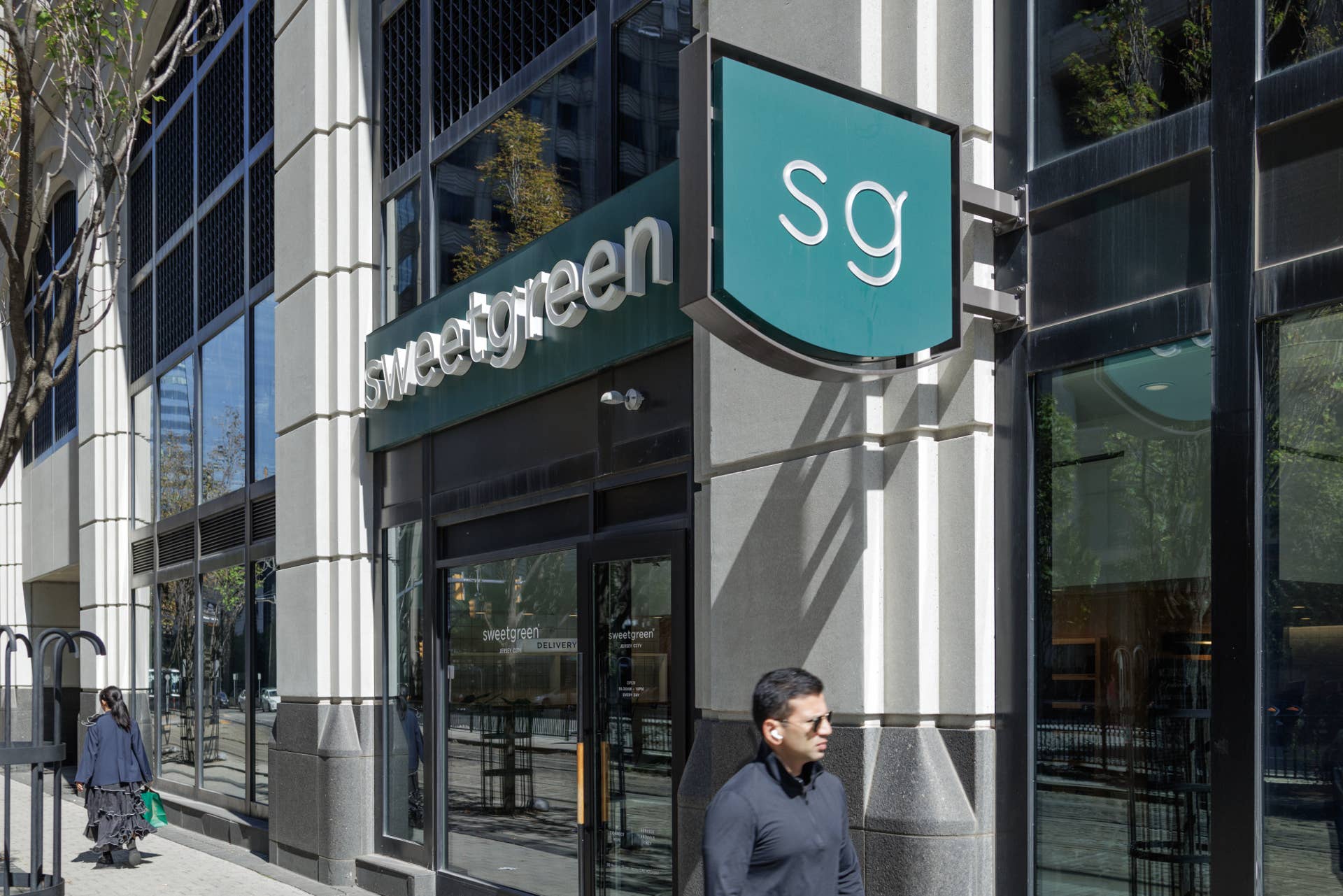 Sweetgreen is relying on manager incentives to turn the business around.
In-N-Out, Starbucks, Cava reward employee performance
Sweetgreen is not alone in tying employee compensation to business performance.
In June, rival fast-casual chain Cava announced that all general managers would be eligible for long-term equity incentives, along with additional rewards tied to recruiting and developing future managers.
Darden Restaurants, the parent company of Olive Garden and LongHorn Steakhouse, also offers quarterly bonuses tied to financial goals and long-term incentives for general managers based on performance, according to its 2025 Impact Report.
Neman told HR Brew that Sweetgreen’s new plan was inspired partly by In-N-Out Burger and Raising Cane’s, two chains known for offering substantial compensation to restaurant managers.
More Restaurants:
- Hooters closing more restaurants in bankruptcy comeback
- These are the True Food Kitchen locations closing in Chapter 11
- Oprah-backed chain closes 12 restaurants for good after filing Chapter 11
In-N-Out has said its store managers can earn more than $200,000 annually on average, while Raising Cane’s previously reported manager compensation reaching $175,000, with monthly bonuses linked to sales performance.
Starbucks introduced a similar performance-driven approach for hourly employees in April, offering eligible baristas and shift supervisors up to $1,200 annually in bonuses based on store sales, operations and customer-service targets, according to its official announcement.
Research suggests such incentives can improve business results, although outcomes depend on how programs are structured.
A 2026 study published in Management Accounting Research found that performance-linked pay increased profits by approximately 8% in an experiment involving supermarket managers in Germany, outperforming unconditional cash payments.
Sweetgreen tests higher pay amid declining sales
The compensation changes come as Sweetgreen works to reverse declining sales and bring more customers into its restaurants.
During the second quarter of 2026, Sweetgreen reported a 6.2% decline in same-store sales, including a 2% drop in customer traffic, according to its earnings release. Restaurant-level profit margins also declined from 18.9% to 13.1%, increasing pressure on the company to improve its operations.
Sweetgreen has since been working to improve menu value, service speed and operational efficiency.
The company believes investing in experienced managers could help address those challenges.
Neman told The Wall Street Journal that early tests of the higher-compensation approach had helped generate additional sales, although Sweetgreen did not disclose the size of those gains.
He also acknowledged to HR Brew that the increased compensation represents an upfront investment, but argued that retaining and incentivizing stronger managers could lead to higher sales and better restaurant margins.
The company plans to evaluate the program using several measures, including employee turnover, manager retention, food quality, customer experience and internal promotions.
For the restaurant chain, retaining experienced managers is particularly important because it allows teams to develop the skills needed to improve service and restaurant performance.
