
As kids growing up, some of us may remember our parents warning us not to let people influence our decisions or compromise our morals to please others.
However, the desire to fit in with the cool crowd and gain the approval of our so-called friends was often more powerful than our developing sense of identity.
💵💰 Don’t miss the move: Subscribe to TheStreet’s free daily newsletter 💵💰
This desperate need for acceptance led many of us to adopt a “gang mentality” mindset, where we suppressed our individuality to follow the group at the expense of our own values.
While this was a temporary phase that faded with time and maturity for some, for others, it became a lifelong struggle that has followed them into adulthood.
Related: Disney reveals major decision in anti-DEI proposal
Lately, it seems like companies are suffering from a similar issue, but in their case, the decision carries a bigger and more significant weight.
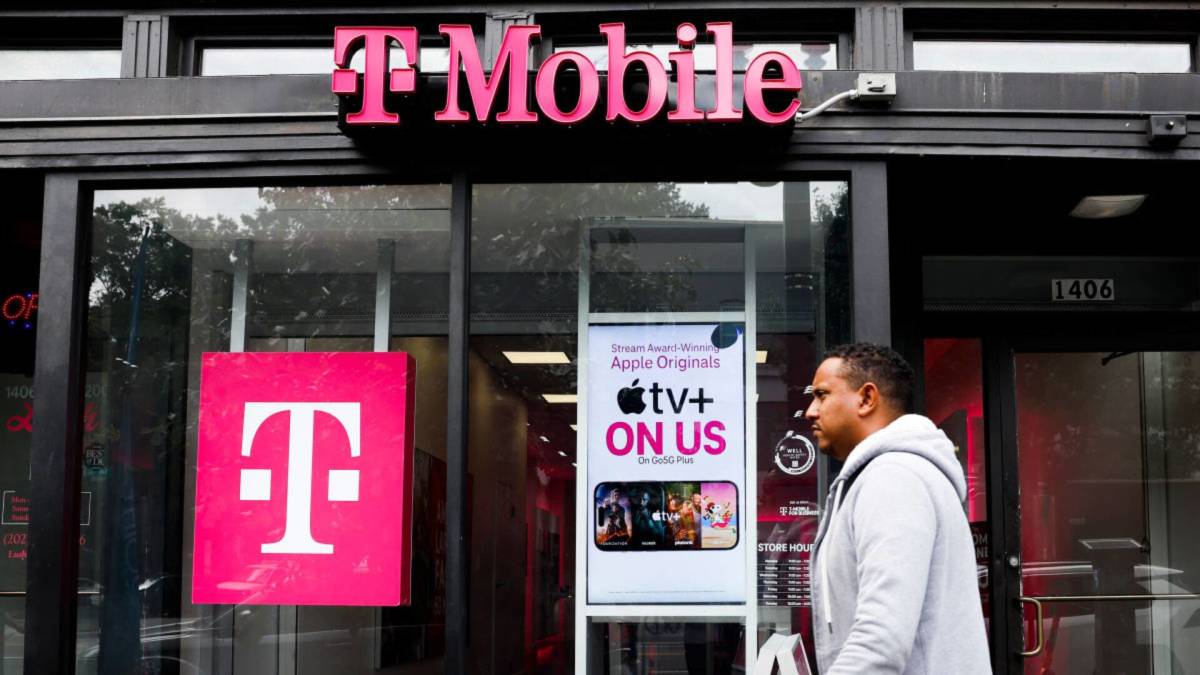 T-Mobile makes a harsh decision amid FCC approval of two major acquisitions.
Image source: Anna Moneymaker/Getty Images
The Trump administration terminates DEI mandates in the workforce
At the beginning of this year, President Donald Trump signed an executive order to terminate Diversity, Equity, and Inclusion (DEI) mandates in the federal workforce, claiming they violated civil rights and discriminated against U.S. citizens.
DEI programs in the workplace were initially created to promote fair treatment for all people by eliminating discriminatory policies and practices and preventing others from arising in the future.
This new executive order has now become a significant factor in the Federal Communications Commission’s decision-making practices.
Related: McDonald’s sued over controversial DEI decision
The FCC is a U.S. government agency that regulates interstate and international communications via cable, radio, television, satellite, and wire. Its purpose is to protect consumers by blocking corporate mergers and acquisitions that could harm competition.
FCC chairman Brendan Carr confirmed this claim in March by stating in an interview with Bloomberg that “any businesses that are looking for FCC approval, I would recommend them to get busy ending any sort of their invidious forms of DEI discrimination.”
In 2025 alone, multiple prominent companies across various industries have scaled back or eliminated their DEI initiatives, including AT&T (T) , Disney (DIS) , Meta (META) , McDonald’s (MCD) , and Target (TGT) , to name a few.
This major decision has caused them to face lawsuits, protests, and boycotts, leading many to suffer financially.
T-Mobile ends its DEI initiatives as it aims to close two major deals
T-Mobile (TMUS) is ending its diversity, equity, and inclusion (DEI) program, making it among the latest companies to join this troublesome trend.
As part of this change, the telecommunications company will remove all DEI-focused roles and teams, as well as any references to it on its website and training materials.
More Retail News:
- Popular restaurant chain slammed with lawsuit by undocumented workers
- Netflix adding more live content: sports, concerts, and more
- Home Depot spends billions on major acquisition
The company confirmed this decision in a letter to the FCC on July 8, stating that it would discontinue DEI policies “not just in name, but in substance.”
This move comes at a very convenient time as the company is awaiting FCC approval to finalize its $4.4 billion acquisition of United States Cellular (USM) and its recent joint venture with KKR (KKR) to acquire a 50% stake in Metronet.
By dismantling its DEI initiatives, T-Mobile would ease pressures from the Trump administration and improve its chances of getting approval for its two pending deals.
Related: Veteran fund manager unveils eye-popping S&P 500 forecast