
Target, one of the top retail chains in the U.S., continues to see customers pull away from its stores amid economic challenges and uproar about the company’s decision back in January to scale back its diversity, equity and inclusion policies, which sparked several boycotts.
In its third-quarter earnings report for 2025, Target revealed that its comparable store sales declined by 3.8% year over year during the quarter. Additionally, data from Placer.ai showed that foot traffic in Target’s stores decreased by 2.7% compared to the same time period last year.
The retail giant ended up generating an operating income of $900 million during the quarter, which is almost 19% lower than what it earned during the third quarter of 2024.
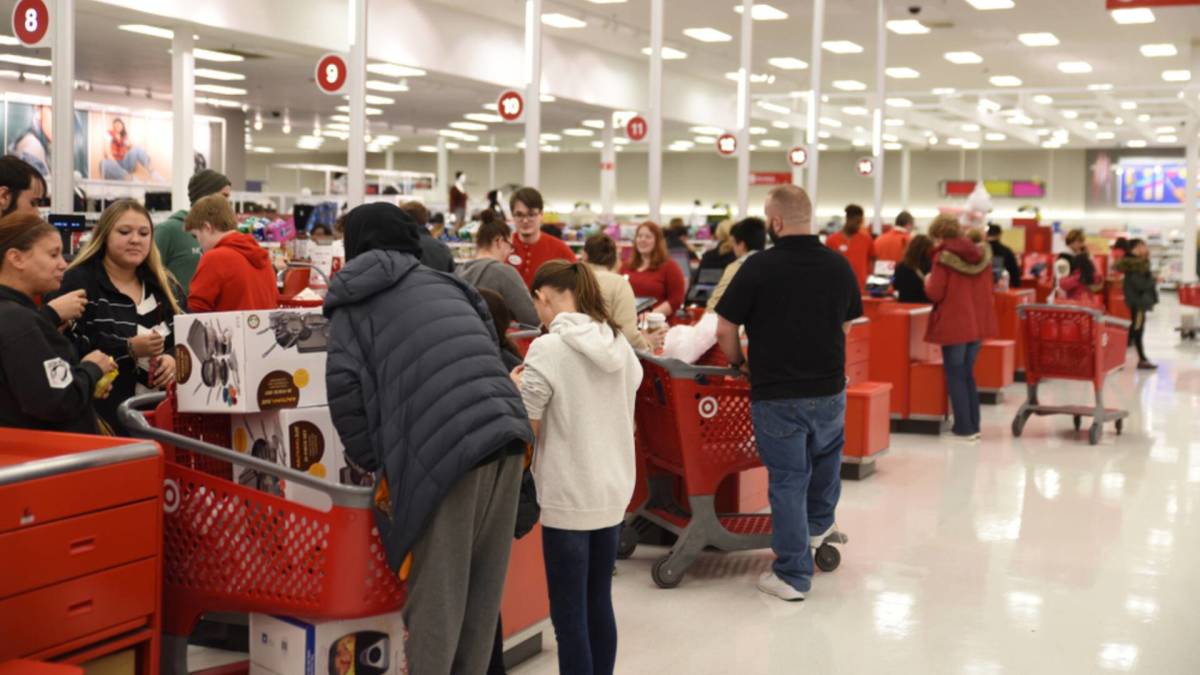 Target saw a drop in sales during the third quarter of 2025.
Target flags reasons why customers are pulling back
During an earnings call on Nov. 19, Target Chief Commercial Officer Richard Gomez revealed that the company saw “continued softness in discretionary categories like home and apparel,” while its strongest sales were rooted in seasonal moments such as “back to school, back to college and Halloween.”
Target Chief Operating Officer Michael Fiddelke, who is set to become Target’s new CEO in February 2026, said during the call that leadership is “frustrated” with the company’s recent performance.
“While our third-quarter performance came in as expected, we’re far from satisfied with our current results, and we won’t be satisfied until we’re operating at our full potential,” said Fiddelke.
Related: Target’s efforts to make amends with customers hit a snag
Gomez said that customers continue to adjust their spending habits in stores as they face economic pressures.
“Guests are choiceful, stretching budgets and prioritizing value,” said Gomez. “They’re spending where it matters most, especially in food, essentials, and beauty, while looking for trend-right deals in discretionary categories.”
Target’s struggles to boost its sales, especially in discretionary categories, coincide with a period when consumer sentiment has declined, particularly during the government shutdown, which lasted from Oct. 1 to Nov. 12.
November 2025 consumer sentiment:
- In November, consumer sentiment declined by almost 5% from October.
- There was an over 10% drop in sentiment surrounding current personal finances and buying conditions for durables.
- Also, year-ahead inflation expectations (which measure how much consumers expect prices to increase) only decreased from 4.6% last month to 4.5% this month. Source: University of Michigan
“After the federal shutdown ended, sentiment lifted slightly from its mid-month reading,” said University of Michigan Surveys of Consumers Director Joanne Hsu in a statement. “However, consumers remain frustrated about the persistence of high prices and weakening incomes.”
Target doubles down on luring holiday shoppers amid a looming threat
Target is betting big on the upcoming holiday season to attract more customers into its stores, despite recent economic uncertainty.
“As we approach the holidays, we know consumers remain cautious,” said Gomez. “Sentiment is at a three-year low amid concerns about jobs, affordability, and tariffs. Yet they remain emotionally motivated. They want to celebrate with loved ones without overspending. Our job is to help them do just that.”
He said Target will focus on affordability this holiday season, highlighting that the company recently launched a $20 Thanksgiving meal deal and lowered prices on 3,000 everyday items to attract price-conscious consumers.
Gomez also stated that Target recently introduced a new “gift finder” feature, powered by artificial intelligence, on its website and app that allows customers to ask questions to make finding gifts for friends and family easier.
“By simply asking something as generic as, ‘What is a good present for my mother-in-law?’ to something more specific, like, ‘I have a five-year-old son that loves dinosaurs, what gifts are available for under $20?’ our app will provide recommendations or ask clarifying questions to quickly and easily help guests find the right present for every person on their holiday shopping list,” said Gomez.
Despite consumers being more cautious about their spending, many are still prioritizing holiday shopping this year, but with a focus on obtaining deals.
How U.S. consumers plan to shop during the 2025 holiday season:
- Consumers plan to spend $890.49 per person on average this year on holiday gifts, food, decorations, and other seasonal items.
- Approximately 85% of consumers expect to pay higher prices due to tariffs.
- Additionally, 63% of consumers plan to wait until Thanksgiving weekend to do most of their holiday shopping, up from 59% last year. Source: National Retail Federation
“Time and again, Americans prioritize spending on loved ones for holidays despite economic uncertainty,” said Katherine Cullen, NRF vice president of industry and consumer insights, in a press release.
“With more consumers planning to seek out sale events this year, retailers are prepared to deliver on deals and value to ensure consumers have everything they need to make the holiday special.”
While Target is doubling down on attracting holiday shoppers, it still expects a low single-digit decline in sales during the last three months of the year.
Its expectations come ahead of the growing “We Ain’t Buying It” boycott, organized by grassroots organizations Black Voters Matter, Indivisible and Until Freedom, which is encouraging consumers nationwide to avoid shopping at Amazon, Target and Home Depot stores between Nov. 27 and Dec. 1.
The organizers of the campaign specifically took issue with Target’s cuts to DEI in January.
Target has a plan to fix declining sales
As Target faces ongoing challenges in its stores, Fiddelke said during the call that the company must make three significant changes to its operations.
“First, we must solidify our design-led merchandising authority, leading with incredible product in a way that is distinctly Target,” said Fiddelke. “Second, as a retailer that believes that the shopping experience is every bit as important as the products we sell, we need to offer a more consistently elevated experience across our stores and digital platforms. Third, we need to more fully use technology to improve our speed, guest experience, and efficiency throughout the business.”
More Retail:
- Marshalls makes bold change to return policy ahead of holidays
- Walmart quietly shrinks generous offer for holiday shoppers
- BJ’s Wholesale announces free offer for customers amid struggles
As part of these initiatives, Target plans to open more larger-format stores in the U.S. in 2026 and focus more on in-store remodels, refreshing its existing store fleet. The retailer also plans to enhance and expand its assortment in key categories such as home, baby, and beauty, since its Ulta Beauty contract ends in August next year.
Target will also rely more heavily on AI to enhance its marketing toward consumers.
“To further enhance our speed to market, we’ve also created synthetic audiences,” said Fiddelke. “AI-driven models that simulate real consumer populations to preview how different groups could respond to campaigns and products before they ever launch. This allows our marketing and design teams to test, learn, and refine products, promotions, and messaging with incredible speed and efficiency. You will see us continue to accelerate our use of technology.”
Related: Home Depot CEO sounds alarm on troubling customer trend in stores