
The last few years have been challenging for the majority of retailers, but especially for Target Corporation (TGT). Compared to other retail giants, which struggled with the Covid lockdowns and overall economic conditions, Target’s story was more complicated.
Target took another serious blow when its reputation was shaken by its Pride collection and the rollback of its DEI (diversity, equity, and inclusion) initiatives, leading to several boycotts.
“Target might truly be one of the saddest retail stories in recent history,” recently highlighted TheStreet retail reporter Maurie Backman.
Target’s foot traffic dropped year-over-year in every month (except October) in the second half of 2025, and Q4 visits dropped 2.0%, according to data from Placer.ai.
Target’s full-year 2025 net sales also dropped 1.7% to $104.8 billion, reflecting a 2.6% decrease in comparable sales, according to its 8-K filing with the Securities and Exchange Commission (SEC).
Target ranks 10th among supermarkets, based on the most recent American Customer Satisfaction Index (ACSI) Retail and Consumer Shipping Study. This places it below Trader Joe’s, Publix, Sam’s Club, and others.
“For Target, the data suggest that a sustained recovery will depend on the effectiveness of Fiddelke’s turnaround strategy, which centers on sharper merchandising curation and improvements to the guest experience,” pointed out Lila Margalit for Placer.ai.
Target tightens dress codes for store employees
Target is now undergoing a massive transformation under the leadership of a new CEO, who is attempting to repair the retailer’s reputation and deploy workforce changes to improve the consumer experience.
The retailer’s latest strategy concerns what its employees can wear while working. Starting this summer, Target is tightening its dress code to make sure all workers look the same across their 2,000 stores, reported Bloomberg, citing people familiar with the matter.
For years, Target workers had more freedom, as red shirts could contain different designs or graphics, and they could wear pants that weren’t just blue or tan.
Target’s new employee dress code rules:
- Employees must wear plain red shirts.
- Pants must be either blue jeans or khakis.
- If a worker doesn’t want to wear a plain red shirt, they can wear a red vest provided by Target over any shirt with sleeves.
Store employees receive a free shirt and a one-time 50% discount on denim as part of the new dress code change, reported Axios.
Why Target is tightening its employee dress code
Employee dress code changes are common among retailers and usually signal some kind of larger transformation. As Bloomberg’s Jaewon Kang points out, businesses can change their dress code to signal their goals and values to customers.
Target is working hard to win back customers’ trust and prove its value, explaining that the move is part of its plan to return to growth by improving the guest experience.
“As part of that focus, we’re continuing to create a more consistent, recognizable in-store experience that delights our guests and helps them easily connect with our team,” a Target spokesperson told Bloomberg.
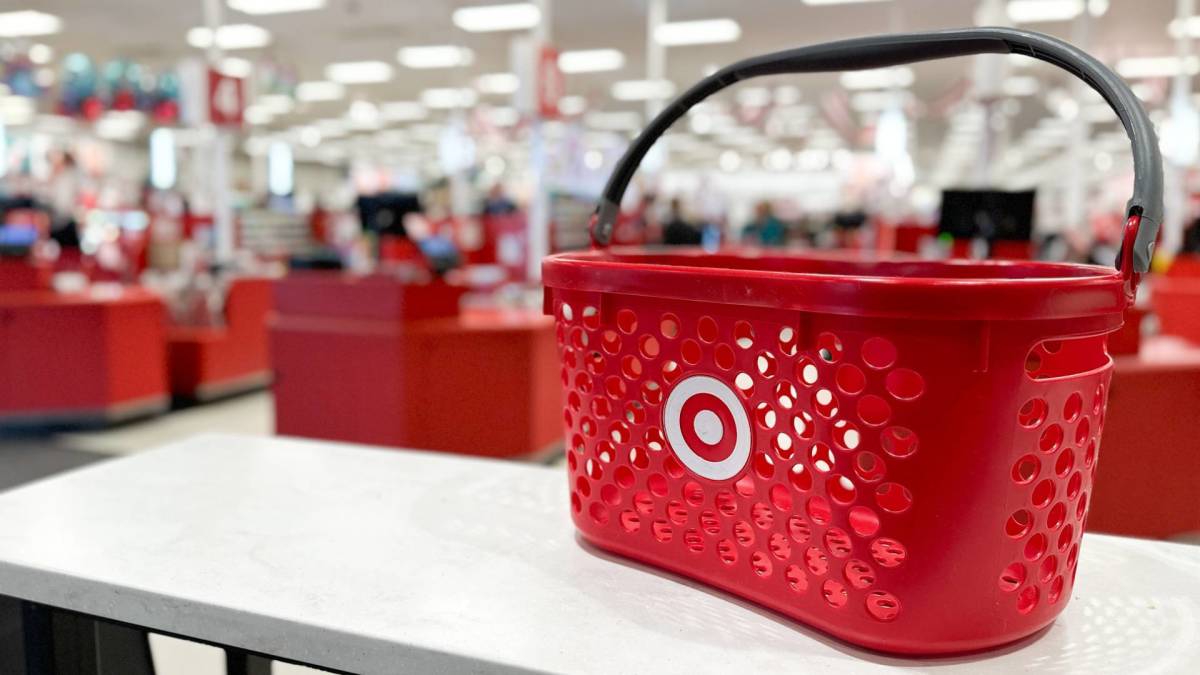 Target introduces a stricter dress code and new employee perks to improve the shopping experience.
Kenishirotie/Shutterstock.com
Why Target’s employee dress code change matters for customers
For years, consumers had to make an effort to distinguish an actual Target employee from just another shopper wearing a red shirt. With stricter dress codes, Target eliminates one source of frustration for customers.
Overall, the dress code change might seem small, but it’s actually part of a larger effort to refresh Target’s image and bring customers back.
Regaining consumer trust is the key goal under the new CEO’s transformation strategy. In fact, for 81% of consumers, trusting a brand is necessary before buying, according to Dash. app: 2026 Branding Statistics.
“Standardizing how store staff present themselves, while expanding exclusive ranges from partners like Keracolor, Chicco and Evenflo, points to a clearer in store identity and a more curated product mix that Target can control and promote across its 5,000 plus partner locations and nationwide footprint,” highlighted SimplyWallSt.
Additionally, Target is making more changes and addressing other common customer complaints.
If employees are happy, shoppers will be happy: Target boosts workers’ benefits
TheStreet’s retail expert Backman previously explained that launching special deals and generous discounts won’t be enough to win back shoppers’ trust. She argued that Target should focus on fixing the store experience first.
Experts such as GlobalData Retail Managing Director Neil Saunders previously pointed out that the retailer’s in-store experience has noticeably deteriorated.
More Retail:
- Walmart closes stores for weeks to test new perks for shoppers
- Target launches another generous deal to win back shoppers’ trust
- 91-year-old grocery chain closes another store in a key market
“Visiting Target stores is less pleasurable and less fun than it used to be,” Saunders told CX Dive. “There is far too much friction, and the experience is sometimes unpleasant.”
Even Target executives recently admitted that the stores had lost clarity and discipline, reported Modern Retail. I also previously reported that the company is investing $2 billion in AI, stores, and staffing, implementing four major changes under its transformation plan.
More recently, the retail giant revealed it is expanding employee benefits while encouraging them to shop more at Target stores, reported Axios.
Target new employee benefits:
- Additional 20% discount: Target is introducing an extra 20% discount for employees on its owned adult apparel brands.
- Private labels: This extra savings applies to Target’s popular private labels.
- 10% base discount: This is on top of the 10% base discount that employees already receive, making the total savings much higher for store-brand clothes. Source: Axios
By boosting employee discounts Target is achieving several goals.
- Promoting employee happiness, which makes them more likely to be helpful to customers and more efficient at their jobs
- Engaging customers with better support from staff
- Increasing sales and promoting private labels
These assumptions are confirmed by several studies, including the one from 2008 published in the Journal of Operations Management.
“Using structural equations modeling, we found that employee satisfaction is significantly related to service quality and to customer satisfaction, while the latter in turn influences firm profitability,” reads the study.
Target stock is rising again
It’s still too early to gauge the results of Target’s efforts to transform the company and win back shoppers’ trust, but the retailer is seeing positive action around its stock. Although its shares dropped 42.31% over the past five years, over the past 12 months, the stock has gained 9.98%.
“Now, a new CEO has breathed new life into Target stock and investors see an opportunity for a turnaround. In a year when the S&P 500 is down, Target is up 18% year-to-date through March 23, largely because new CEO Michael Fiddelke has instilled a sense of confidence in the company’s turnaround potential, even after middling fourth-quarter results earlier this month,” reported The Motley Fool.
Related: National cosmetics retailer closes three-quarters of its stores