
A decade ago, seeing a Tesla on the road was quite a sight.
If the curvy, oblong-shaped vehicles didn’t catch your attention, the lack of sound output from the electric motor, or the keyless entry options, certainly did.
Speaking of keyless entry, Tesla’s hidden door handles were also one of the vehicle’s intriguing features when they first hit the streets. But since then, they have proven to be pretty dangerous, leading the largest EV market in the world to ban them.
In September, Tesla admitted it had made a mistake designing its hidden door handles and confirmed its plan to make changes.
Longtime Tesla design chief Franz von Holzhausen told news services on Sept. 17 that Tesla is looking to combine its electronic and manual door-release mechanisms in an effort to make the handles more intuitive for occupants “in a panic situation.”
Von Holzhausen’s comments came less than 24 hours after the National Highway Traffic Administration (NHTSA) opened an investigation into the door-handle mechanism on about 174,000 Tesla Model Ys from the 2021 model year.
The NHTSA stated that it is in the second phase of its three-step process to issue a recall for the popular Tesla Model Y due to an electrical issue that could cause the door handle to fail.
In the case of a crash and a loss of 12 V power, first responders can’t open the door from the outside. While this type of incident is rare, it has resulted in at least 15 deaths.
This week, Chinese regulators went a couple of steps further than their American counterparts. They banned the door handles completely.
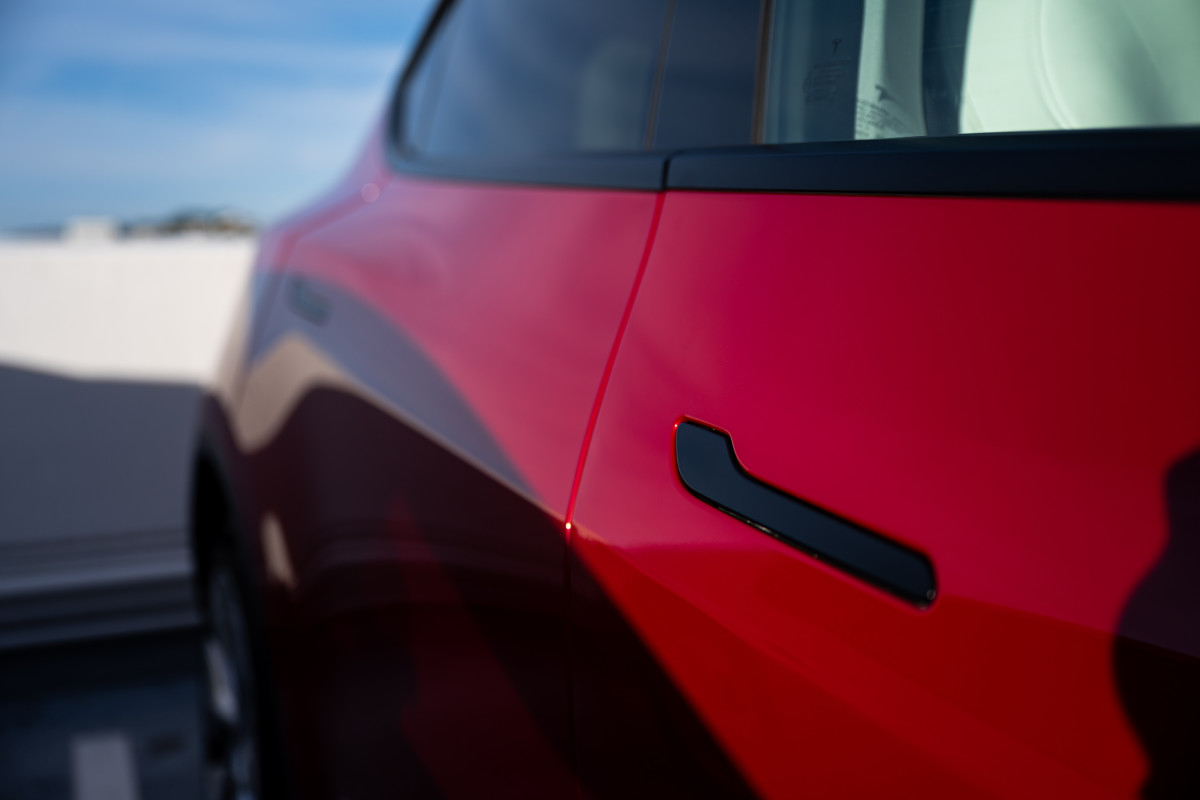 Tesla will have to find a new design for its door handles in a few years.
Photo by Bloomberg on Getty Images
China bans the hidden electric door handles Tesla uses
This week, China banned electronic retractable door handles on all new car models introduced after January 1, 2027.
The new regulations stipulate that there must be a physical door handle with a recessed space at least 2.4 inches wide, 0.8 inches tall, and 1 inch deep for a hand to operate.
Related: Tesla reality plays catch-up with Elon Musk’s promises
In the event of a crash in which the airbags deploy or the battery catches fire, the vehicle’s locking mechanism must also allow the non-impact side doors to be opened without tools.
Each door must also have mechanical releases inside that an occupant can easily find.
Carmakers with existing non-door-handle designs approved by regulators will have an extended grace period until January 1, 2029, to redesign their doors.
Tesla isn’t the only car company that will have to rethink its vehicle doors, reports Carsales, as hidden door handles have exploded in popularity since Tesla helped bring them to the fore.
Tesla sued over hidden door handles
Tesla design chief Franz von Holzhausen’s comments about changing the company’s door handles after all these years didn’t come unprompted.
About a year ago, five people died in Verona, Wisconsin, after the Tesla Model S they were riding in crashed into a tree.
Related: Tesla plans Mag 7 spending spree analyst calls ‘difficult to justify’
Jeffrey Bauer, 54, and Michelle Bauer, 55, were passengers in the vehicle, and their children claim the car’s door handle mechanism trapped them, preventing them from opening the doors after the Tesla crashed.
According to the lawsuit, a fire in the car’s lithium-ion battery pack caused the electronic door systems to fail. The plaintiffs argue that Tesla was aware of this potential risk based on earlier fires, but has failed to implement the changes von Holzhausen suggested in September.
The lawsuit, filed in Dane County Circuit Court by the Bauers’ children, said that passengers in the rear were particularly vulnerable following the crash.
A nearby homeowner told 911 she heard screaming coming from the vehicle as “Tesla’s design choices created a highly foreseeable risk: that occupants who survived a crash would remain trapped inside a burning vehicle,” the complaint says.
The Bauers died the day following the crash.
Tesla door handles face NHTSA scrutiny
Tesla door handles can fail from the inside, but the NHTSA probe will also examine the mechanism from the outside.
The NHTSA said it is investigating Tesla door handles after receiving reports that parents were unable to open their vehicles’ doors, leaving children trapped inside.
“The most commonly reported scenarios involved parents exiting the vehicle after a drive cycle in order to remove a child from the back seat or placing a child in the back seat before starting a drive cycle. In those events, the parents were unable to reopen a door to regain access to the vehicle,” the NHTSA said.
The NHTSA has received more than 140 consumer complaints about doors on various Tesla models getting stuck, not opening, or malfunctioning since 2018.
At least four parents in the NHTSA investigation were forced to break the vehicle’s back window to access it.
The NHTSA says its initial review suggests the issue arises when the electronic door locks don’t receive sufficient voltage from the vehicle.
The agency reports that repair invoices indicate the affected vehicles had their low-voltage batteries replaced after the incidents. Still, none of the owners reported seeing a low-voltage battery warning before the door handles failed.
In September, Bloomberg reported that Tesla’s fully concealed door handles could be dangerous if the vehicle lost power after a crash.
“Tesla engineers went wildly in the direction of automation and overlooked what happens to the human body after a crash,” Charles Mauro, founder of Mauro Usability Science, a New York consulting firm that specializes in human factors engineering, told Bloomberg.
“Musk’s idea is a computer on wheels, but the design of the door locks was overlooked.”
Related: Tesla turns to surprising partner for critical new hardware