
Tesla CEO Elon Musk has a loyal online following, so when Tesla instructed its followers to inundate the Dutch transit authority, Rijksdienst voor het Wegverkeer (RDW), with messages to approve testing of Tesla’s Full Self-Driving, they responded.
The electric vehicle maker explained that it has been trying to ship supervised Full Self-Driving tech to Europe for 12 months, and the best path forward for the company is through the Netherlands.
Tesla performance benchmarks for Elon Musk $1 trillion pay package:
- 20 million Tesla vehicles delivered
- 10 million active FSD subscriptions
- 1 million bots delivered
- 1 million Robotaxis in commercial operation
- $400 billion of Adjusted EBITDA over four separate quarters
Tesla says it has driven over 1 million kilometers safely on EU roads across 17 countries, based on its internal data (though CNBC reported that Tesla’s internal data sometimes doesn’t jibe with local data when it comes to traffic incidents).
“Our main path to success is partnering with the Dutch approval authority RDW to gain an exemption for the feature,” Tesla said in an X post.
Current EU regulations, which Tesla refers to as “outdated,” render FSD illegal in its current form. Changing the system to comply with European rules would render FSD “unsafe and unusable in many cases,” according to the company.
So Tesla urged followers to contact RDW to “express your excitement & thank them for making this happen as soon as possible.”
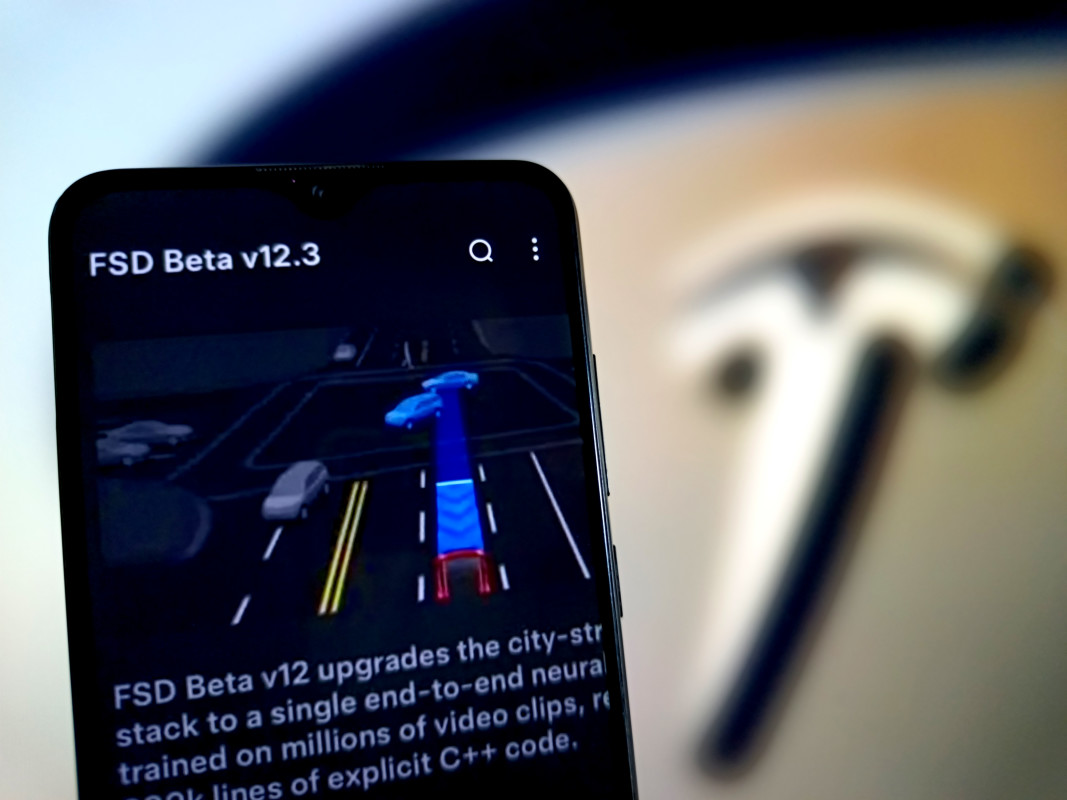 Tesla aims to secure its foothold for FSD approval in Europe by February 2026.
Photo by CFOTO on Getty Images
RDW responds to Tesla FSD social media pressure campaign
Tesla’s call to action on X, on behalf of its FSD tech reaching Europe, has garnered 3.7 million views, 10,000 likes, 2,300 retweets, and nearly 800 comments in just two days.
The tactic worked: RDW was flooded with comments, forcing the agency to ask the X users to chill out.
Related: Amazon’s Zoox makes a move on Tesla Robotaxi territory
“We thank everyone who has already done so, and would like to ask everyone not to contact us about this. It takes up unnecessary time for our customer service. Moreover, this will have no influence on whether or not the planning is met,” RDW said in a statement Nov. 24.
The RDW states that it does not disclose details about pending applications because “this is market and competition sensitive information,” but the agency clarified that it expects to test Tesla FSD in February 2026 to determine whether it meets the requirements.
“RDW and Tesla know what efforts need to be made to make a decision on this in February. Whether the schedule will be met remains to be seen in the coming period. For the RDW, (traffic) safety is paramount,” the RDW said.
Tesla’s best route to EU FSD approval goes through the Netherlands
European Union parliamentary rules can be complex for a manufacturer seeking to introduce a new technology in Europe for which no existing legislation currently exists.
But to receive an exemption for the market authorization, a member country must submit an application to the European Commission on behalf of the manufacturer.
Related: Tesla enthusiasts take Elon Musk’s cross-country FSD challenge
If the European Commission approves the technology by majority vote, then the exemption is valid in all EU member states.
If there is no majority vote, the exemption would remain valid only in the Netherlands, and other member states could decide for themselves whether to adopt the tech in their countries.
Related: Tesla Robotaxi makes a move to fulfill big Elon Musk promise