
After initially rising after hours following its fourth-quarter earnings release, Tesla shares started off Thursday morning, Jan. 29, in what has become familiar territory over the past month: the red.
Tesla shares were down 1.3% at last check after the company reported falling deliveries for the second consecutive year and falling revenue for the first time ever.
Tesla Q4 deliveries
- Q4 Model 3 and Y deliveries: 406,585
- Q4 all other models deliveries: 11,642
- Q4 Model 3/Y production: 422,652
- Q4 all other models production: 11,706
Tesla reported fourth-quarter earnings of 50 cents per share, topping analyst estimates of 45 cents per share, on revenue of $24.9 billion vs. analyst expectations of $24.79 billion. However, the company reported $25.7 billion in the year-ago quarter, with auto sales falling 11%.
Full-year revenue dropped to $94.8 billion from $97.7 billion as Tesla rode the wave of consumer demand that forced consumers to rush to dealerships to take advantage of the expiring $7,500 government tax credit, then abandon EV sales after it expired at the end of September.
Vehicle deliveries dropped 16% in the quarter and fell 8.6% year over year.
Tesla shares are down more than 5% this week and nearly 8% over the past four weeks as investors have been anticipating the down quarter.
However, the company also unveiled a radical plan to increase profits down the road, which includes significant spending now. Analysts at BNP Paribas aren’t sure that’s the right tactic.
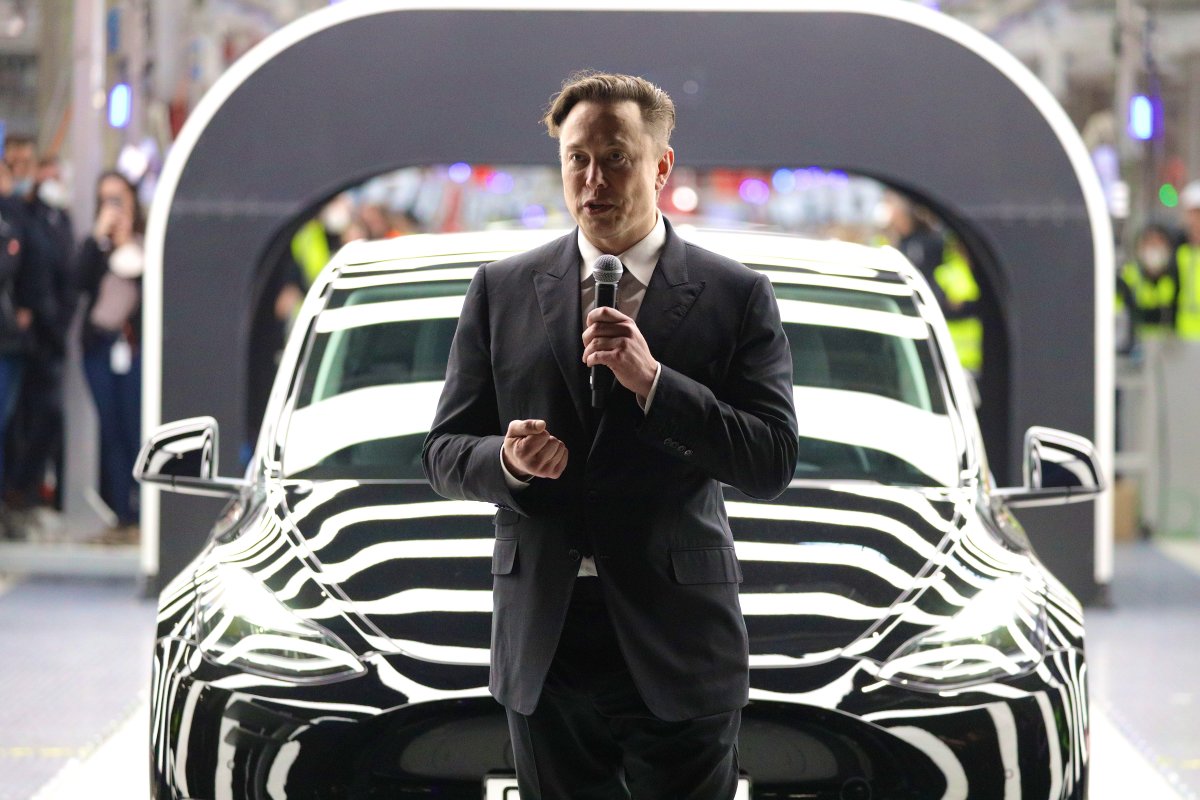 BNP Paribas analysts are skeptical of Tesla’s spending plan.
Tesla $20 billion capex plan isn’t sustainable, BNP Paribas says
Tesla is part of the high-volume, large market cap cohort known as the Magnificent 7. The Mag 7 includes tech industry stalwarts including Meta, Microsoft, Apple, and Nvidia.
Those other companies tend to spend big on capital expenditures because new tech is their industry’s lifeblood, and new tech takes research money to build.
Related: Tesla reality plays catch-up with Elon Musk’s promises
Tesla, which is still ostensibly a car company, doesn’t have that same issue; however, the company did just unveil a plan to discontinue 40% of its driving products in order to spend more time and energy on future tech like robotics and artificial intelligence.
Tesla is mothballing the Model S and the Model X by the second quarter and using the production space to build Optimus robots. And it is spending $20 billion to do it.
Tesla spent just $8.5 billion on capex in 2025, so more than doubling it during a time of falling revenue has analysts at BNP Paribas intrigued.
“Tesla attributes the massive uplift in spend toward the need ot ramp 6 production lines (refinery, LVP, Cybercarb, Semi, new Megafactory, and Optimus/Fremont), coupled with incremental AI training investments to support Optimus,” BNPP’s note states.
While the firm notes that the $20 billion spend isn’t out of the ordinary for Mag 7 companies, “we do believe Tesla has meaningfully less bandwidth to sustain such levels of spending vs peers.”
Tesla’s implied negative free cash flow of $8.6 billion makes it the only Mag 7 company slated to burn cash this year.
“If this pattern were to sustain, Tesla would naturally be forced to raise additional capital. During the 4Q25 call, the Co. pointed to the possibility of leveraging future robotaxi cash flow to back debt,” BNPP’s note states. “However, we’re currently forecasting Tesla’s first year of positive Robotaxi EBITDA in 2029, which we’d expect to complicate this funding option alternative.”
Related: History of Tesla & its stock: Timeline, facts & milestones
Tesla can’t keep up with the Mag 7 in 2026
Despite 90% of its revenue coming from electric vehicles, Tesla CEO Elon Musk insists Tesla isn’t a car company.
It’s more of a consumer tech company like Microsoft, Google, and Apple. So in that way, $20 billion in capital spending isn’t out of the ordinary.
However, Musk’s claim that Tesla is more like a tech company doesn’t mean its balance sheet aligns with that assessment.
Related: Tesla catches big break in federal racial discrimination case
Of the rest of the Mag 7, only Nvidia and Apple plan to spend less on capex in 2026 than Tesla. Those are also the only two companies with a lower capex-to-2025 cash ratio.
But in terms of capex as a percentage of operating cash flow, Tesla is far and away the leader, at nearly 170%. The next highest is Meta, which is at 87% of operating cash flow. Tesla is also the only Mag 7 company with negative free cash flow.
“Tesla bulls might initially want to interpret this news as further conviction behind the company’s robust, AI-led future… But what we know is, we’re already modeling an extremely bright future for Tesla across both Optimus and Robotaxis, and yet we fail to see supportive valuation beyond our $1 trillion price target,” BNPP’s note said.
“Now, with real cash burn most certainly in store for this year, and likely multiple years, the company’s discounted cash flow valuation becomes that much more difficult to justify as future cash flows take on even greater risk.”
BNP Paribas reiterated its underperform rating and $313 price target on Tesla shares.
Tesla was trading at $423.24 at last check Thursday, Jan. 29.
Related: Elon Musk must deliver on Tesla promise in 2026, Deutsche Bank says