
From its inception, Tesla was different from its fellow U.S. automakers, and with its latest decision on Full Self Driving, the company is solidifying itself as a tech company, not a car company.
Unlike the Detroit Big 3, Tesla was born in Silicon Valley, and its ambitions have always matched those of Google rather than those of Ford. And now it is treating its software just like Facebook or Google might.
Tesla is part of the high-volume, large-market-cap cohort known as the Magnificent 7, which includes tech industry stalwarts such as Meta, Microsoft, Apple, and Nvidia.
Tesla also plans to spend money more like a tech company rather than like a car company.
Tesla spent just $8.5 billion on capex in 2025, but it plans to spend $20 billion this year alone as it looks to build fewer cars and more Optimus humanoid robots.
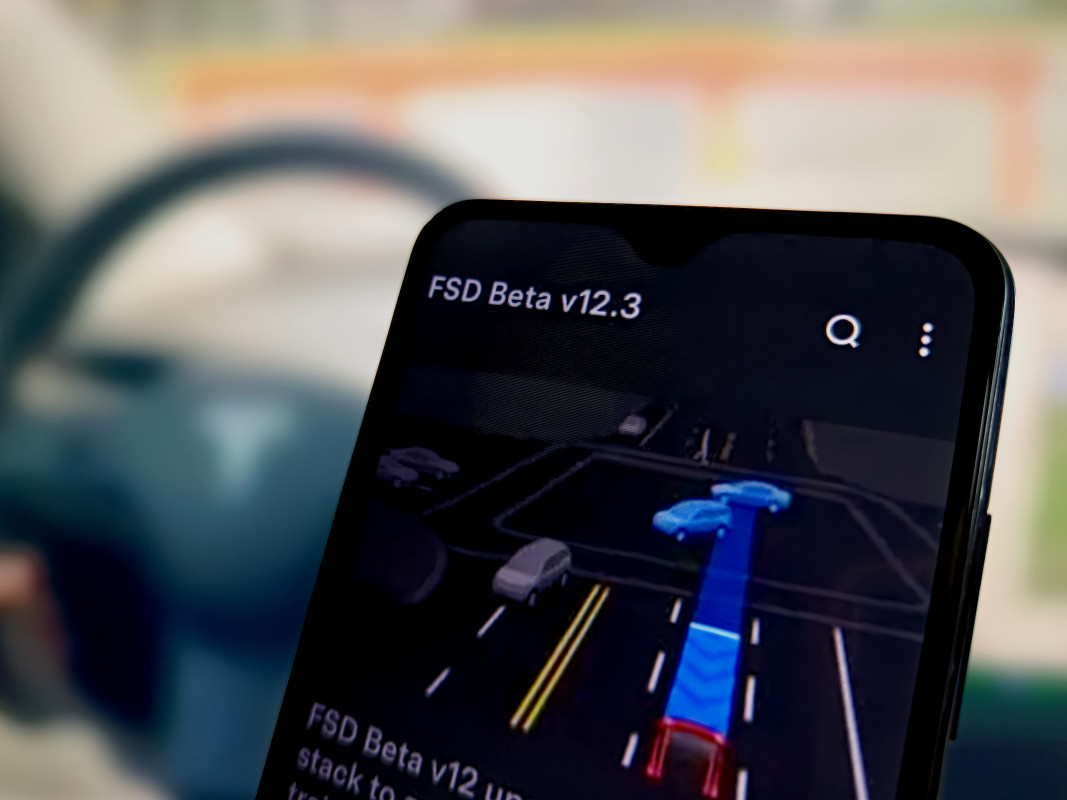
Full-Self Driving technology is at the cutting edge of real-world driving assistance, and with its latest move, Tesla is making it clear that they own the tech, you, the customer, are just renting it from them.
 Tesla has strict rules about the secondary market for its cars.
Photo by CFOTO on Getty Images
Tesla changes FSD resale rules, leaving owners confused
As Tesla has matured as a car company, so have its vehicle policies, especially in the resale market.
Tesla previously had a strict no-resale policy for the Cybertruck, prohibiting sales within the first year of delivery. Before the company backtracked on this policy, Tesla held the right to assess a $50,000 fine to Cybertruck owners who sold their vehicles.
Related: Tesla gets an answer for its FSD ambitions in Europe
Tesla is targeting the secondary market with its latest policy change.
As Electrek reported, Tesla recently sent out a marketing email that makes a change to the company’s longstanding policy that Tesla FSD ownership is transferred to whoever owns the car.
Now, Tesla says, “When you purchase Full Self-Driving (Supervised), it stays with your Tesla as long as you own it.”
This, coupled with the fact that Tesla will stop selling FSD on February 14, and instead go to a subscription-only model straight out of Silicon Valley.
But if you paid $8,000 for the full FSD package before the change, those capabilities disappear once the vehicle is resold, according to Electrek, which points out that FSD’s support page directly contradicts this new policy.
“If the previous owner purchased FSD (Supervised) with a one-time payment rather than subscribing, then the vehicle will be transferred to you with FSD (Supervised). If the previous owner subscribed to FSD (Supervised) for a monthly fee, you will need to subscribe using your own Tesla Account.” Tesla’s website says.
Tesla did not respond to a request for comment.
Tesla loses ground for the second consecutive year
While Tesla CEO Elon Musk thinks of his company as much more than just an electric vehicle maker, more than 90% of Tesla’s revenue comes from cars.
Still after years of not selling, Tesla announced earlier this month that it is mothballing the Model S and the Model X.
Related: Tesla rival inspires Ford CEO Jim Farley’s push for EV profitability
Even analysts are looking past the company’s struggling car-selling business to the software Tesla has been developing.
“While the autos business at Tesla may underperform in 2026, we think more attention is directed towards the company’s robotaxi expansion and efforts at humanoid development,” Deutsche Bank analysts said in a recent note. “To the extent that the macro regime doesn’t change materially, we think investors will continue to look beyond weakness in the autos business.”
The year 2025 marked Tesla’s second consecutive year of falling car deliveries. Tesla delivered 1.64 million vehicles last year, down from 1.78 million in 2024 and 1.81 million in 2023.
Tesla’s operating income dropped dramatically in 2025 to $4.86 billion from $7.76 billion in 2024, and its gross profit declined to $16.2 billion from $17.4 billion.
But based on recent history, Tesla investors aren’t going anywhere because of the promise the company represents. CEO Elon Musk and his vision has brought them this far, and investors and analysts alike are hesitant to abandon him now.
Elon Musk’s promises keep investors intrigued
Analysts at Deutsche Bank expect the bad times to stretch into 2026, but the firm remains bullish on the company, given its future ambitions.
“While the autos business at Tesla may underperform in 2026, we think more attention is directed towards the company’s robotaxi expansion and efforts at humanoid development,” Deutsche Bank analysts said in a recent note.
“To the extent that the macro regime doesn’t change materially, we think investors will continue to look beyond weakness in the autos business.”
Tesla reported delivering 418,000 vehicles in the fourth quarter, exceeding the 15% year-over-year decline to 422,000 vehicles that analysts polled by Tesla had expected.
For the year, they expected 1.64 million deliveries, an 8.6% decline, which Tesla achieved.
Related: Tesla rival inspires Ford CEO Jim Farley’s push for EV profitability