
Uber (UBER) has been at the forefront of the digital ride-hailing revolution for about a decade.
While it wasn’t the first contracted cab-hailing app on the scene, it has grown into the biggest game in town in the U.S. with a 76% market share.
Uber’s next-closest competitor, Lyft (LYFT) , holds the rest of the U.S. market.
Related: Tesla has late start in a crucial race for its future
But ride-hailing is yesterday’s technology. The technology all the cool kids are raving about now is autonomous driving.
The majority of Americans are still very skeptical of the technology. According to recent surveys, the majority of Americans are not very fond of autonomous 4,000-pound vehicles ambling down their streets.
Waymo is the most popular autonomous vehicle (AV) platform.
Waymo One users register over a quarter of a million paid weekly trips across Phoenix, San Francisco, Los Angeles, and Austin, with plans to expand to Atlanta, Miami, and Washington, D.C., in 2026.
Waymo’s current fleet features over 1,500 vehicles spread across its four current host cities, but by next year, it expects to more than double its fleet with more than 2,000 new additions.
Uber has partnered with Waymo to offer autonomous rides through the Uber app in the past, but Uber just revealed plans that will take its AV pursuit to the next level.
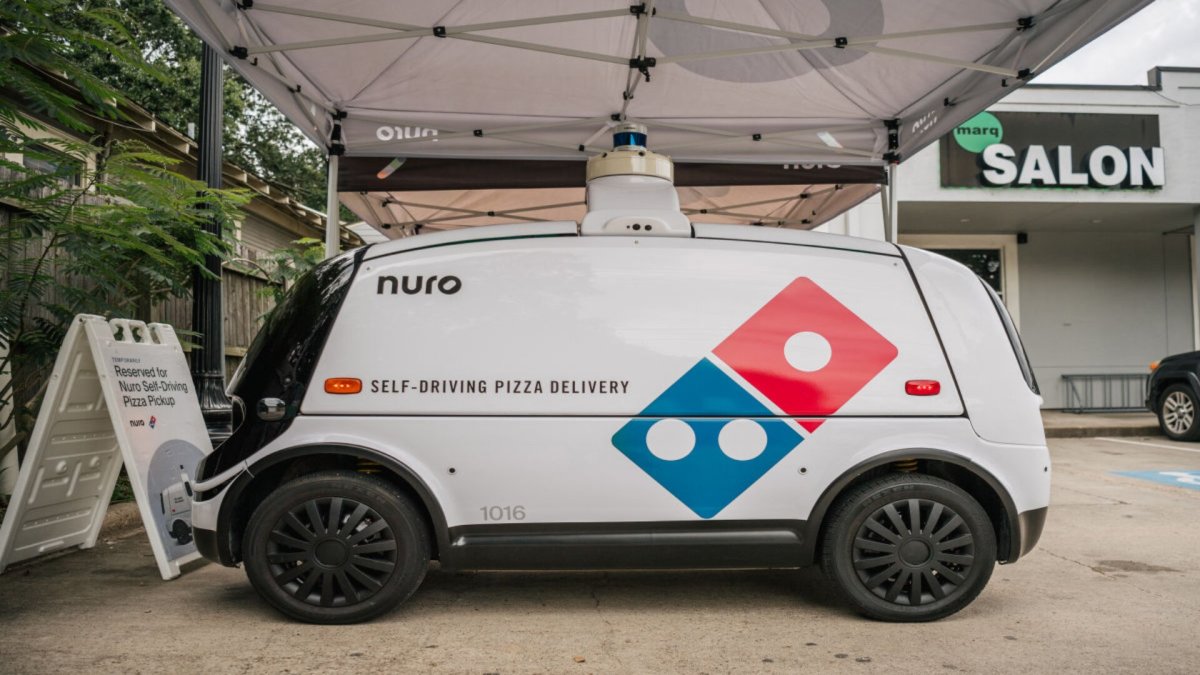 Nuro autonomus vehicles have more than 1.4 million miles in their rearview.
Image source: Brandon Bell/Getty Images
Uber announces plans to launch robotaxis in 2026
Uber has expanded its partnership with Waymo. As or June 24, Atlantians are able to order an autonomous Waymo through the Uber app.
But Uber has much bigger plans for its autonomous future.
The company announced it is teaming with EV maker Lucid Group and self-driving tech startup Nuro to launch its robotaxi fleet in 2026.
Uber will purchase and operate a fleet of Lucid Gravity SUVs with Nuro Driver technology. Uber says it expects to put at least 20,000 on city streets over the next six years.
Nuro says it has achieved Level 4 autonomy with over five years and 1.4 million miles traveled.
Related: Amazon sends a bold message Tesla fans need to hear
Level 4 autonomy, as defined by the Society of Automotive Engineers, is the highest available level of autonomy, and it means the driver can be completely disengaged from the driving process.
Tesla’s commercial Full Self Driving platform is considered Level 2, but the company says the software guiding its Robotaxis is different than the one currently available.
Uber says it will also make separate major investments in both Nuro and Lucid, including $300 million for Lucid to upgrade its assembly line so it can install Nuro technology in vehicles.
Bloomberg reports that this deal adds to the more than a dozen partnerships Uber has with companies in pursuit of its autonomous future.
Uber needs to go autonomous to start turning a consistent profit
Uber investing hundreds of millions in autonomous driving makes sense, since paying drivers is by far the company’s biggest expense.
In addition to the driver’s take from each ride, Uber also pays for the high-value commercial insurance all 50 states require in addition to their personal auto insurance.
Uber says the “U.S. insurance industry is in crisis” as insurers raise premiums, adding to overhead costs for Uber.
Uber drivers are classified as independent contractors by the company, meaning it’s not responsible for paying them any benefits.
But even that setup has faced legal challenges in the past and could again in the future.
Uber is facing a huge obstacle as it looks to cut down on its biggest expense: consumer skepticism.
“Consumers are skeptical of the full self-driving (FSD) technology that undergirds the robotaxi proposition, with 60% considering Tesla’s full self-driving ‘unsafe,’ 77% unwilling to utilize full self-driving technology, and a substantial share (48%) believing full self-driving should be illegal,” according to the May 2025 edition of the Electric Vehicle Intelligence Report (EVIR).
Related: Unprecedented BYD assisted driving offer puts competition on notice