
Most partnerships do not fall apart over the work. They fall apart over who gets to sign off on it.
Bands that record well together argue about whose name goes first on the sleeve. Law firms that bill beautifully split over the letterhead. The thing that breaks a partnership is almost never the thing the partnership was built to do.
The auto industry has been running that experiment at industrial scale for a decade. Building a competitive car has become too expensive for most companies to manage alone, which is why the past 10 years produced Stellantis, a long row of battery joint ventures, and an even longer row of announced tie-ups that quietly went nowhere.
Japan has felt the squeeze harder than most. Toyota (TM) moves more than ten million vehicles a year by itself. Chinese rivals have taken share in Europe and Southeast Asia with cars packed full of software features. And U.S. tariffs on Japanese-built vehicles have chewed through the margins that used to fund exactly this kind of engineering.
So when Honda (HMC) and Nissan (NSANY) walked away from a roughly $60 billion combination in February 2025, the working assumption was that both would go it alone and one of them would eventually run out of road.
That assumption did not survive Monday, Aug. 31.
Why the Honda Nissan merger collapsed in 2025
The two companies signed a memorandum of understanding in December 2024 to fold themselves into a joint holding company, with a Tokyo listing targeted for August 2026. Mitsubishi Motors (MMTOF), in which Nissan is the largest shareholder, signed a separate memo to study joining them.
The arithmetic was compelling. The combined group would have ranked as the world’s third-largest automaker by volume.
Related: Nissan scrapped a bank it couldn’t afford to build
The governance was not. Negotiations deteriorated after Honda proposed that Nissan become a subsidiary through a share exchange instead of an equal partner under a holding company, a change both sides described in a joint statement.
Nissan would not accept it. Talks were formally called off that February, CEO Makoto Uchida stepped down the following month, and Ivan Espinosa inherited a company that needed a turnaround plan more than it needed a wedding.
Honda later signaled the conditions it wanted before restarting talks, and Nissan moved ahead alone with roughly $2.6 billion in cuts.
What survived the wreckage was the boring part. The two had already agreed in March 2024 to study working together on electrification and vehicle intelligence, and they widened that into joint research on software-defined vehicles five months later.
Nobody wrote headlines about it. It kept running anyway.
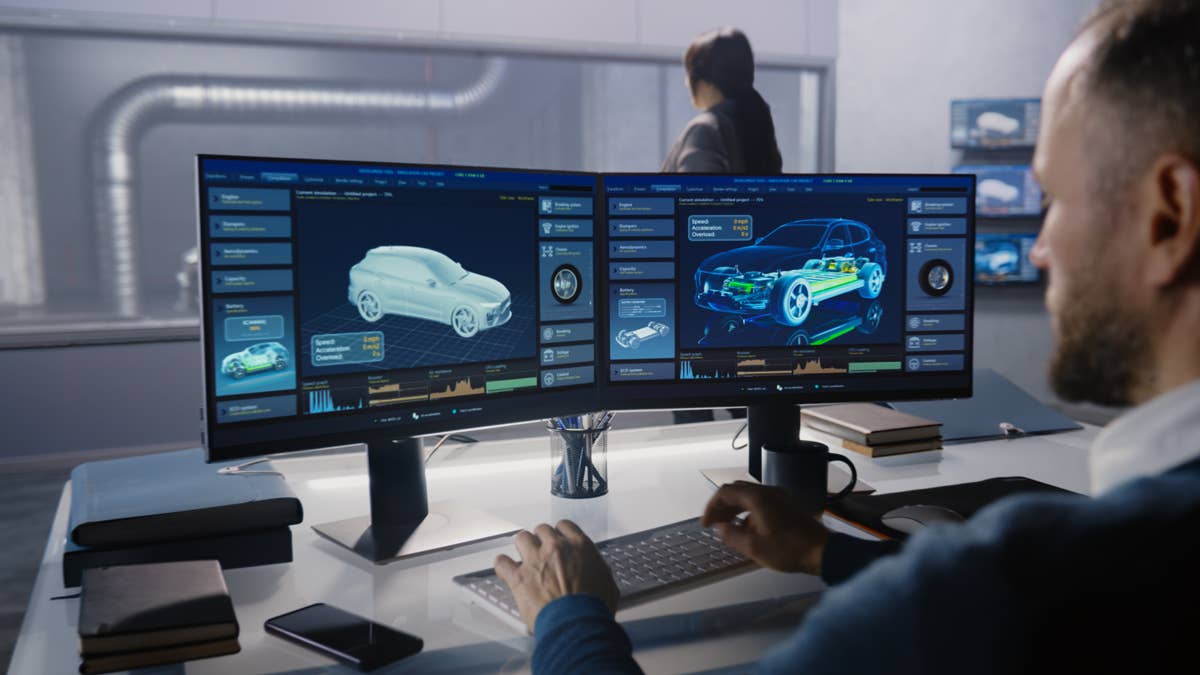 Honda and Nissan will share onboard computers and a common vehicle operating system beginning in fiscal 2029.
EvgeniyShkolenko / Getty Images
What the new Honda Nissan software agreement covers
The companies have entered a joint development agreement covering “multiple electronic control units (ECUs) that form the core of next-generation software-defined vehicles (SDVs), along with the in-vehicle operating system and key parts of the middleware, and vehicle control software,” according to a joint statement posted to Honda’s newsroom on Aug. 31.
An electronic control unit is an onboard computer. A modern vehicle carries dozens of them scattered through the body, and the point of this agreement is to replace that sprawl with a smaller number of shared, high-performance units running common code.
The architecture is planned for both companies’ next-generation vehicles beginning in fiscal year 2029.
More Automotive:
- Honda keeps skipping the hybrid its buyers are asking for
- Automakers are quietly changing what’s in your engine
- Tariffs just pushed Hyundai deeper into America
Read the language carefully and notice what is missing. No equity. No holding company. No share exchange. Nothing that requires either board to hand anything over.
For the person actually sitting in the driver’s seat, a software-defined vehicle is one in which the features are delivered by code rather than fixed by whatever hardware left the factory. Driver assistance improves over the air. Infotainment gets patched instead of replaced.
That only works if the underlying computer was designed to keep receiving updates for the 15 or 20 years the car stays on the road, which is why the industry is spending so heavily here.
Software has become a central battleground as vehicles take on more autonomous and connected functions, and the pressure is sharpest from Chinese carmakers such as BYD (BYDDY) that have gained ground in Europe and Southeast Asia, reported Reuters.
Mitsubishi Motors said it was considering joining the collaboration and remained in discussions with both automakers, the same Reuters report said.
Investors liked it. Honda’s U.S.-listed shares opened Aug. 31 around $31.91, up roughly 1.7%, while Nissan’s Tokyo-listed stock closed up about 2.3%. Honda said the agreement is not expected to have a material effect on results for the fiscal year ending March 31, 2027, which is a polite way of saying the payoff sits several years out.
How Honda and Nissan built toward a software deal
When I lined up both companies’ own disclosures against the merger timeline, the pattern was hard to miss. The software track never stopped. It just got quieter while the corporate drama played out above it.
- March 2024: Honda and Nissan sign a memorandum of understanding to begin a feasibility study of a strategic partnership covering vehicle electrification and intelligence, announced Nissan.
- August 2024: The two sign a joint research agreement on fundamental technologies for a next-generation software-defined vehicle platform, plus a second memorandum the same day covering shared battery cell specifications, e-Axles, and charging services, said Honda.
- December 2024: Merger talks begin, targeting an August 2026 holding company listing, according to a joint announcement.
- February 2025: Talks collapse over the subsidiary proposal, the companies confirmed at the time.
- May 2026: Nissan selects Red Hat In-Vehicle Operating System as the Linux foundation for its Scalable Open Software Platform, announced Red Hat, a unit of IBM (IBM).
- May 2026: Honda commits to applying its ASIMO OS across gasoline, hybrid, and electric models under a “Triple Half” goal of halving development cost, timeframe, and workload versus 2025 levels, said Honda.
- Aug. 31, 2026: The joint development agreement is signed, first flagged days earlier by Nikkei Asia.
Espinosa had been telegraphing this for months. Discussions with Honda were constructive and news was coming, he told Yahoo Finance in July, while stressing that there was no discussion around integration.
He had said much the same in April about talks covering larger vehicles in North America, Automotive News reported.
What the Honda Nissan software deal means for investors
Here is the part that matters well beyond Tokyo. A vehicle operating system certified to automotive safety standards costs an enormous amount to build and considerably more to maintain across millions of cars for two decades.
Honda earmarked about one trillion yen for software technologies over three years at its May briefing. Nissan is running a development platform used by thousands of engineers.
Split that bill two ways, or three if Mitsubishi signs on, and the per-vehicle cost of staying competitive with Tesla and the Chinese automakers drops without either company surrendering a seat at its own table.
My read is that this structure is more durable than the merger would have been, precisely because it asks for so much less. Merger integration failures are usually cultural and political. A shared parts bin and a shared codebase require cooperation on engineering, not on hierarchy.
The risk is just as clear. Neither company has published an investment figure, a governance structure, or a model list, and joint software programs between rival automakers have a poor completion record.
Fiscal 2029 is three product cycles away, and the deal did not specifically mention electric vehicles or name a single model, the Associated Press reported.
Wall Street has been warming up regardless. Honda joined the Zacks Rank #1 (Strong Buy) list on Aug. 18 after its consensus current-year earnings estimate climbed 77.4% over the prior sixty days, according to Zacks.
The merger was supposed to deliver scale. What Honda and Nissan actually signed delivers scale in the one place where scale now decides the winner, and it does it without either side ever having to say the word subsidiary again.
Related: Honda CEO withstands investor backlash after $9B EV misstep
