
While both countries still keep the other at the lowest possible advisory level, relations between the United States and Canada deteriorated rapidly under the Trump administration.
After President Donald Trump repeatedly referred to then-Prime Minister Justin Trudeau as “governor” and the country as the “51st state,” Canadian travel numbers to the U.S. fell by as much as 40% over the spring.
Amid several high-profile stories of Canadian tourists who got caught up in the current administration’s immigration crackdown, the Canadian government has also updated its travel advisory to explicitly state that travelers need to “comply and be forthcoming in all interactions with border authorities” and “could be detained while awaiting deportation.”
In response, American ambassador to Canada Pete Hoekstra called the fears that have been driving the decline in U.S. travel “unfounded” and the situations that the advisory warns about “isolated” back in June.
Don’t miss the move: SIGN UP for TheStreet’s FREE Daily newsletter
‘Follow guidance from local authorities’: Canada travel advisory
While the U.S. travel guidance for Canada continues to state that it is a low-risk country where nothing more than “normal precautions” are necessary, a June advisory warns of wildfire season taking place from May to September.
“In Canada, wildfires are common in forested and grassland regions from May to September,” the U.S. Embassy and Consulates in Canada wrote. “In 2024, Canada was affected by record-breaking wildfires affecting all 13 provinces and territories. We urge U.S. citizens visiting or living in Canada to be aware of wildfire conditions in their area and follow guidance from local authorities.”
Related: Hotels have started giving Canadians anti-Trump discounts
Over the last half-decade, wildfires in Canada have grown progressively more intense during the hottest periods of the year. A series of wildfires that began in the Western province of Manitoba over the weekend of July 12 saw heavy smoke drift eastward and set off air quality alarms as far east as Toronto and the Maritime Provinces.
In June 2023, intense wildfire smoke from that carried over from Canada briefly turned a portion of the New York City sky orange and caused the city to suffer some of the worst air conditions on record.
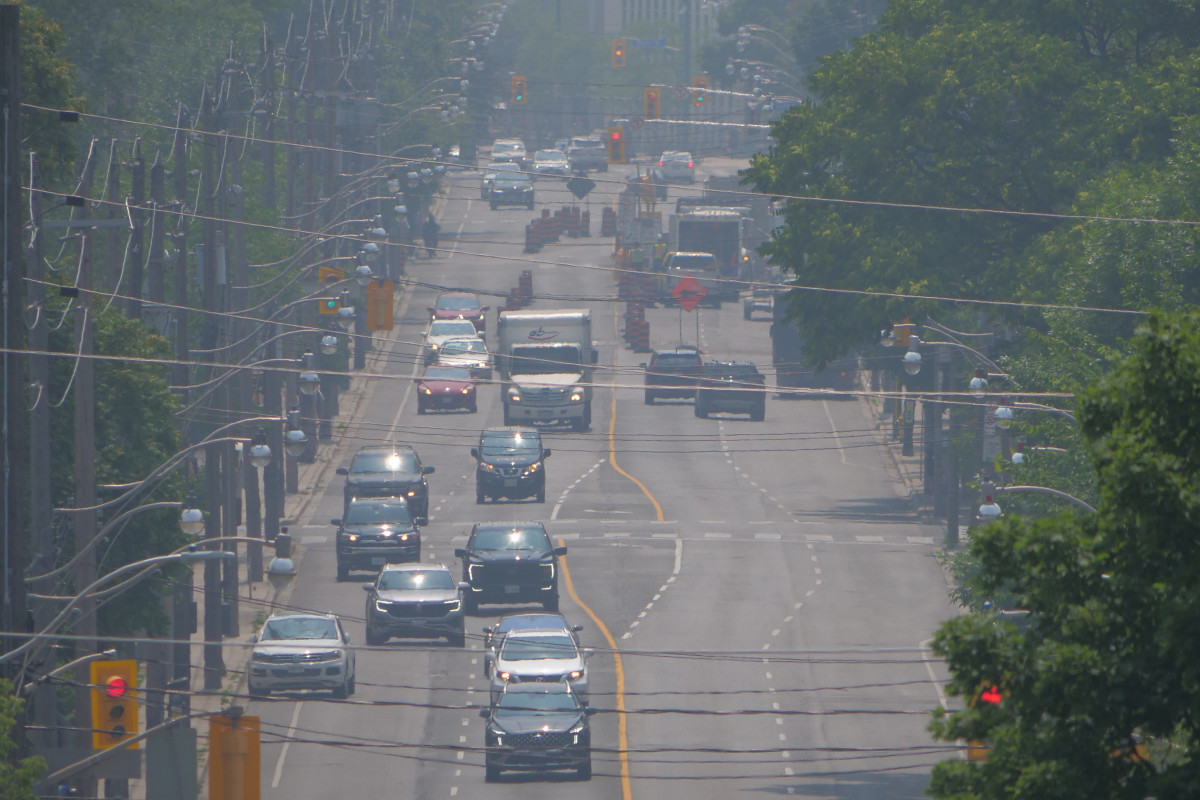 Vehicles drive through Toronto, Canada, in hazy conditions due to wildfire smoke.
Image source: NurPhoto/Getty Images
Republican lawmakers scold Canada about its wildfire season
In advance of the ongoing wildfire season, a group of Republican lawmakers from Minnesota have sent Canadian ambassador Kirsten Hillman a letter urging more attention to wildfires in the country.
In response, the Canadian embassy told BBC that the government takes wildfire season “very seriously” and that their effect is felt even more strongly by the local population.
“We write to you today on behalf of our constituents who have had to deal with suffocating Canadian wildfire smoke filling the air to begin the summer,” the letter signed by representatives Tom Tiffany, Glenn Grothman, and Michelle Fischbach reads.
More on travel:
- Another regional airline is now on the verge of bankruptcy
- Government issues new travel advisory on popular beach destination
- Another country just issued a new visa requirement for visitors
In its guidance for Canada-bound travelers, the U.S. government urges keeping up with conditions in the specific areas one plans on visiting. The Canadian government offers condition updates and has an emergency contingency plan in place should one get caught up in a wildfire.
“Dial 911 for immediate assistance from police, ambulance, or fire services in Canada,” the advisory states. “[…] Follow the government of Canada’s guidance on what to do before, during, and after a wildfire. Review the government of Canada’s coordinated Wildfire page.”
Related: Veteran fund manager issues dire S&P 500 warning for 2025