
It had to happen.
After the June 11 market close, Elon Musk took his Space Exploration Technologies Corp. (otherwise known as SpaceX) public. Price: $135 a share. Result: The company raised some $75 billion before expenses.
The next day, when the shares could be traded, the shares reached $176.52, then dropped to $160.95. Still, it was good day: The shares were up 19.2%.
The following Monday, on June 15, SpaceX (SPCX) jumped 19.6% to $192.50. The following day, the shares rose another 4.8% to $201.80, achieving a market capitalization of $2.64 trillion.
But few realized SpaceX’s big opening run had ended.
The June 16 high was $225.64, and that’s been the peak for the stock. So far.
SpaceX shares swoon
SpaceX has mostly been sliding ever since because many investors (or traders) saw the peak and sold, happy to let others take over the risk with a company long on a huge idea but still developing the guts of the venture.
On July 16, the stock finished at $131.11, down 3.1% on the day.
And that’s just the start.
- SpaceX has fallen for five straight days.
- It’s down nearly 41% from its June 16 high.
- And it’s down 2% below that June 11 IPO price — and down 41% from the June 16 high.
- There are some 180 million shares sold short, according to charting site TradingView.com. Meaning many traders believe the decline has more to run. So they’re selling shares, hoping to buy them back at a lower price generating nice profits.
SpaceX has big dreams and Elon Musk
As a business, SpaceX isn’t through. Elon Musk is bright, resourceful, driven, fantastically ambitious and well-connected. He has a vast number of fans, admirers and supporters who believe he’s a genius visionary who will achieve his dream of populating the moon and beyond.
The mission statement in the company’s prospectus clearly articulates the audacious dream that powers Musk and his company:
“Our mission is to build the systems and technologies necessary to make life multiplanetary, to understand the true nature of the universe, and to extend the light of consciousness to the stars.”
So that means hardware (chips, computers and space ship), software (lots of artificial intelligence) and intense development testing.
The first goal — to colonize the moon — may take some years (and billions of dollars of SpaceX equipment. And years (and more money) after that to get to, say, Mars.
And it didn’t seem to help matters that SpaceX followed up with a controversial $20 billion bond offering to finance artificial intelligence development in its XAI group. AI, as we all know, sucks up billions of dollars of investment capital, with uncertain profitability.
All IPOs suffer growing pains
In the meantime, stocks are stocks, and initial public offerings are IPOs. Rarely after a company goes public does the share price rise consistently.
And SpaceX right now is behaving like a lot of companies that have gone public.
As a comparison, Meta Platforms went public (as Facebook) at $38 a share in May 2012. It promptly slumped, reaching a low of $17.55 in September 2012, according to Yahoo Finance data. The stock didn’t close above $38 until Aug. 2, 2013.
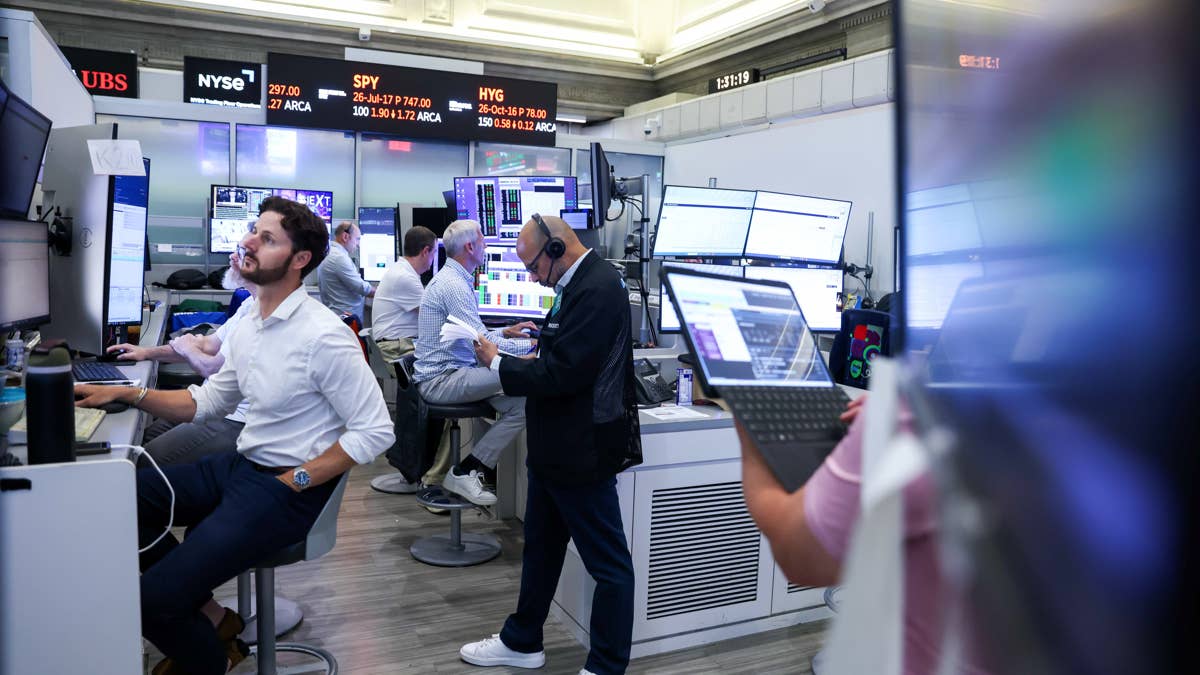 Floor traders at the American Stock Exchange in New York. (Bloomberg and Getty Images)
Michael Nagle / Bloomberg / Getty Images
Fast forward to July 16, 2026. Meta, which has never split its stock, closed at $664.54. Which means if you bought 100 Meta shares at the 2012 IPO price and held on, your stake has jumped in value from $3,800 to $66,454.
You would have more if you bought Meta in September 2012 when the shares dropped below $18. And still more if you reinvested dividends since they were initiated in 2024.
Musk himself knows about market volatility thanks to Tesla, the electric vehicle company he joined in 2004 and soon took over. The company has evolved into a global brand that faces intense competition, especially from China.
In late 2024, Tesla jumped nearly 190%, peaking at $479.86. It then fell 55% over the next five months. The shares recovered those losses by December 2025.
IPOs, in fact, have a tough history. Small IPOs generally are no longer public within five years, according to a 2016 study published in the Harvard Business Law Review.
A large IPO (which SpaceX unquestionably is) can weather a lot, but the first few years may be a struggle.
An April 2026 study by ASB Growth Ventures showed that nearly 70% of newly listed companies underperform their benchmark indices within three years of listing.
More SpaceX
- Former Tesla board member issues candid message on SpaceX stock
- Michael Burry sees a $3 trillion problem with SpaceX
- Doug Kass: I Remain Short SpaceX
Big dreams require big patience
So the performance of SpaceX’s shares may be more volatile, but, given Musk’s global celebrity, understandable. If Musk and his team can get their prime product, the Starship reusable rocket, to work safely and efficiently, the very patient investor may get rewarded.
These include the biggest investment and money managers, many of whom put up seed capital for SpaceX 10-to-15 years ago. Already, many have reaped huge gains from the IPO, according to a June 12 Inc. magazine report.
Peter Thiel‘s Founders Fund invested $600 million in SpaceX. The stake may be worth $20 billion. Baron Capital’s $2-billion stake may be worth up to $12 billion. (If the firm has elected not to sell any of its holdings.)
So far, one is not hearing sounds of panic.
Related: TSMC is about to answer Wall Street’s biggest AI question