
The numbers are grim.
Over 7 million Americans are living with Alzheimer’s Disease, a number that matches the population of Tennessee.
The progressive brain disorder kills more than breast cancer and prostate cancer combined and the total cost of care for people 65 and older is projected to reach $384 billion this year.
Nearly 12 million Americans provide unpaid care, contributing an estimated 19.2 billion hours of care valued at over $413 billion, with caregivers – often family members – bearing much of the emotional and financial burden.
There is no cure for the disease, the Alzheimer’s Association said, but there are treatments that may change its progression, and drug and non-drug options that may help treat symptoms.
One treatment, Cerezen, recently received CE certification under the European Union’s Medical Device Regulation for its non-invasive device to treat mild cognitive impairment due to Alzheimer’s disease or mild Alzheimer’s disease.
The approval makes it the first and only device certified under the new EU framework for the condition, the Farmington Hills, MI-based Cerezen said in a statement, “giving European patients access to a therapy that remains out of reach in the United States.”
The medical device company said that in 2021, the U.S. Food and Drug Administration designated Cerezen, a “Breakthrough Device,” acknowledging both its safety profile and its potential to meet a significant unmet medical need.
But despite that recognition – and despite significant clinical data showing measurable improvement in patients’ cognition and daily function – the FDA has yet to approve it for use, the company said.
“We made every effort to bring this treatment to U.S. patients first,” said Cerezen Founder and CEO Manoj Bhargava. “However, it seems politics is more important than people’s lives. The current pharmaceutical approaches cost a fortune, and the patient still gets worse.”
Rather than targeting the amyloid plaques that dominate most drug-based approaches, the device focuses on restoring vascular health in the brain, improving blood flow and oxygenation.
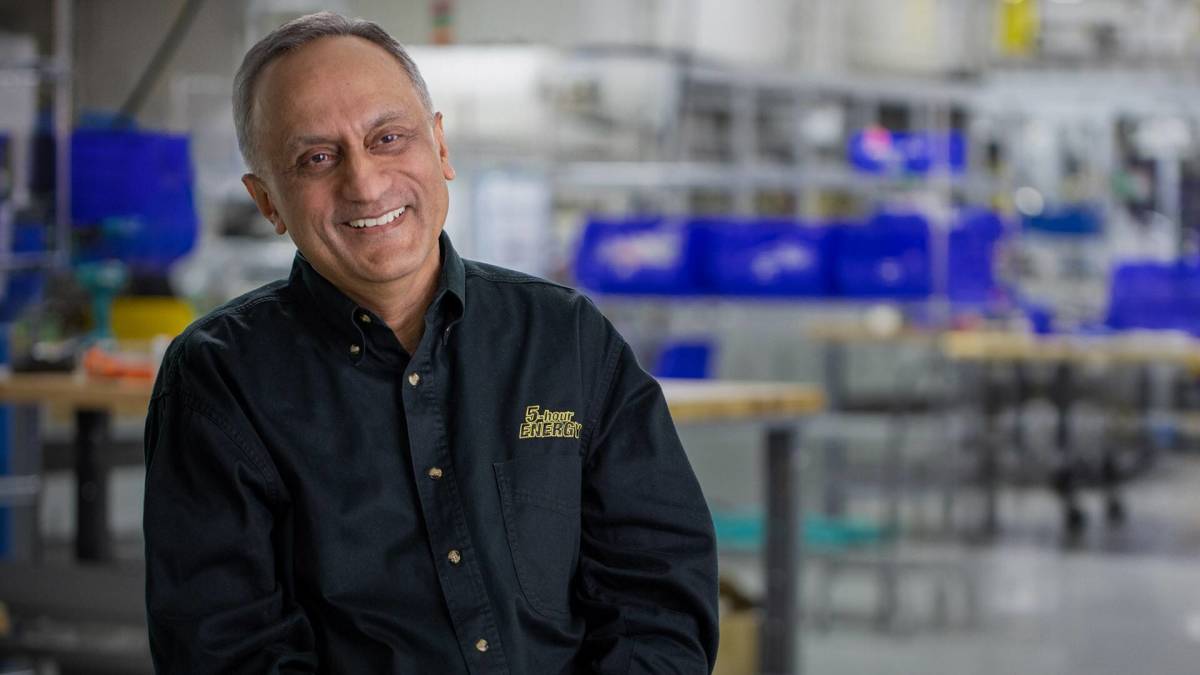 Cerezen Founder and CEO Manoj Bhargavasays the company made every effort to bring this treatment to U.S. patients first.
Bridge Media Networks
Cerezen founder: disheartening Amercans can’t access device
Alois Alzheimer, the pathologist who is credited with identifying the first published case of the disease, stated that impaired vascular function is a root cause of the disease that bears his name.
“It’s disheartening to know that American families still can’t access it,” said Bhargava, majority owner of TheStreet’s parent company, The Arena Group (AREN). “We’ve proven it’s safe, effective, and easy to use. The question is no longer whether it works – it’s when regulators will allow it here.”
Related: Life Expectancy in Humans is Not Likely to Increase Much More
The non-invasive device has shown in clinical studies that patients with mild cognitive impairment or early Alzheimer’s can see meaningful improvement within six months.
On average, participants gained five points on standard cognitive scales – an improvement roughly equivalent to regaining a year’s worth of lost function.
The gains were achieved without major safety risks and without the need for costly PET scans or drug infusions, the company said. More than 70% of Alzheimer’s patients would qualify for the therapy – a stark contrast to the narrow eligibility and high costs associated with many of the approved drug treatments.
Cerezen’s European certification means that patients there could begin receiving treatment soon, while in the U.S., the timeline is uncertain. The company is re-engaging with FDA leadership to reopen its prior application.
More Health Care:
- How AI Could Monitor Brain Health and Find Dementia Soone
- Health insurers make a major move older Americans won’t like
- How the government shutdown affects Social Security, Medicare
“This is an American innovation,” said Bhargava “It was developed, tested, and proven here—but the first patients who’ll benefit live across the Atlantic. That’s a hard reality to accept.”Despite decades of research and billions spent, the company said that most available treatments only slow progression. Few offer improvement, and none come close to a cure.
For families facing the disease, even small gains in memory, clarity or independence can make a profound difference, the company said.
The FDA did not immediately respond to a request for comment.