
Microsoft is offering a $39.97 “lifetime” package for Office Professional 2021 and Windows 11 Pro, aimed at users who unboxed a new machine and learned it didn’t include Office or was delivered with a more limited Windows edition.
That’s not a big deal when it comes to Microsoft products. But it shows how Microsoft has been making money off of people’s choices for decades: the first step is buying a PC, and the second step is paying to “complete the setup.”
Even though AI is all over the news, Microsoft’s 2026 story is still about the boring, high-volume plumbing, like Windows upgrades, Office lifecycle deadlines, and the slow march to Microsoft 365.
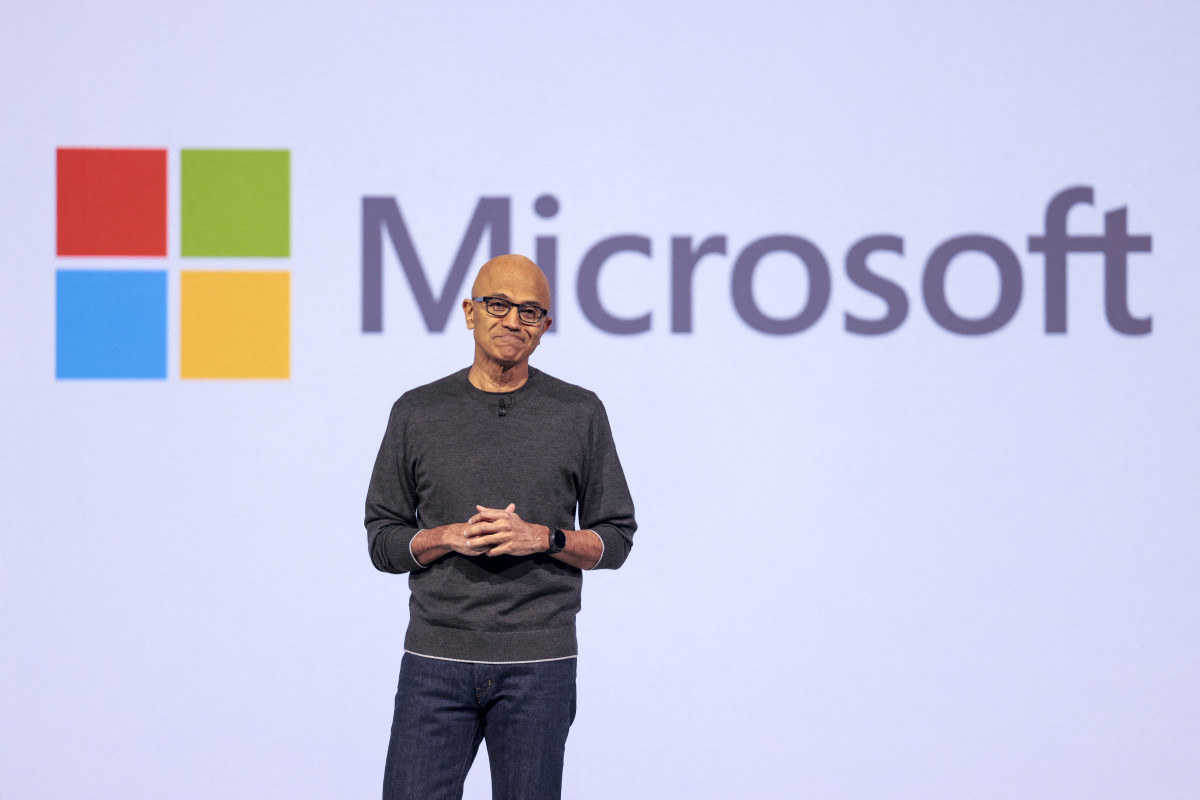 The holiday PC upgrade moment is back, and Microsoft knows it
Photo by JASON REDMOND on Getty Images
The Windows setup for 2026 is now more direct
Microsoft says Windows 10 support ended Oct. 14. This means that most people who still use the old operating system won’t get any more tech support or security updates.
That matters in 2026 because it means a certain section of users will upgrade to Windows 11 right away. Some people will buy new devices to replace old ones that can’t run Windows 11. In either case, the cycle of upgrading and refreshing PCs becomes less optional.
For some people, especially small businesses that are worried about encryption and device controls, Windows 11 Pro is more than just a “nice to have.” The sale post used those “Pro” features to explain why the upsell was worth it.
There is a deadline hidden in the “lifetime Office” pitch
The bundle also pushed Office 2021 as a one-time buy that you can keep. The issue is that Microsoft’s support clock never stops.
Microsoft said that after Oct. 13, 2026, they will no longer support Office 2021. There won’t be any more security updates or an extension. The apps might still work, but they won’t get any more updates to make them safer.
People aren’t paying enough attention to that lever for 2026. Some “buy once” customers will still move before the deadline, and Microsoft wants them to come to Microsoft 365.
More Tech Stocks:
- Morgan Stanley sets jaw-dropping Micron price target after event
- Nvidia’s China chip problem isn’t what most investors think
- Quantum Computing makes $110 million move nobody saw coming
Microsoft is retailing it for $39.97 instead of $418.99. That’s about 90% off, which is a big discount meant to encourage people to buy PCs quickly during the holidays.
It’s a powerful way to convince them to buy. As a Microsoft thesis, it shows that the market still responds to “own it” messages, even though Microsoft is still making the ecosystem work on recurring income.
Cloud and AI are the real center of gravity for Microsoft in 2026
If you want the cleanest “primer” metric, it’s this: the cloud is already most of the company’s revenue mix.
Microsoft said that in the first quarter of FY26, revenue rose by 18%, with growth in all areas.
It also said that sales from Azure and other cloud services rose by 40% during the quarter.
This means that things are looking promising for the coming year. Windows and Office are still important, but mostly as “front doors” that connect to the bigger platform.
What analysts think will happen
Dan Ives, an analyst at Wedbush, says that Microsoft will do better than predicted, with a price target of $625. He thinks that 2026 will be a year of growth for Azure and Copilot, with AI at the helm.
MSFT was worth about $487.71 on Dec. 27.
The good thing about Ives’ $625 target is that it implies an upside of $625.00 − $487.71 = $137.29 per share, which is about 28.1% more.
So, to set expectations, here’s a quick price target I came up with based on the numbers Microsoft has given us. Microsoft said in its FY26 Q1 report that GAAP diluted EPS was $3.72, which is 13% more than it was at the same time last year.
- To get a baseline earnings run rate, first annualize the quarter. This means multiplying $3.72 by 4 to get $14.88, assuming the next few quarters are similar.
- Next, let’s look at the market’s valuation based on that run rate. With MSFT at about $487.71, $487.71 divided by $14.88 gives us a P/E of about 32.8 times the run rate.
- Then, use Microsoft’s own year-over-year EPS growth rate from that quarter to make a simple one-year projection. Since EPS was up 13%, $14.88 times 1.13 equals $16.81.
- Finally, keep the multiple steady and change that EPS into a price. For example, $16.81 times 32.8 gives a price of about $551.
Microsoft moves to look forward to in 2026
First, watch Azure’s growth as AI workloads grow. That’s what keeps the premium multiple going.
Second, watch how the end of support for Windows 10 leads to new hardware and upgrades to Windows 11.
Third, keep an eye on the Office 2021 support cliff in October 2026. It will be a quiet reason for people to move on to the next version, especially those who took the “lifetime” road.
Related: Meta Platforms may signal major AI market shift in 2026