
If you have TSA PreCheck, there’s a good chance you’ll never want to travel without it.
TSA PreCheck offers expedited screening at over 200 airports nationwide, allowing low-risk travelers who have passed a security background check to breeze through security without removing shoes, laptops, belts, or light jackets.
💵💰Don’t miss the move: Subscribe to TheStreet’s free daily newsletter 💰💵
For many, it’s the difference between a smooth airport experience and a stressful security slog.
Approved travelers are issued a Known Traveler Number (KTN), which grants access to designated TSA PreCheck lanes — often with significantly shorter wait times. As of 2025, more than 18 million Americans are enrolled, and the program continues to grow as post pandemic air travel rebounds.
But TSA PreCheck is a privilege, not a right. Therefore, it can be revoked.
Travelers who violate airport security rules, attempt to carry prohibited items through checkpoints or misrepresent themselves during the application process risk losing their trusted traveler status.
There is one shocking reason most people who lose their TSA privileges do so. And it has nothing to do with forgetting to empty out their water bottles.
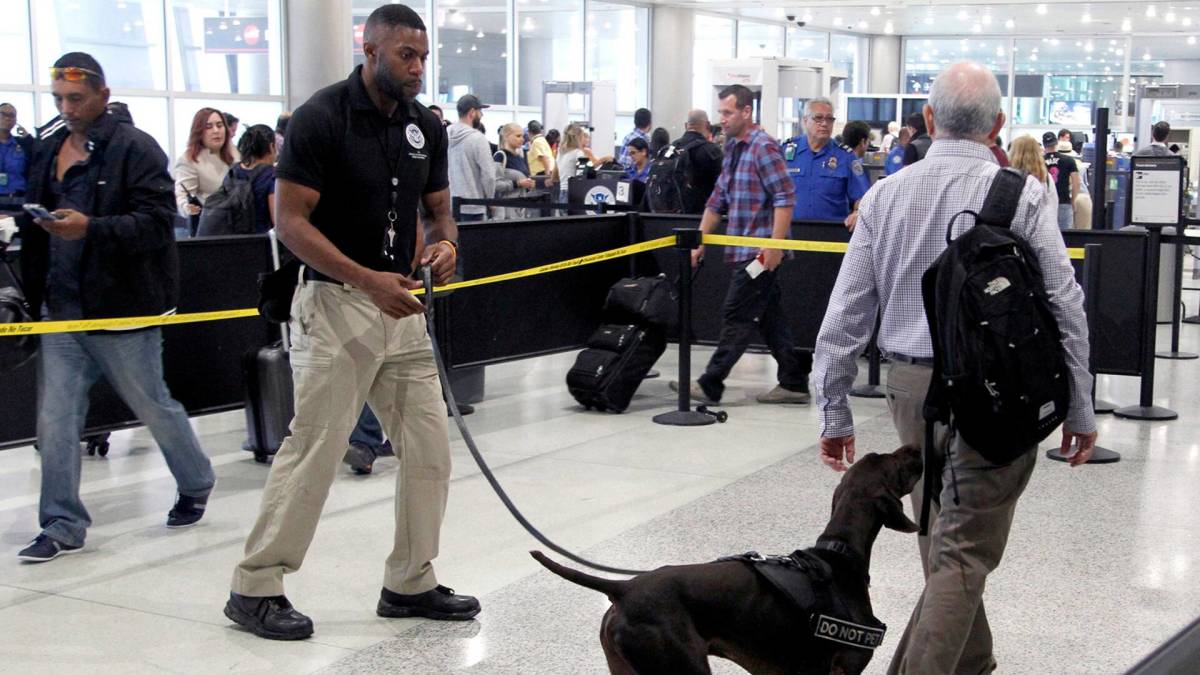 TSA officers confiscate weapons at airports in the U.S. every day.
Image source: Juste/Miami Herald/Tribune News Service via Getty Images
People try to get through TSA checkpoints with weapons every day
TSA reports that the most common reason for PreCheck revocation is passengers attempting to bring firearms — often loaded — through security in their carry-on bags.
Nearly 20 weapons are confiscated every day, and the TSA frequently publishes press releases about weapons-related security violations.
In June, TSA agents in Detroit discovered a hand grenade in a traveler’s suitcase. The security checkpoint was evacuated and closed until a TSA explosive specialist and airport law enforcement determined the grenade was inert, according to the TSA announcement.
Even replicas of explosives, such as the case with the hand grenade in question, are prohibited in both checked and carry-on baggage.
Related: The real Real ID requirements that the TSA is following
Also in June, agents in Charlotte, North Carolina, discovered a knife hidden in a walking cane and in New Hampshire, a woman was stopped because she was carrying a loaded firearm.
More Travel:
- Iconic Las Vegas Strip eatery permanently closes after long run
- Disney World adds an adults-only after-dark experience
- Popular hotel chain replaces room service with something better
“When individuals bring prohibited items to our checkpoints, it significantly slows down the security screening process for other travelers,” said TSA Federal Security Director for Michigan Reggie Stephens.
TSA issues reminders about traveling with weapons
The TSA says most people “simply forgot” their gun was in their bag. And some people may be confused about what is allowed in the state where they live vs. where they are traveling to, but it doesn’t matter.
Attempting to carry a weapon through a TSA checkpoint will result in the loss of your TSA PreCheck privileges, likely a fine, and sometimes an arrest.
Related: TSA warns passengers to avoid this popular airport convenience
“Individuals who bring a firearm to a TSA checkpoint face a maximum civil penalty of $14,950, will have their TSA PreCheck eligibility revoked for at least five years, and will undergo enhanced screening to ensure there are no other threats present, which takes up additional time,” per the TSA.
An astonishing 6,678 firearms were caught at 277 TSA checkpoints in 2024, according to the TSA. Even worse, 94% of them were loaded.
The top offenders were: Atlanta (ATL), Dallas-Fort Worth (DFW), George Bush Intercontinental Airport (IAH), Phoenix (PHX), Nashville (BNA), Denver (DEN), Orlando (MCO), Tampa (TPA), Austin, Tex. (AUS), and Dallas Love Field (DAL).
If you must travel with a weapon of any type, take the time to learn the about TSA’s firearms requirements.
Here are a few of them:
- Firearms are permitted only in checked baggage, never in carry-on luggage, even for travelers with concealed carry permits.
- Firearms must be unloaded, packed in a locked, hard-sided case, and declared to the airline at check-in.
- Research state and local firearm laws for your departure, destination, and any connecting airports to ensure compliance.
- Contact your airline in advance to understand their specific policies for transporting firearms and ammunition.
Related: TSA quietly cracks down on popular travel essential