
ThredUp launched in 2009 as a peer-to-peer marketplace for gently used children’s clothes. A decade later, it had two large distribution centers, partnerships with several designer brands, and a handful of physical locations where shoppers could peruse clothes for all genders and age brackets.
Now, nearly two decades on, the online thrift store isn’t just a niche company frequented by treasure hunters but a core player in the clothing retail game.
“Resale is no longer just growing, it’s taking direct market share,” ThredUp CEOJames Reinhart said in a statement accompanying ThreadUp’s 2026 Resale Report. “In 2025, the U.S. secondhand market grew nearly 4X faster than the broader retail clothing market.”
The implications of that tell a troubling story about consumer sentiment and behavior.
ThredUp says secondhand shopping is essential for many shoppers
For many consumers, thrift and consignment shopping has long been a choice. Rather than being driven by economic necessity, consumers have shopped secondhand out of a preference for vintage styles, concern for the environment, or a desire for a “treasure hunt” experience.
New data from ThredUp indicates this may be changing as “cost pressure is moving resale from optional to essential.”
In 2025, 59% of consumers shopped secondhand, ThreadUp’s 2026 Resale Report found. Almost three-quarters (72%) of those surveyed for the report said that rising prices are impacting their apparel spending, and 27% said they plan to increase secondhand shopping in order to further offset those prices.
Data from Placer.ai tells a similar story.
“As economic pressure continues to reshape consumer behavior, one retail segment is accelerating through the storm,” a recent report from the location analytics firm said. “Thrift stores, long viewed as a niche segment, are emerging as a core apparel channel – attracting more affluent value-seekers and a younger generation of shoppers.”
Between the second quarter of 2022 and the end of 2025, foot traffic at all thrift stores increased by 25.6%, the report continued. This far outpaced visits to luxury retailers, which grew 1.3% during the same period, and traditional retailers, which declined by 7.8%.
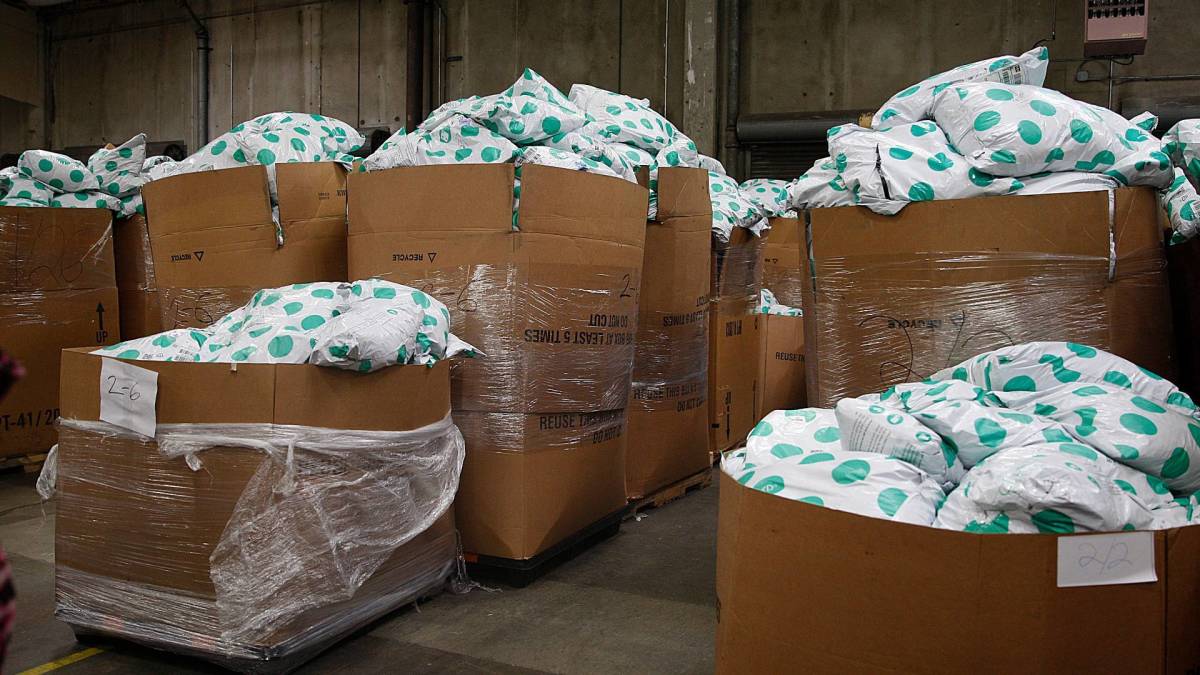 ThredUp’s 2026 Resale Report found that secondhand shopping is growing at two times the rate of traditional retail.
Getty Images
The profile of secondhand shoppers is evolving
The global secondhand market has become a $393 billion industry, representing roughly 10% of total apparel spend, ThredUp reports.
That number is only expected to grow over the next few years, and the profile of the shoppers driving that growth is surprising.
“The global secondhand market is entering a more competitive, structurally complex phase. We expect the U.S. market alone to reach $78.8 billion by 2030,” GlobalData’s Managing Director and Retail Analyst Neil Saunders said in a statement. “Gen Z and Millennials [are driving] the vast majority of this value.”
In 2025, 58% of Gen Zers and 55% of millennials prioritized buying secondhand over buying new, and a whopping 62% of Gen Zers made at least one secondhand purchase over the course of the year.
Related: Ulta makes big change customers will notice right away
This affinity for lower-priced apparel can be attributed, at least in part, to the generations’ tight financial position.
Among these generations, 7 out of 10 people feel that wealth is out of reach and survival spending has become the norm, according to a 2026 survey conducted by Beyond Finance and Operation Hope.
Additionally, 32% of the survey respondents say they have used “buy now, pay later” platforms for essentials like groceries and utilities, and 1 in 3 perceive themselves as “barely surviving” financially.
With budgets stretched that thin, it’s no surprise that thrift and consignment shopping has become such a popular way to fill closets.
But budget-conscious shoppers aren’t the only people utilizing thrift stores. The median household income of secondhand shoppers has increased significantly over the past four years, according to Placer.ai, going from $74,900 in 2022 to $75,700 in 2025.
Thrift stores are also increasingly popping up in affluent neighborhoods, and the difference between the retailer’s potential market and captured market is beginning to flatten out.
This seems to indicate that it’s not just young, and low-income earners that are feeling the pinch, but consumers across all income and age brackets.
Reselling has become a source of income
Millennials and Gen Zers aren’t just using secondhand shopping to fill their closets, they’re also turning to the practice to empty them.
In light of their strained financial positions, a growing number of Gen Zers and millennials see their closets as an asset.
“Online resale activity is increasing, particularly among younger, digitally savvy consumers,” Placer.ai’s report said. “As economic uncertainty persists, many are turning thrifting into a side hustle, leveraging low-cost sourcing and online platforms to generate income.”
More than half of resellers sell their unwanted clothing items for the additional income, ThredUp says. The trend is particularly strong among Gen Zers, who are 10% more likely to monetize their wardrobes.
More Retail:
- Taco Bell makes major menu changes
- Starbucks debuts a new drink to take on energy brands
- Costco tests checkout that could take under 10 seconds
As reselling as a side hustle continues to grow, it will have a significant impact on the apparel market as a whole.
In fact, 49% of millennials and Gen Zers told ThredUp they have already stopped purchasing low-quality apparel because it can’t be resold.
“We’re moving from a linear apparel economy toward a resale flywheel, where consumers increasingly buy with future value in mind,” Reinhart said in ThredUp’s report.
While this “resale flywheel” has acted as a safeguard against inflation for buyers and sellers, its rapid acceleration highlights a worrisome truth about the current state of the economy. Thrifting is no longer just a fun weekend hobby, but a necessary survival tactic for an American consumer base that is increasingly being priced out of the traditional retail market.