
Gold has clearly been on everyone’s radar, and Wells Fargo just backed that positive sentiment with some eye-popping numbers.
The Wells Fargo Investment Institute just bumped its year-end 2026 gold target to $6,100 to $6,300 an ounce, which is up substantially from its previous $4,500 to $4,700 range.
Doing the math, that equates to a $1,600 upward reset, or nearly a 35% hike across the band. From today’s spot price of about $4,961, Wells Fargo is essentially calling for a whopping 23% to 27% upside.
Though it hasn’t exactly been a straight line for the shiny yellow metal of late, the sentiment is far more attractive to other parts of the market, especially tech and AI stocks.
Over the past week, it has been nothing short of carnage, with the brutal selloff wiping away nearly $1 trillion from software and services stocks, Fox Business reported. In fact, some software indexes have shed more than 15% in value in days, not months.
After a couple of years of outsized gains from tech, investors are in “show me” mode with AI, seriously questioning it as a long-term profit engine for businesses.
Moreover, AI bellwether stocks like Amazon plunged about 9% after the company flagged nearly $200 billion in capital spending through 2026, according to Reuters, alongside similar numbers from other comparable tech giants.
That’s exactly why billionaire investor Ray Dalio of Bridgewater fame dismissed the recent pullback in gold prices at the World Government Summit in Dubai.
Against that backdrop, Wells Fargo’s gold price target reset makes a lot more sense, as the shiny metal doesn’t exactly need a flawless execution narrative.
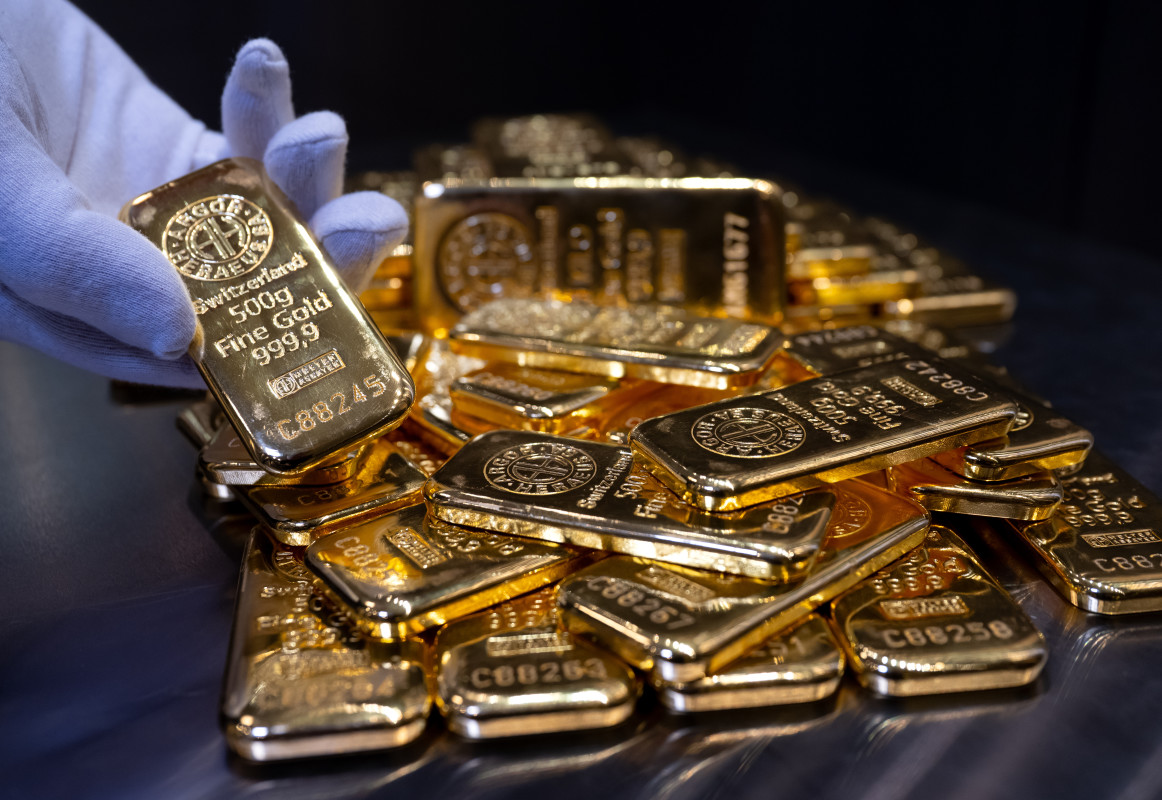 Wells Fargo sharply raised its gold price outlook, signaling continued demand amid policy uncertainty and market volatility.
Photo by picture alliance on Getty Images
The latest gold price targets map out gold’s next move
Here are the most recent gold targets, along with their upside/downside compared to the current spot gold price at $4,961/oz.
- J.P. Morgan: $6,300 (end-2026) +27.0%
- UBS: $6,200 (2026 target) +25.0%
- Deutsche Bank: $6,000 (2026 target) +20,9 %
- Goldman Sachs: $5,400 (end-2026) +8.8%
- Macquarie: $4,323 (average 2026 forecast) -12.9% Sources: Reuters, Investing, TheStreet
Gold’s wild ride makes sense once you follow the money
Gold’s recent surge and steep pullback look chaotic, but the forces behind the moves are consistent.
In particular, central banks continue to act as structural buyers (I’ll get to this in more detail in another section). Throw in a dose of geopolitical and policy uncertainty, and the case of the safe-haven investment becomes even stronger.
The rates matter as well.
Related: Morgan Stanley tweaks AMD stock price target post-earnings
Even with the spike in volatility, the markets are still pricing in at least a couple of rate cuts in 2026, which effectively lowers the opportunity cost of holding a non-yielding asset such as gold.
On the flip side, the recent bearishness was linked to a hawkish Fed-chair narrative with Kevin Warsh taking up the reins as chairman.
On top of that, crowded trade unwinding and physical demand cooling in areas such as India led to a wobble.
However, the tailwinds are still in place with central banks still buying, and uncertainty remains mostly on the higher side.
- Strong monthly gain: Gold ended Feb. 6 near $4,961/oz., according to Investing.com, up from about $4,453 on Jan. 7, posting a 11.4% return over 30 days.
- Fresh records: Within that window, gold struck a record $5,595/oz. on Jan. 29, breaking through multiple psychological levels at $5,000+ and $5,100+.
- Peak momentum: From Jan. 7 to the Jan. 29 high, gold surged nearly 25.7% at peak.
- Violent volatility: However, after topping, prices dropped to a $4,404 low on Feb. 2, which marked a 21.3% peak-to-trough drawdown in just days.
Wells Fargo sees policy uncertainty and rate shifts continuing to favor gold
Wells Fargo raised its gold target amid evolving macro conditions.
The bank sees the U.S. economy entering 2026 with stronger momentum than expected, which will lift global growth forecasts.
In that scenario, the Fed could cut rates later, not faster, which results in short-term rates falling while long-term yields rise, leading to greater uncertainty. Gold tends to thrive in that kind of environment.
Related: Bank of America resets Google stock forecast post-earnings
Then there’s policy risk to consider.
Wells Fargo points to “accelerating policy surprises” including factors such as tariffs, deregulation, and geopolitics as reasons investors may need better hedges.
Rates are playing a strong role, too.
Wells Fargo still believes there could be a couple of Fed rate cuts this year, which would lower the opportunity cost of holding a non-yielding asset.
Throw in the continued central-bank buying, which the bank expects will keep rising, and the demand picture starts to look structural.
Central banks remain a powerful, structural buyer of gold
Despite volatility in gold prices, central bank activity offers a durable demand floor for gold.
- Scale remains historically large: Central banks scooped up 863 tonnes in 2025, a slowdown from the outsized buying in prior years, but still remarkably elevated by historical standards, according to the World Gold Council.
- Precedent matters: Buying topped a mighty impressive 1,044.6 tonnes in 2024 and 1,050.8 tonnes in 2023, marking two straight years over 1,000 tonnes.
- Demand share is meaningful: WGC estimates central banks accounted for roughly a quarter of global gold demand in 2022-2023.
- China shows persistence:The PBOC added approximately 1.2 tonnes in January 2026 alone, extending a steady monthly accumulation trend (15 consecutive months of buying).