
Koji Sato, Toyota’s chief industry officer, has urged Japan’s major automakers to collaborate more closely as competition from Chinese automakers intensifies.
Sato, who is also chairman of the Japan Automobile Manufacturers Association (JAMA), believes that combining resources can reduce costs, improve efficiencies, and help Japanese automakers become more sustainable as China rapidly reshapes the automotive landscape.
While Sato did not go as far as to propose shared vehicle designs or mergers, he recommended sharing manufacturing standards and standardizing commodity components like certain plastics. By doing so, Japanese carmakers can free engineers and capital to concentrate on developing new batteries, software, and associated technologies.
Sato’s view indicates that even giants like Toyota (TM) and Honda (HMC) must rethink traditional models to remain globally competitive.
Sato’s action plan focuses on parts standardization
Sato’s strategy involves standardizing a list of commodity components across Japan’s seven major automakers. These components include steel grades, plastics, and wire harnesses. The former Toyota CEO says standardizing wire harnesses alone could improve productivity tenfold.
As things stand now, an enormous supply base must produce parts with a wide range of specifications for Toyota, Nissan, Honda, Mazda, Subaru, Mitsubishi, and Suzuki. Suppliers have to make about 70,000 wire harnesses alone, indicating the enormous complexity in the current supply chain.
More Automotive:
- China is becoming the auto industry’s innovation lab
- Toyota’s global dominance faces new test
- Toyota sends mixed message on its EV future
“Right now, the most important theme facing the Japanese auto industry is improving ‘international competitiveness,’” said Sato in a July 7 interview with the media, reports Automotive News. “We aim to strategically create ‘areas of cooperation’ to improve efficiency, thereby accelerating coexistence in the essential ‘areas of competition.’”
Standardizing these components need not compromise the brand identity of each Japanese automaker. If the proposal is approved, shared parts are not expected to be visible to customers, who will enjoy the same brand differentiation they do presently.
Toyota and Honda would remain fierce showroom rivals.
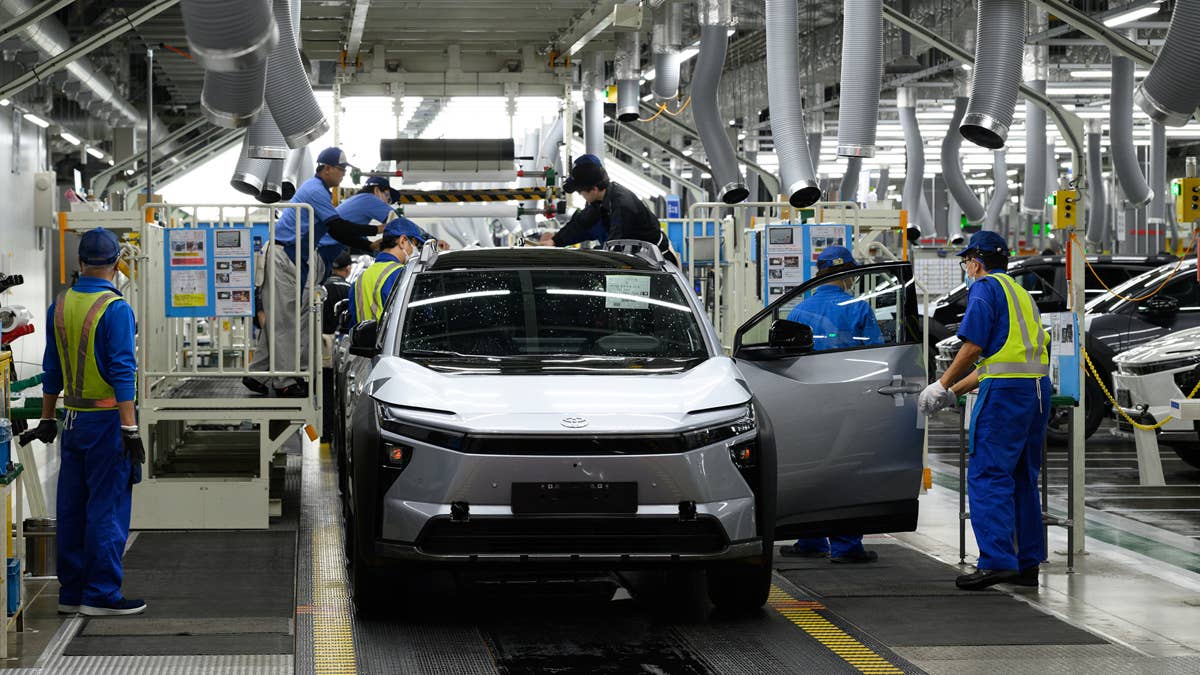 Japan Automobile Manufacturers Association Chair Koji Sato says standardizing commodity components will boost global competitiveness among major Japanese automakers.
Japan wants to avoid Europe’s auto crisis
Several European brands are scurrying to realign their businesses as newer Chinese automakers claim a bigger share of the market.
This past week, the Volkswagen group outlined plans to cut its lineup by up to 50%, according to Autoblog. As many as 100,000 jobs are on the line as the carmaker faces rising losses due to greater competition and costly investments in electrification.
Japan has not been immune to these developments.
Honda recorded its first annual loss this year due to poor EV sales and associated restructuring costs. Sato’s proposal could prevent other Japanese brands from facing a similar dilemma.
The industry shift is already underway, as Chinese brands collectively outsold Japanese vehicles in Europe for the first time in May.
Related: Mercedes’ China problem just got worse
“We have a strong sense of crisis that the Japanese auto industry is in a massive period of transition,” Sato said. “Now is exactly the time to further develop and evolve with the challenges and reform initiatives that the auto industry as a whole must face.”
While Japanese brands have historically been leaders in quality and reliability, they have been slower to adopt EVs and software-defined vehicles. By collaborating, these brands may free up the funds to focus on these areas.
Smaller Japanese brands such as Mazda and Mitsubishi could benefit most from Sato’s plan, as they lack Toyota’s purchasing power and larger footprint.
Curbing component costs lets Japanese automakers invest in batteries
In theory, Sato’s plan has several advantages for Japanese automakers. Lower component and procurement costs allows these automakers to focus on areas where they’ve traditionally lagged — and where Chinese automakers are thriving.
To remain competitive, automakers must invest increasingly in the latest battery advances— as Ford is doing with its new EV platform — faster development cycles, and automation. Simplifying logistics can contribute to this.
However, there are questions around whether Sato’s plan can be implemented quickly enough.
Related: With U.S., China lagging, Europe leads the way on EVs
Furthermore, each automaker has its own factories, platforms, and suppliers. While brands such as Toyota and Subaru have already developed some vehicles together, as Autoblog noted, Sato is asking for deeper collaboration that could be met with some resistance.
Automakers may not find common ground over who defines standards, and the plan would require supplier cooperation, too. At this stage, that’s not guaranteed.
As daring as Sato’s proposal is, it does demonstrate that traditional business models are no longer sufficient to stay competitive. This is true even for the world’s largest automakers, which are increasingly challenged by Chinese competitors.
Innovation and looking beyond established patterns have become a necessity. If the Japanese brands agree to join forces, they could redirect resources toward the technologies that increasingly impact global competitiveness.
Related: Toyota is spending $3.6B to undo a move from 5 years ago