
U.S. Treasury Secretary Scott Bessent, in a stunning turnaround for the Trump administration, says he could understand if Federal Reserve officials want to wait to observe economic developments related to the Iran war before they resume cutting interest rates.
But the secretary added he was quite confident that U.S. core inflation would continue to go down despite the war, Reuters also reported April 14. And Bessent repeated his call for the Fed to lower interest rates.
Confused?
Just the day before, Bessent said the U.S. central bank should “wait and see” before deciding whether to lower interest rates amid the war in Iran, as Semafor noted.
“Do I think rates should be lowered? Eventually. I think now that we have to wait and see,” Bessent said at a Semafor event. “But I think as we went into January [and] came out of January and February — the economy was very strong.”
President Donald Trump has spent much of his second administration demanding Fed Chair Jerome Powell and the central bank slash interest rates to 1% or lower.
The current Federal Funds Rate is between 3.50% and 3.75%, with the next Federal Open Market Committee slated for April 28-29. As I reported, the FOMC voted to hold rates steady after cutting by a quarter point in the final three meetings of 2025.
Bessent, Hassett offer opposite views of Fed rate cuts
For now, the Fed is “doing the right thing by sitting and watching” how the Iran conflict plays out, Bessent said.
National Economic Council Director Kevin Hassett said April 14 on CNBC that the president believes there is still room for the Fed to cut interest rates. That’s because he thinks oil spikes will be temporary and, following the eventual cessation of the Iran war, prices will drop back down.
Hassett also said Americans are seeing a substantial dip in grocery prices, proving that the Trump administration has a good handle on inflation.
More Federal Reserve:
(As an aside, I would like to invite the director to join me on a future grocery run which involves juggling three supermarkets for the lowest prices on the healthiest foods. Egg prices may be down, but Atlantic salmon, fresh spinach, and Icelandic yogurt are not. Then we’ll stop for gas.)
Bessent said he’s confident recent price increases won’t permanently alter how consumers view the economy.
The government said inflation rose three times faster in March than it did in February amid surging oil and gas costs, Semafor indicated. Inflation excluding food and energy, however, rose slightly less than forecasters had anticipated.
Asked whether the war in Iran would wind up being good or bad for the U.S. economy, Bessent said: “I think we will look back and say — I don’t know the number of days, whether it’s 50 or 100 or more — for 50 years of stability.”
Bessent also said he thought in February that the economy would have grown more than 4% this year. Asked whether he still thought that, he said: “Obviously, we’re going to have some make-up to do.”
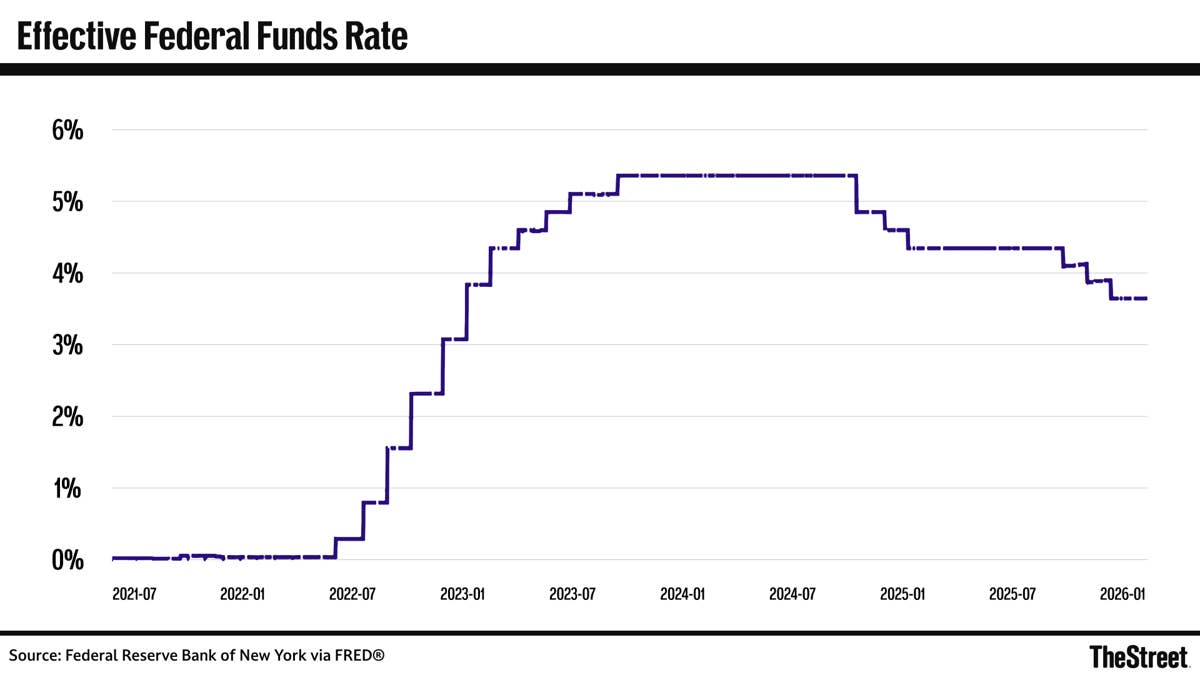
Federal Reserve Bank of New York via FRED®
Iran war causes risks to both jobs, prices
The U.S. Consumer Price Index rose 0.9% in March and 3.3% from a year earlier. The Fed’s preferred inflation gauge, the Personal Consumption Expenditures price index, was running at roughly 2.8% annually, highlighting persistent price pressures, despite earlier signs of cooling inflation.
Even before the outbreak of the Iran war, the Fed faced a dilemma from worrisome risks to both sides of its congressional mandate: unemployment rates and sticky inflation from tariffs.
Several Wall Street firms say inflation will now be closer to 3% this year than the Fed’s 2% target, Bloomberg reported March 25, eating into disposable incomes and keeping a lid on hiring.
That’s a shift from what was supposed to be a strong year in 2026 as the inflationary shock of President Donald Trump’s tariffs faded and stimulus from tax cuts kicked in.
Even if the Iran war ends soon, economists say the damage already done will keep the U.S. economy on a narrow footing, with job seekers and lower-income consumers alike continuing to struggle as its ripple effects upend prices and jobs.
What the Fed dual mandate requires for jobs, prices
The Fed’s dual congressional mandate requires it to balance full employment and price stability.
- Lower interest rates support hiring but can fuel inflation.
- Higher rates cool prices but can weaken the job market.
Related: Fidelity delivers sobering interest-rate message amid Fed pause
The two goals often conflict, operate on different timelines and are influenced by unpredictable global events such as pandemics and wars.
The Fed’s March median Summary of Economic Projections or “dot plot” calls for a single quarter-point rate cut in 2026, and an additional quarter-point cut in 2027, the same as the December 2025 forecast.
The CME Group FedWatch tool on April 14 reported two quarter-point rate cuts this year, one in October and the other in December.
IMF downgrades 2026 growth forecast due to Iran war
The International Monetary Fund on April 14 downgraded its growth projection for the year, according to Bloomberg. This comes after the Iran war triggered a major oil shock and included the possibility of a downturn if the conflict drags on and energy infrastructure is severely damaged.
Global gross domestic product is now expected to rise 3.1% this year, compared with 3.3% predicted in January, the Washington-based fund said.
That’s assuming a relatively short-lived conflict and moderate gain in energy prices this year.
“The global outlook has abruptly darkened following the outbreak of war in the Middle East,” the fund said in its annual report.
Related: Oil, inflation threaten Fed interest-rate cuts under Warsh