
For Tesla, CEO Elon Musk‘s relationship with the White House has gone from advantageous to a liability and back to advantageous again in the short span of 18 months.
This week, a few decisions by the National Highway Traffic Association could be a huge benefit to Tesla.
It was about a year and a half ago when Elon Musk officially endorsed President Donald Trump. Between spring 2024 and the November election, Musk spent over a quarter of a billion dollars to help get Trump elected.
Tesla compensation performance benchmarks for CEO Elon Musk
- 20 million Tesla vehicles delivered
- 10 million active FSD subscriptions
- 1 million Optimus robots delivered
- 1 million Robotaxis in commercial operation
- $400 billion of Adjusted EBITDA over four separate quarters
While that is a lot of money for any election by any measure, it is simply a rounding error for a man of Musk’s $700 billion wealth and a small price to pay for the influence it has granted him.
However, 2025 didn’t exactly unfold according to plan, as Elon Musk left his position at the Department of Government Efficiency and burned some bridges on his way out of Washington, D.C.
However, when you are the world’s richest man, no relationship is unsalvageable. Musk has returned to endorsing MAGA policies on his social media platform, and Trump has gone back to inviting Musk over for dinner at the White House, according to Bloomberg.
But free meals aren’t the only benefit Musk’s Washington D.C. ties have granted him.
Musk caused a stir earlier this year when, at his direction, DOGE fired about 30 members of the National Highway Traffic Safety Administration, the government agency that regulates original equipment manufacturers like Tesla.
One worker said at the time that the firings could “weaken NHTSA’s ability to understand self-driving technologies,” The Verge reported.
In September, the U.S. Senate voted 51-47 along party lines to confirm Jonathan Morrison as the 17th leader of the National Highway Traffic Safety Administration.
This week, we got a glimpse into how the agency’s new director will handle one of its most high-profile wards.
 Tesla requested that the National Highway Traffic Safety Administration grant it more time to review records of consumer complaints, field reports, crashes, and related issues.
Photo by CFOTO on Getty Images
NHTSA gives Tesla 5 more weeks to comply with investigation
On Friday, Jan. 16, the NHTSA granted Tesla a five-week extension to respond to its investigation into Tesla Full Self-Driving (Supervised) traffic violations.
The agency delayed the deadline for key responses to its investigation until February 23 after Tesla requested more time to review thousands of records. The NHTSA first opened its preliminary investigation into Tesla in October, and in December, it sent it a request seeking information on consumer complaints, field reports, crashes, lawsuits, and internal assessments related to alleged violations involving FSD.
Related: Tesla turns to surprising partner for critical new hardware
Earlier this week, Tesla said 8,313 records still needed to be reviewed and that it could process about 300 of them per day. Assuming a five-day workweek and a rate of 1,500 records per week, Tesla may need another extension in five weeks.
Tesla has also said that the multiple NHTSA investigations into the company are also hampering the speed at which it can respond to its latest request.
Whether that excuse will work remains to be seen.
Luckily for President Trump and Tesla CEO Elon Musk, after Senate Republicans blocked Ann Carlson, President Joe Biden’s nominee for the National Highway Traffic Administration, Biden never tried to fill the position again.
So for nearly three years, the NHTSA had an acting director.
The Senate confirmed Jonathan Morrison the lead the agency in September.
Current NHTSA head has clashed with Elon Musk in the past
Morrison, formerly a lawyer at Apple and the NHTSA’s chief counsel during President Trump’s first term, says he plans to be a proactive agency leader.
“NHTSA cannot sit back and wait for problems to arise with such developing technologies, but must demonstrate strong leadership,” Morrison said after he was confirmed in 2025.
During Trump’s first term, Morrison penned a strongly worded letter responding to a Tesla blog that claimed the Model 3 had the “lowest probability of injury of any vehicle ever tested by NHTSA.”
Related: Elon Musk’s special treatment derails Senate hearing on auto affordability
Morrison’s letter, which was made public through a Freedom of Information Act request, said that the statement “could be interpreted as misunderstanding safety data, an intention to mislead the public, or both.”
While Morrison didn’t pull any punches about Tesla’s claim, that interaction came at a time when Trump and Musk didn’t have a close relationship.
The two have a much closer relationship now, so the NHTSA’s relationship with Musk will undoubtedly draw scrutiny.
Tesla is already pretty popular at the NHTSA
Tesla is already popular at the NHTSA. The electric vehicle maker had ranked fourth in open NHTSA investigations, with four. Honda, Ford, and Chrysler rank ahead of Tesla with 8, 5, and 5 investigations, respectively.
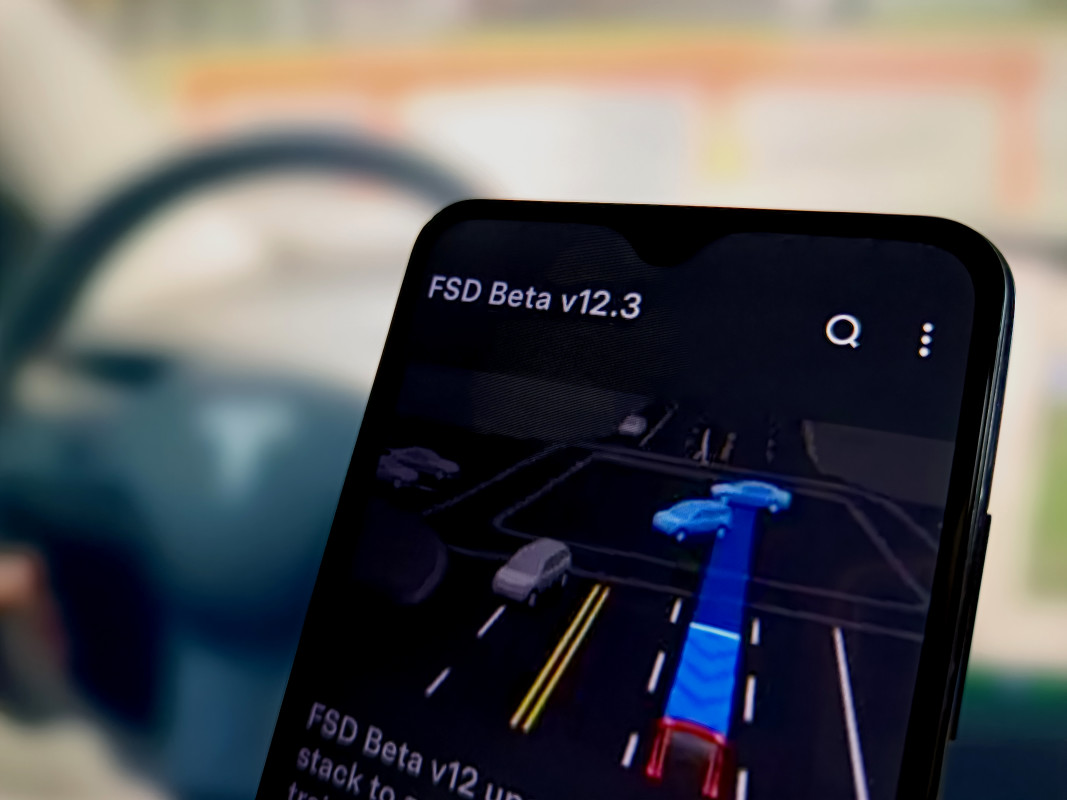
The Tesla investigation from October concerns 2.88 million Teslas equipped with Full Self-Driving, following more than 50 reports of traffic-safety violations and a series of crashes.
Related: Ford debuts plan to leapfrog key Tesla tech
The agency says its investigation will focus on “whether certain driving inputs within the control authority of FSD forestall the driver’s supervision when they are unexpectedly performed.”
Even though Tesla says FSD requires drivers to pay attention and intervene when necessary, the NHTSA says it has received reports that the technology has “induced vehicle behavior that violated traffic safety laws.”
Those reports fall into two categories, according to the agency.
“The first…scenario involves a vehicle …proceeding into an intersection in violation of a red traffic signal. The second…involves FSD commanding a lane change into an opposing lane of traffic,” the NHTSA said.
The NHTSA Office of Defects Investigation also identified six crash reports in which an FSD-engaged Tesla ran through a red light. Four of those accidents resulted in one or more reported injuries.
The ODI has also identified two Standing General Order crash reports, 18 complaints, and two media reports alleging an FSD-engaged Tesla swerved into the opposing travel lanes during or following a turn, or attempted to turn onto a road in the wrong direction, despite the presence of wrong-way road signs.
In January, the NHTSA opened an investigation into 2.6 million Tesla vehicles over reports of crashes involving a feature that allows users to move their cars remotely.
In August, it was reported that the Office of Defects Investigations was investigating “numerous incident reports submitted by Tesla in response to Standing General Order 2021-01, in which the reported crashes occurred several months or more before the dates of the reports.”
In September, the NHTSA announced that it is in the second phase of its three-step process to issue a recall on the popular Tesla Model Y over an electrical issue that could cause the door handle to fail.
Related: Elon Musk must deliver on Tesla promise in 2026, Deutsche Bank says