
Tariffs might be heading to the Supreme Court, but that’s not stopping President Donald Trump from imposing targeted tariffs on heavy-duty trucks, kitchen and bathroom cabinets, and imported drugs.
On Oct. 1 a new 100% tariff is set to apply to branded and patented drugs that are imported by companies that don’t have U.S.-based manufacturing facilities or plans to build them.
The new levies target America’s dependence on pharmaceutical imports, analysts say. And even before they’re taking effect, the threat is stirring action from the industry.
While many multinational pharmaceutical and biotech firms already boast some sort of domestic manufacturing footprint, American companies are committing billions to R&D, manufacturing and supply chains. Even before the new tariff announcement, Johnson & Johnson (JNJ) and Eli Lilly (LLY) committed to invest $55 billion and $30 billion.
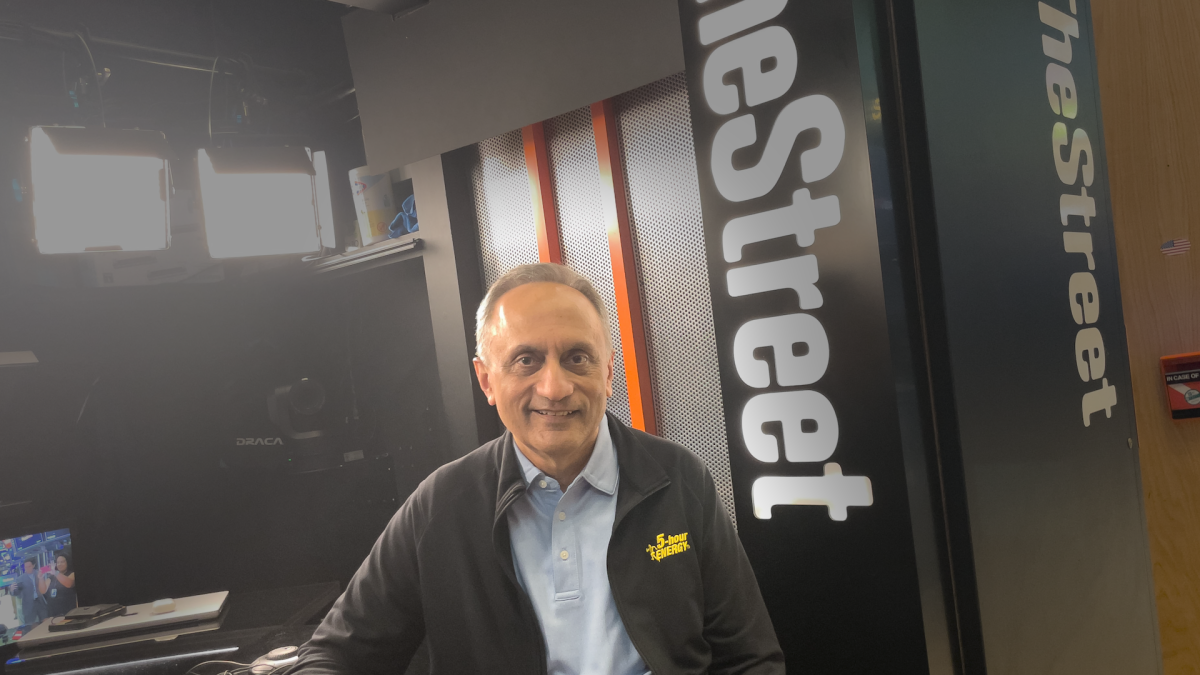 Manoj Bhargava, majority owner of Arena Group, parent of TheStreet, at the NYSE.
Jacqui Frank
They’re not alone, either. Reflecting the realities of trade policy, international firms are also pulling out their checkbooks, seeking to build capacity closer to the world’s most valuable pharma market. The U.K.’s GSK (GSK) and AstraZeneca (AZN) , Switzerland’s Roche (RHHBY) and Novartis (NVS) , and France’s Sanofi (SNY) have committed billions of their own.
In total, The Wall Street Journal reports, commitments from big pharma exceed $350 billion, with most of that spending expected by the end of the decade.
Tariffs Change Production Equation: Bhargava
Those investments are a departure for the industry, which has long relied on importing drugs. “Most drugs consumed in the U.S. are made overseas, not because it’s more efficient but because of taxes,” Manoj Bhargava, the founder of Michigan-based HANS Scientific, said. “With the recently announced tariffs, [the] equation changes.”
HANS Scientific is among the companies positioning for more pharma reshoring. It recently announced more than $2 billion in U.S. investments in Michigan, which will grow its manufacturing footprint to seven facilities from one.
With the investment, Bhargava expects more high-paying jobs for American workers will follow. “Unlike manufacturing consumer goods or toys, pharmaceuticals create high-paying jobs,” Bhargava said.
It’s unlikely to stop with branded medications, too. Bhargava, who is majority owner of Arena Group, AREN parent of TheStreet, warns that offshore generics manufacturers might be in for a rude awakening as the administration targets that market, which accounts for 90% of Americans’ prescriptions.
Concern About Drug-Ingredient Shortages
During the pandemic many of those cheaper generic drugs showed up on the Food and Drug Administration’s Drug Shortages List, stirring concern about America’s reliance on imports of active ingredients.
Trump’s new levies come after years of efforts to reshore domestic capacity in key industries like advanced manufacturing and semiconductors.
But pharmaceuticals have also emerged as an industry of concern, particularly after the Covid-19 pandemic sent shockwaves through the global supply chain. A 2021 study from Washington University in St. Louis called the lack of domestic capacity to produce active ingredients a “national security issue.”
As a result, bringing drug manufacturing back to the U.S. has become a bipartisan issue. The Biden administration looked to provide incentives for reshoring with subsidies. The Trump administration has taken a punitive approach — invest in America or pay up.
The Trump tariffs are a subject of legal debate and a Supreme Court case is on the docket for November. But with billions in commitments from American businesses in the pipeline, even a change in the administration’s central economic policy is seen as unlikely to unwrite those checks.