
It’s the only season that comes four times a year: Every three months, companies and investors gear up for quarterly financial results.
💵💰Don’t miss the move: Subscribe to TheStreet’s free daily newsletter 💰💵
Since 1970 the U.S. has required public companies to report earnings every quarter. The previous requirement, dating to 1955, was semiannual reporting.
“Timely and accurate financial information is the lifeblood of financial markets,” the CFA Institute, which certifies Chartered Financial Analysts, says in a post on its website.
“Quarterly reporting of financial information creates a more level playing field for access to financial information between insiders and outside investors and shareowners, and ultimately promotes greater investor confidence and improved capital allocation,” the organization says.
Others don’t share that opinion, including President Donald Trump, who during his first term had called on the Securities and Exchange Commission to adopt semiannual reporting.
The proposal never materialized, but now Trump has revisited the issue.
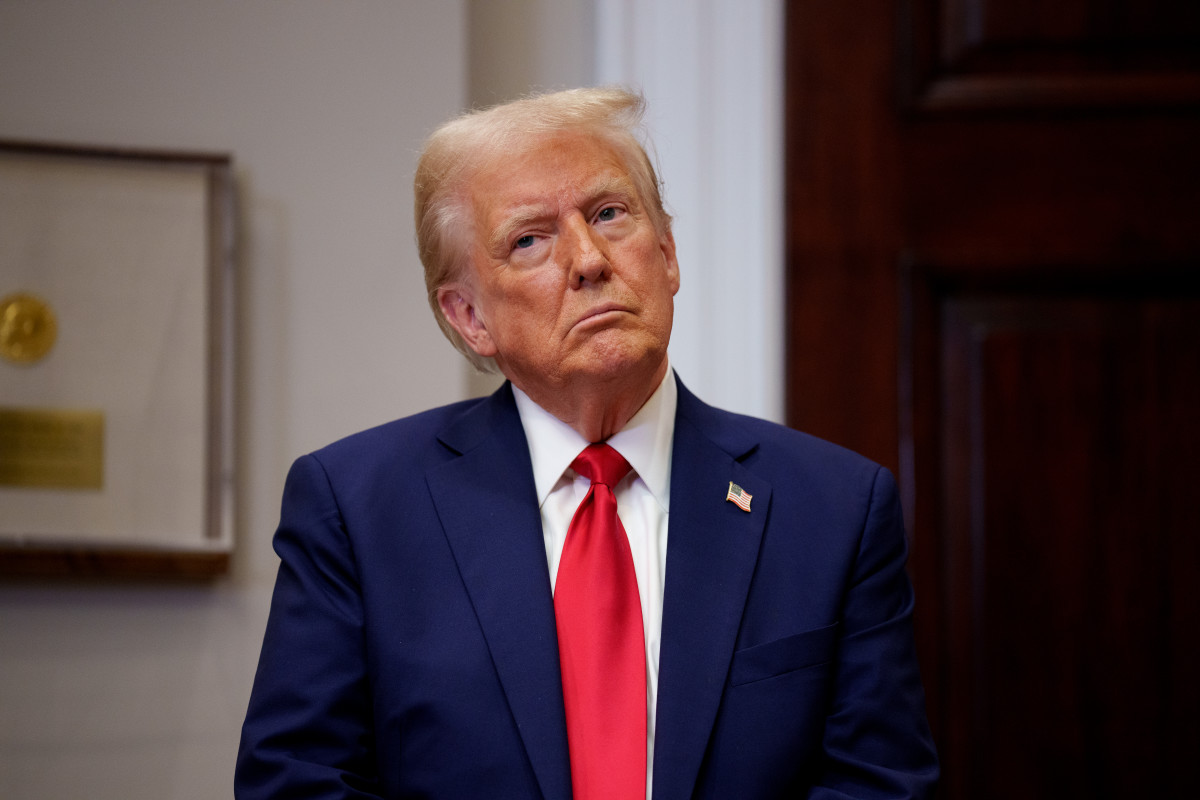 President Donald Trump has renewed his call for companies to report their earnings every six months instead of quarterly.
Andrew Harnik/Getty Images
Professor: Reporting rule ‘onerous, unnecessary’
“This will save money, and allow managers to focus on properly running their companies,” Trump said in a social media post.
“Did you ever hear the statement that “China has a 50 to 100 year view on management of a company, whereas we run our companies on a quarterly basis???” Not good!!!”
James Mohs, associate professor of accounting and taxation at the University of New Haven, said that if you believe in the efficient-market theory, then “you accept the idea that everything about every investment is known at any time and more importantly baked into the pricing and trending.”
“I am a proponent of the efficient market theory and believe that with today’s technology a six-month reporting requirement would be appropriate,” he said. “The three-month requirement seems somewhat onerous and unnecessary.”
Related: Paramount bid chatter about Warner Bros. continues media trend
Mohs noted that all interim SEC reporting is between the company and the SEC, adding that shareholders and investors need to go to the regulator’s website for Form 10-Q quarterly reports.
“From a corporate standpoint the quarterly SEC reporting is not only expensive but forces executives to think and plan for the short term and move away from longer-term strategic planning,” he said.
“Having spent many years in corporate reporting and tax, I have seen this firsthand and agree that six-month reporting makes sense.”
The Long-Term Stock Exchange, a stock-trading venue for companies focused on long-term goals, told The Wall Street Journal that it plans to petition the SEC to eliminate the quarterly earnings report requirement and instead give companies the option to share results twice a year
“This is an idea whose time has come,” Bill Harts, the exchange’s CEO, said.
TheStreet Pro’s Guilfoyle tweaks reporting proposal
Lawrence Cunningham, director of the University of Delaware’s Weinberg Center for Corporate Governance, said he has long advocated for the longer reporting periods.
“Quarterly reporting increases short-termism,” he said. “The only ‘investors’ who study quarterly results are short-term traders.”
“Long-term investors examine yearly data, or perhaps semiannual data, which is the norm in Europe and preferred by some distinguished US investors, including Warren Buffett,” he added.
At a minimum, Cunningham said he would encourage the SEC to consider experimenting with limiting its quarterly reporting requirement “to certain sectors or for certain topics where the concerns about short-termism may be slighter, to study its effects, both benefits and costs.”
Buffett, CEO of Berkshire Hathaway (BRK.A) (BRK.B) , said in a 2018 interview with CNBC that while he likes getting corporate reports, he doesn’t like guidance, or companies’ estimating their outlooks.
Related: AI lawsuit against Google parent Alphabet highlights growing legal trend
“I think the guidance leads to a lot of bad things, and I’ve seen it lead to a lot of bad things,” the Oracle of Omaha said a few weeks after Trump had first proposed the change.
TheStreet Pro’s Stephen “Sarge” Guilfoyle also has long argued for less frequent financial reporting, but he said he’d largely given up on anyone else taking up the cause.
He does tweak the idea. “Six months is too long in my opinion,” he said. “I don’t believe a move from reporting every three months to every four months would negatively impact transparency to any significant degree.”
The longtime trader, whose career dates back to the floor of the New York Stock Exchange in the 1980s, said the change would have a notably positive impact “on the costs and efforts associated with putting on a regularly scheduled dog-and-pony show.”
“An extra month in between reports would also give C-Suite executives more time to focus on their actual function, and implement corporate strategies as opposed to constantly having to prioritize pleasing Wall Street.” the veteran trader said.
Related: The stock market is being led by a new group of winners