
In September, I reported on the Transportation Security Administration’s (TSA) major decision to remove certain gate restrictions that have been in place for 25 years.
The TSA had introduced the Gateside by TSA PreCheck program, which allows PreCheck members who are not flying to access the terminal beyond airport security. Non-travelers had generally been barred from the secure side of airports since the TSA was created after the 9/11 attacks.
Although the program was largely welcomed by casual travelers, more frequent flyers expressed worry that it would crowd terminals and slow down security lines.
Without much public attention, the program was introduced in September across 13 airports, with a plan to expand across other airports in phases.
TSA expands Gateside to hundreds of airports, then scales back to original 13
In October 2026, the TSA quietly expanded the program to hundreds more airports, CNN reported.
There was no single announcement or press release by the TSA confirming such a large expansion.
Instead, several airports outside the initial 13 pilot sites published official updates in October announcing they were joining the program. In California, Norman Y. Mineta San José International Airport shared visitor guidelines offering daily security checkpoint passes to non-traveling members.
On the East Coast, Pittsburgh International Airport announced that PreCheck members could enter its post-security areas to dine, shop, and visit gates without a boarding pass.
Other airports quickly alerted travelers to their newly added gate-access perks. Piedmont Triad International Airport confirmed it was selected for the program, allowing companions to walk loved ones directly to departure gates.
Similarly, Tulsa International Airport posted instructions detailing how local visitors could request free daily passes to enter post-security areas.
Now, it appears that TSA has scaled back the project to the initial 13 participating airports, CNN reported.
“TSA recently returned Gateside by TSA PreCheck operations to the original 13 participating airports, at least for the time being,” the Denver airport said in a statement to CNN.
TSA has not yet provided a reason for the change and didn’t respond to CNN’s request for more information.
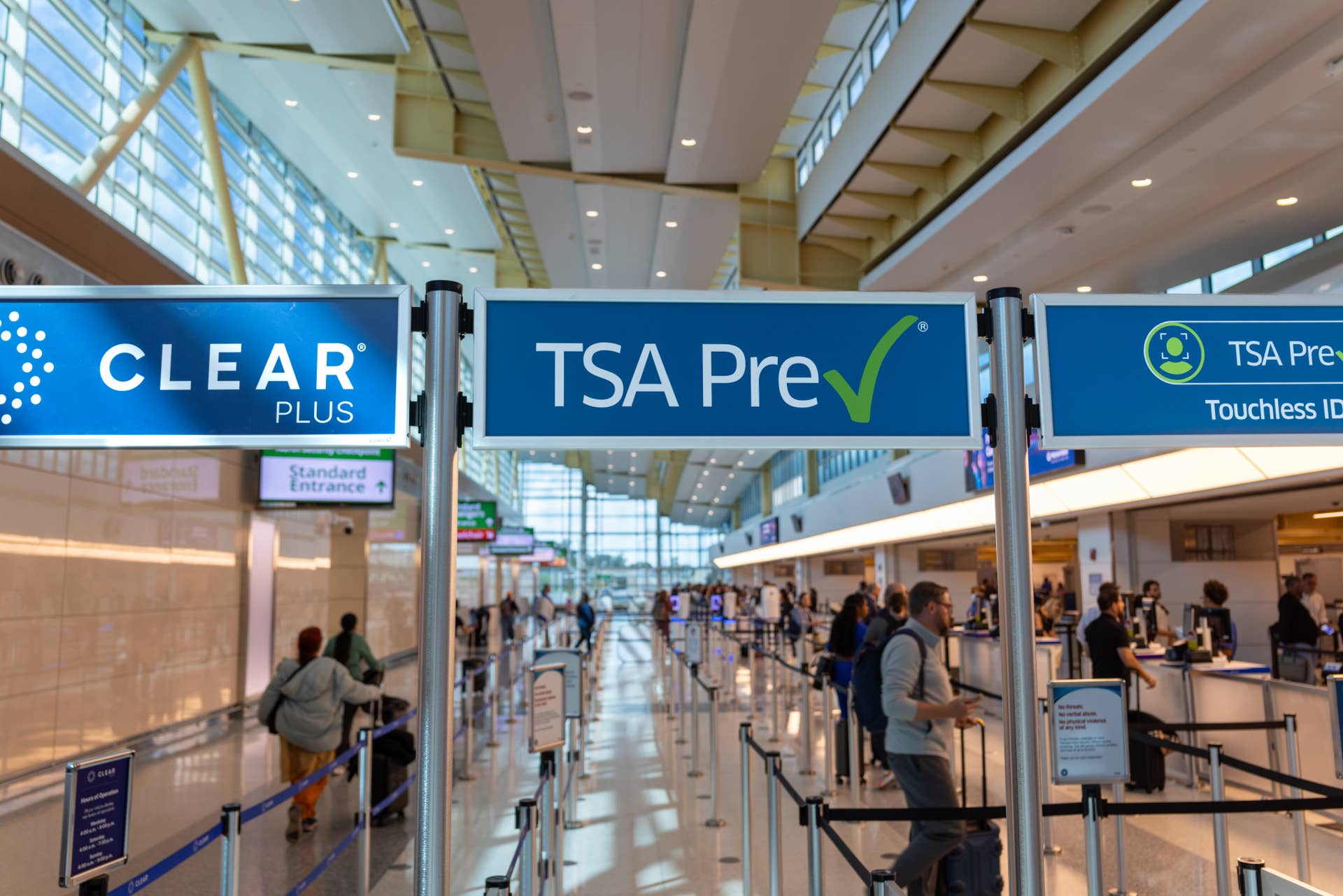 TSA expands Gateside to hundreds of airports, then scales back to the original 13.
Greggory DiSalvo / Getty Images
One airport learns it was dropped from the program through social media, emails
CNN further reported that Norfolk International Airport (ORF) in Virginia only realized it had been dropped after people emailed or posted online that they couldn’t find ORF in the application portal.
“We received a few comments on social media and emails from people who said they recently tried to apply via the TSA’s online portal but found ORF was not among the available airports. I logged in to check these claims and likewise did not see ORF in the pulldown menu,” the airport’s Chief Marketing and Communications Officer Chris Jones told CNN.
Here’s some of my other recent travel news coverage:
- Low-cost airline Wizz Air exits 2 major markets until March 2027
- Marriott finally fixes major pain point for key travelers
- Delta Air Lines expands flight options while delaying one highly anticipated route
An airport must be listed on the Gateside website for people to apply for a pass.
Here is how the process works: Active TSA PreCheck members can get a free, single-day gate pass without buying a plane ticket. Members must apply online one to three days in advance, as same-day walk-ins are not permitted.
The program is currently limited to 13 airports, and approved guests must still clear standard PreCheck security screening.
Which airports still offer Gateside by TSA PreCheck benefits?
“As an exclusive benefit for our most trusted travelers, this new program makes it easier to return to the gate for welcomes and send-offs, meet friends during a layover, and enjoy dining and shopping along the way, bringing back the moments that once defined air travel,” reads the TSA’s official page on the program.
Airports included in the program:
- Mesa Gateway Airport (AZA) in Arizona
- John Glenn Columbus International Airport (CMH) in Ohio
- Dallas Fort Worth International Airport (DFW) in Texas
- Detroit Metropolitan Wayne County Airport (DTW) in Michigan
- Wichita Dwight D. Eisenhower National Airport (ICT) in Kansas
- Indianapolis International Airport (IND) in Indiana
- Harry Reid International Airport (LAS) in Nevada
- Los Angeles International Airport (LAX) in California
- Bill and Hillary Clinton National Airport (LIT) in Arkansas
- Will Rogers International Airport (OKC) in Oklahoma
- Eppley Airfield (OMA) in Nebraska
- San Diego International Airport (SAN) in California
- Salt Lake City International Airport (SLC) in Utah
Safety unlikely reason for scaling back, says travel expert
Travel expert Gary Leff believes the abrupt rollback of the Gateside program wasn’t driven by actual security concerns.
He pointed out that the TSA still allows the practice at the original 13 pilot airports. Since PreCheck members are already vetted and still have to go through PreCheck screening at the checkpoint, he argues that buying a flight ticket doesn’t make someone less of a threat.
“The only real argument for limiting gate access is managing the number of people TSA has to process. Everyone gets screened when they go through,” Leff wrote.
Instead, Leff suspects the program was scaled back due to internal bureaucratic issues or poor execution. He suggests that the expansion to roughly 300 airports may have happened without full agency buy-in, leading to infighting.
He also suggested that the TSA may not have prepared the airports, since local checkpoint staff reportedly had not been trained on the system and were turning away approved visitors.
Leff believes that capping visits during busy periods is a simple fix. Rather than scaling the program back, he suggests the TSA could just offer entry slots to non-flyers during quieter, off-peak hours.
Related: Royal Caribbean changes its cancellation rules, and it could cost you more
