
President Donald Trump has been using his bully pulpit against the Federal Reserve in recent weeks to no avail.
The U.S. central bank once again defied the president when it left monetary policy and interest rates unchanged at its fifth scheduled Federal Open Market Committee (FOMC) meeting on July 30.
President Trump has said that high interest rates are holding the country back. During Covid, the Fed cut and held interest rates at or near 0% for years.
Related: 1 in 5 new car shoppers are committing a big financial blunder
Interest rates that low encourage buyers to spend on big-ticket items like homes and cars, which in turn boost the economy.
However, the Fed argues that the economy is doing well enough at this point not to need that type of stimulus. From 2022 to 2023, the Federal Reserve raised rates a total of 11 times.
The Fed often refers to its “dual mandate” of low inflation and maximum employment. But last week, it noted that “the unemployment rate remains low, and labor market conditions remain solid,” though inflation is still “somewhat elevated.”
Still, the median expectation was for two rate cuts in 2025, and the Fed Funds Rate of 4.25% to 4.50% has remained unchanged for five consecutive FOMC meetings this year.
Banks take their cue on loan rates from the Federal Reserve. So while the Fed rate doesn’t directly affect auto loan rates, it does affect the rate at which banks lend to each other, affecting the customer’s loan rate.
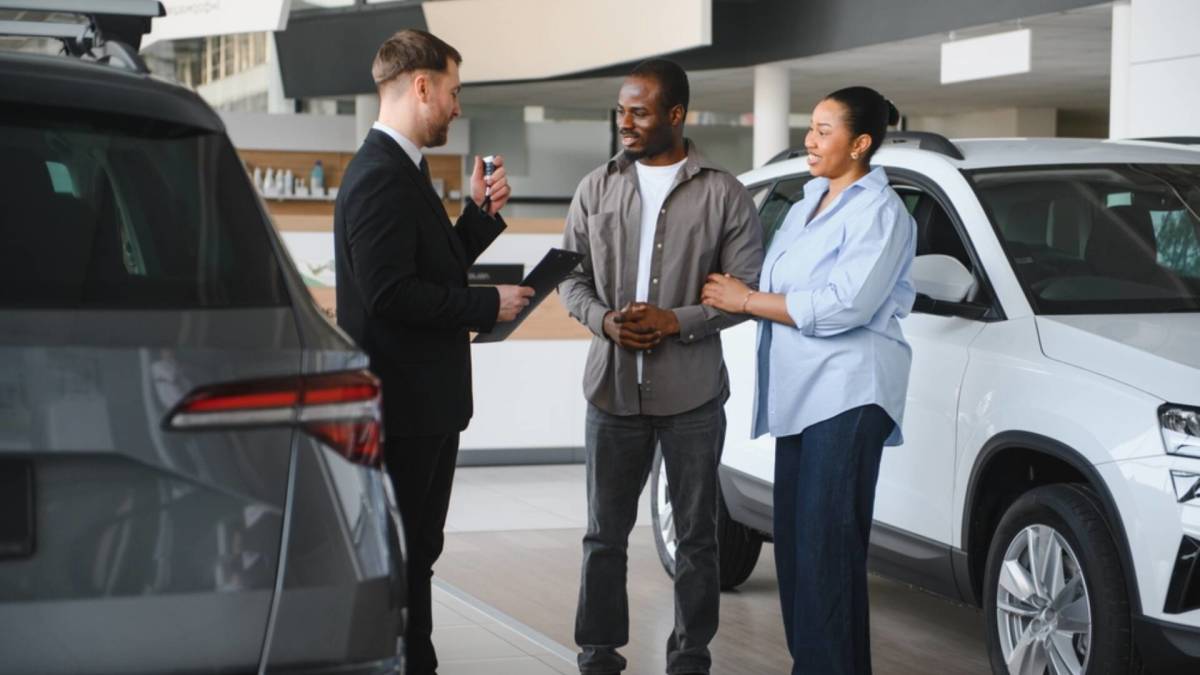 Even most buyers with ‘very good’ credit scores aren’t scoring 0% APR.
Image source: Serhii/Shutterstock
Consumers with good credit are getting better rates
Federal interest rates don’t directly affect the deal you can get on a new car, but a new Cox Automotive study suggests that consumers with higher credit scores could get better deals.
“It is highly likely that, with sales slowing, consumers will benefit from attractive financing offers for the rest of the summer, but the catch is that those offers are typically only available to well-qualified buyers,” said Jonathan Smoke, Cox Automotive chief economist.
Cox’s data shows that only about 7% of consumers financing new vehicle purchases are locking in a 0% annual percentage rate.
Related: Luxury carmaker begs UK government to stand up to tariffs
Meanwhile, the average new auto loan rate is above 9%. Even consumers with “very good” credit scores, above 760, were getting 5.4% rates in July. But that rate is still the lowest it has been since September 2022.
Auto buyers are starting to feel the pain of tariffs
Car dealers have relied on incentives to combat the expected loss in demand from the 25% auto tariffs President Trump announced in April.
“People are buying cars because they think tariffs are coming,” one Mazda dealer said.
Auto sales climbed sharply through the first half of the year as consumers were motivated by the incentives and the need to buy vehicles before any tariff-related price increases.
More automotive:
- Ford CEO Jim Farley supports US tariffs despite $2 billion cost
- EU and US automakers both lose big in latest tariff deal
- Tesla faces ‘unprecedented’ downturn in one key area
A recent Bank of America note, however, suggests that the good times are slowing, as consumer vehicle loan applications declined from their peak in April, “suggesting that ‘buying ahead’ has largely run its course.”
Like Cox, BofA expects lower-income and younger buyers to feel the most pain. Its data shows that median car payments have grown faster than new and used car prices since 2019.
Shockingly, of those households with a monthly car payment, 20% have a payment over $1,000.
New car affordability rebounded in June despite tariffs
The auto tariffs are extremely expensive.
But automakers, at the White House’s behest, have chosen to swallow much of the pain for now.
“Tariffs remain a major headwind for vehicle affordability,” said Smoke in July. “Even with some trade relief, the added cost – up to $5,700 per imported vehicle – hits the most affordable models hardest, limiting options for price-sensitive buyers.“
“We are in the early stages of seeing how manufacturers deal with these added costs, but we do not believe that the American consumer can absorb it all.”
Related: New car buyers are finally starting to feel the pain from tariffs