
July 4, 2025, will be remembered not only for the annual celebration of America’s independence, but also for President Donald Trump’s signature on the controversial One Big Beautiful Bill Act (OBBBA).
The over 900-page bill, viewed by many as problematic, was one reason for a big feud between the president and Elon Musk, Tesla CEO and a former unpaid special government employee who led the Department of Government Efficiency (DOGE).
💵💰Don’t miss the move: Subscribe to TheStreet’s free daily newsletter 💰💵
Among the most controversial parts of the act are trillions of dollars in tax cuts, large cuts to funding for Medicaid and other programs, and increased spending for immigration enforcement.
The independent Congressional Budget Office (CBO) projects that changes to Medicaid could cause 11.8 million people to lose health insurance over the next decade.
The CBO also estimates that the OBBBA adds a massive $7 trillion a year in spending, while generating around $5 trillion in revenue. This suggests that debt relative to gross domestic product (GDP) will increase, leading to further economic distress.
Legendary fund manager and longtime Wall Street icon Ray Dalio recently commented on the law, saying it “will lead to either a big squeezing out (and cutting off) of spending and/or unimaginable tax increases, or a lot of printing and devaluing of money and pushing interest rates to unattractively low levels.”
Given the scope of the bill, experts have yet to figure out its wide range of impacts.
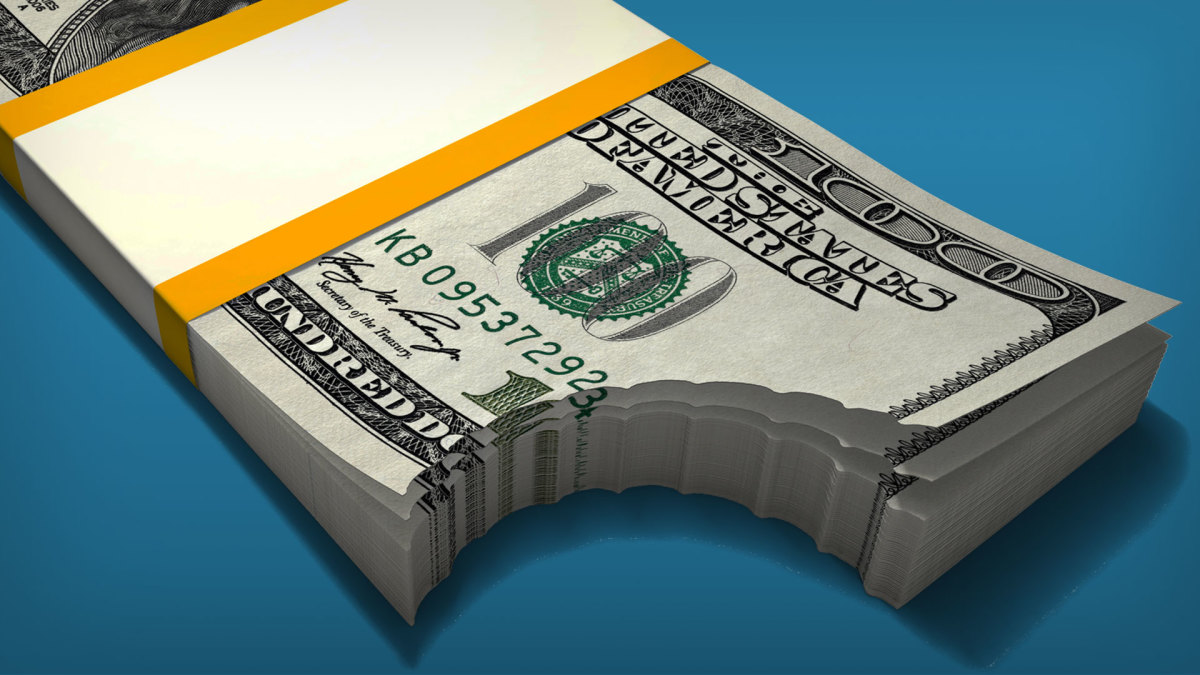 A significant loss in international visitor spending this year will impact not only U.S. travel and tourism, but also the overall economy, affecting businesses, jobs, and communities from coast to coast.
Image source: Getty Images/TS
The One Big Beautiful Bill Act’s impact on the U.S. tourism industry
In 2022, the travel and tourism industry contributed $2.3 trillion to the U.S. economy or 2.87% of the country’s gross domestic product, according to the International Trade Administration.
The industry supports around 9.5 million jobs.
Related: Supermarket inflation: Beef prices soar as egg prices fall
The OBBBA increases the price of an Electronic System for Travel Authorization (ESTA) from $21 to $40. ESTA is required for visitors from 42 countries who can travel to the U.S. without a visa.
The $40 price includes $10 for administrative expenses, $13 for the general fund, and $17 for the Travel Promotion Fund. However, transfers for the Travel Promotion Fund are limited to $20 million, with the excess going to the general fund. This makes the balance a “tourism tax rather than a marketing fee,” writes View From The Wing.
The increase might not seem significant compared to the overall expenses of international travel, but for a family of four, it is a noticeable $160, versus $84 previously.
In addition, the law aims to reduce funding for the Corporation for Travel Promotion (Brand USA) by 80% through FY2027. Brand USA works to promote the U.S. as a travel destination and attract more visitors. Federal funding for Brand USA comes from ESTA fees.
Now, ESTA fees are going up, but funding for Brand USA is decreasing.
U.S. tourism industry was suffering even before OBBBA
Another provision in the OBBBA requires Washington, D.C., airports to pay more to the federal government. Section 40007 increases the amount of Metropolitan Washington Airports Authority (MWAA)’s lease payment for Ronald Reagan Washington National Airport and Washington Dulles International Airport.
Under the new law, MWAA must pay $15 million per year (adjusted annually for inflation) starting in 2027. Currently, it pays $7.5 million per year.
The Covid pandemic was a huge blow for the travel industry globally, with the number of flyers falling from 4.5 billion to around 1.8 billion in 2020. When restrictions dropped, the sectors started to recover, reaching 91% of pre-pandemic levels in 2023.
However, the U.S. tourism sector is still dealing with a lot of challenges, and some of them have nothing to do with the post-pandemic environment or the OBBBA.
Related: A judge partially struck down President Trump’s travel ban
According to a research note published by Oxford Economics, spending from foreign visitors is projected to decline by $8.5 billion in 2025. The drop is driven by negative perceptions of trade and new immigration policies, writes CNBC.
Earlier this year, the GDP report from the U.S. Bureau of Economic Analysis revealed that a drop in foreign visitors led to an annual rate decline in the real value of exports of travel services.
In addition, the U.S. Travel Association says the U.S. is running an annual travel trade deficit of $50 billion, compared to a $3.5 billion surplus three years ago, reported Quartz.
“This presumably reflects increased hostility by many foreigners to the U.S., as well as fear of harassment by [Immigrations and Customs Enforcement] officers,” wrote Center for Economic and Policy Research Senior economist Dean Baker. “We will likely see further declines in future quarters, especially among students coming to study in the United States.”
Meanwhile, the World Travel & Tourism Council (WTTC) recently estimated that the U.S. is on track to lose a whopping $12.5 billion in international visitor spending this year.
WTTC stresses that this loss won’t harm just the travel and tourism sectors, but also the broader U.S. economy, affecting businesses, jobs, and communities nationwide.