
American households are paying nearly 40% more for electricity today than in 2021, according to a report from PowerLines, a nonpartisan consumer education nonprofit.
The energy index jumped 3.8% in April 2026 alone, according to the Bureau of Labor Statistics, driven in part by the U.S.-Israeli conflict with Iran.
A growing coalition of solar providers and utility companies now want to pay homeowners for helping ease that cost pressure on the grid.
The concept is called a virtual power plant (VPP), a network that links home solar panels and batteries into one coordinated source.
When demand on the grid spikes, utilities draw from that shared network, and participating homeowners earn cash rewards and monthly bill credits.
One Houston couple has not paid a single electric bill in more than a year after connecting their home to one of these networks.
Their experience signals what could become a far broader model for easing the country’s escalating electricity shortfall in the years ahead.
A Houston couple earns income by feeding surplus solar power to the grid
Jeff and Jenny Wright installed solar panels and two Tesla battery packs at their Houston home, then joined a virtual power plant operated by Sunrun.
The system stores surplus energy from the panels and dispatches it to the Texas grid when other households’ demand peaks, NBC News reported.
The couple collects a $240 annual reward from Sunrun on top of monthly energy credits that have reached as high as $30.
Their electricity bill has effectively been zero for more than a year because surplus power flows back to the grid during peak-demand periods. “I never notice it, the lights don’t dim,” Jeff Wright told NBC News. “We’ve never come close to running out of energy.”
We’re experiencing a fundamental shift as homes are no longer just energy consumers.
“With storage and solar, they become powerful grid assets, delivering affordable, reliable power exactly when and where it’s needed for communities and across the grid,” Powell added.
Solar panel systems can cost tens of thousands of dollars, pushing more homeowners toward leasing after the Section 25D tax credit expired in late 2025.
Leased and third-party-owned systems still qualify for the Section 48E commercial credit through 2027, with installers passing savings through lower monthly payments, the Solar Energy Industries Association confirmed.
Sunrun and Reliant race to enroll hundreds of thousands of homes
Sunrun, the country’s largest distributed energy company, currently has more than 106,000 homeowners enrolled in its virtual power plant program across the United States.
In 2025, those participants contributed 18 gigawatt-hours of energy back to the grid, enough electricity to power 15 million homes for one hour.
Sunrun paid enrolled homeowners a combined $17 million for the energy they fed back into the grid during the same period.
The company has set a target of growing its dispatchable battery fleet to 10 gigawatt-hours of total capacity by the end of 2028.
Reliant, a major Texas retail electricity provider owned by NRG Energy, has 300,000 customers enrolled in virtual power plant programs.
More Personal Finance:
- Fidelity has a warning for anyone who left a 401(k) at an old job
- Living trusts: what they do and who needs one
- Fidelity sounds alarm on 401(k)s, IRAs
Sunrun and NRG Energy deepened their alignment in December 2025 through a multi-year partnership that advances NRG’s existing goal of creating a 1-gigawatt virtual power plant in Texas by 2035, according to the joint announcement.
Reliant Senior Vice President Bill Clayton said homeowners often face a much lower barrier to participation than many initially expect.
“You really don’t need a bunch of fancy devices in order to be a participant in any of our virtual power plant programs,” Clayton told NBC News.
Even a smart thermostat in a home can qualify a household for participation in one of Reliant’s virtual power plant offerings, Clayton noted.
Reliant is developing technology to use electric vehicles in home garages as on-demand energy sources for the grid. Clayton called EVs the “crown jewel” of future virtual power plants because their batteries can store large amounts of energy.
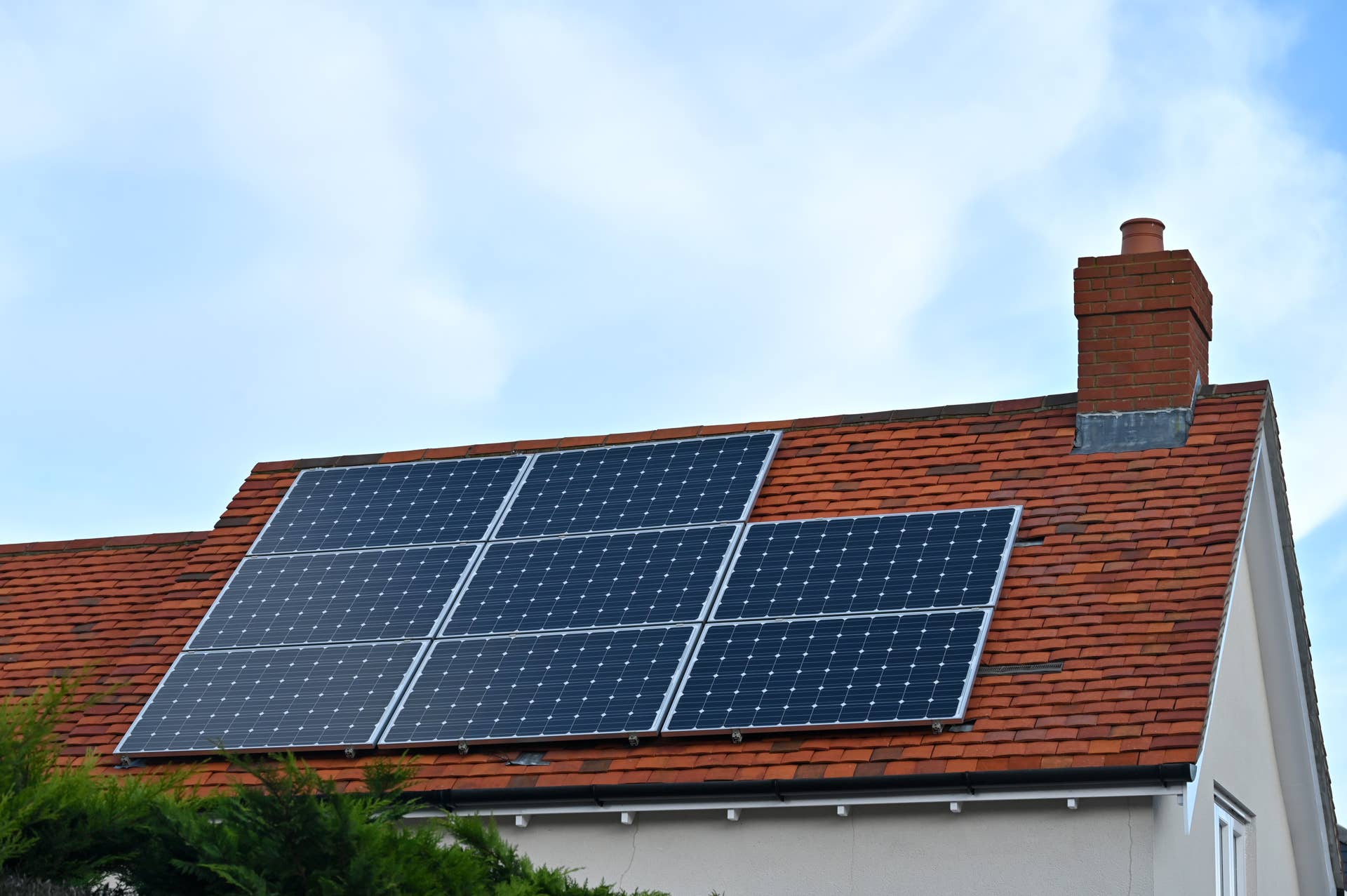 Sunrun and Reliant are turning homes into power plants, paying millions to homeowners while building the future energy grid.
Keeble/Getty Images
AI data centers push grid toward biggest demand surge in decades
The push to scale virtual power plants is accelerating because the country’s grid faces electricity demand growth it has not experienced in over two decades.
Sunrun President Paul Dickson said the grid is bracing for a 40% increase in total electricity demand over the next 15 years.
“The grid hasn’t seen growth for decades, and people don’t realize that,” Dickson told NBC News. “That’s getting turned on its head over the next 15 years.”
The U.S. Department of Energy has calculated that the country needs to add new generation resources capable of supporting approximately 200 gigawatts of peak demand.
Artificial intelligence data centers are a primary driver of that projected surge, with U.S. data center power demand projected to climb from 31 gigawatts in 2025 to 66 gigawatts by 2027, Goldman Sachs Research estimated.
Building a conventional power plant takes 10 to 12 years, and a new nuclear facility can take decades from permitting to operation. In contrast, a virtual power plant can be deployed within months, giving it a speed advantage over traditional energy sources.
“The 100,000 homes that we do every year equates to the same output as a nuclear power plant,” Dickson said.
Rocky Mountain Institute projects billions in grid savings by 2030
A report from the Rocky Mountain Institute found that virtual power plants could reduce peak electricity demand across the country by 60 gigawatts by 2030.
That same analysis projected these networks could also trim annual power-sector spending by $17 billion within that same timeframe, the Institute reported.
The energy department has separately estimated that full-scale deployment could save approximately $10 billion in annual grid costs, redirecting savings back to consumer bills.
Back in Houston, Wright said his neighbors have already started asking about virtual power plants after watching his household utility bills drop to effectively nothing, NBC News reported.
Related: What is an energy monitor, and how can it save you hundreds annually?