
Oil prices surged to nearly $120 a barrel in March 2026, and your retirement account likely felt the impact almost immediately. The S&P 500 dropped roughly 9% from late January through the end of March, rattling portfolios across the country.
Gasoline prices climbed above $4 per gallon nationally for the first time in more than three years, with certain states hit harder.
Vanguard, the firm managing roughly $12 trillion in global assets, published a pointed assessment of the Iran conflict and market risk.
The conflict between the United States, Israel, and Iran triggered the largest supply disruption in the history of global oil markets. What Vanguard found in its client trading data may reshape how you think about volatility and your next portfolio move.
Energy prices are primary channel for Iran conflict’s market damage
Vanguard’s March 2026 analysis identifies energy prices as the main mechanism through which the conflict is rippling through global financial markets.
Supply disruption fears centered on the Strait of Hormuz pushed crude oil prices sharply higher, feeding into inflation expectations.
The Strait handles roughly one-fifth of global oil and LNG consumption, making it one of the most critical energy chokepoints on the planet, Morgan Stanley analysts noted.
What had been a scenario of oil reverting to $65 is becoming less likely, even in the event of a resolution, because the disruption has moved beyond logistics to production.
“Even if the Strait reopens in the near term, it could take months for oil and gas production to normalize, creating a more prolonged supply shock and higher prices,” Rats added.
Brent crude touched nearly $120 a barrel on March 9 amid the effective closure of the Strait, climbing from around $72 on Feb. 27 before U.S.-Israel attacks on Iran began, according to CNBC and IEA reporting.
Vanguard stressed that markets appear to be repricing near-term risk rather than signaling a fundamental change in the long-term economic growth outlook.
That distinction matters because it suggests the sell-off reflects temporary uncertainty rather than lasting structural damage to the broader economy.
Goldman Sachs projected on March 13 that Brent would average above $100 per barrel in March and $85 in April, with a fourth-quarter base of $71 (or $93 under a prolonged Hormuz disruption). The bank raised its Q4 Brent forecast to $90 on April 26, up from $80.
Goldman Sachs economists estimated that a 10% increase in oil prices raises headline PCE inflation by 0.2% points and core inflation by 0.04 % points.
Vanguard investor data reveal surprisingly calm response to oil shock
While headlines painted a picture of panic, the reality of investor behavior told a calmer story during the Iran conflict this spring.
Vanguard examined how its individual clients responded, and the results challenge common assumptions about fear-driven portfolio decisions.
Only 14% of Vanguard investors traded during the first weeks of the Iran conflict, from Feb. 28 through April 8 of this year. Among those who did trade, most acted on just one or two days during the entire six-week stretch, Vanguard reported.
“Periods of market uncertainty can spark anxiety in the moment, but our data show that most investors respond with discipline rather than emotion,” said Andy Reed, Vanguard’s head of behavioral economics research.
Investors who traded were net buyers of equities by nearly a 4-to-1 margin over the six weeks of the conflict, the firm confirmed. That buying interest persisted even on the most volatile trading days, suggesting rebalancing behavior rather than fear-driven exits.
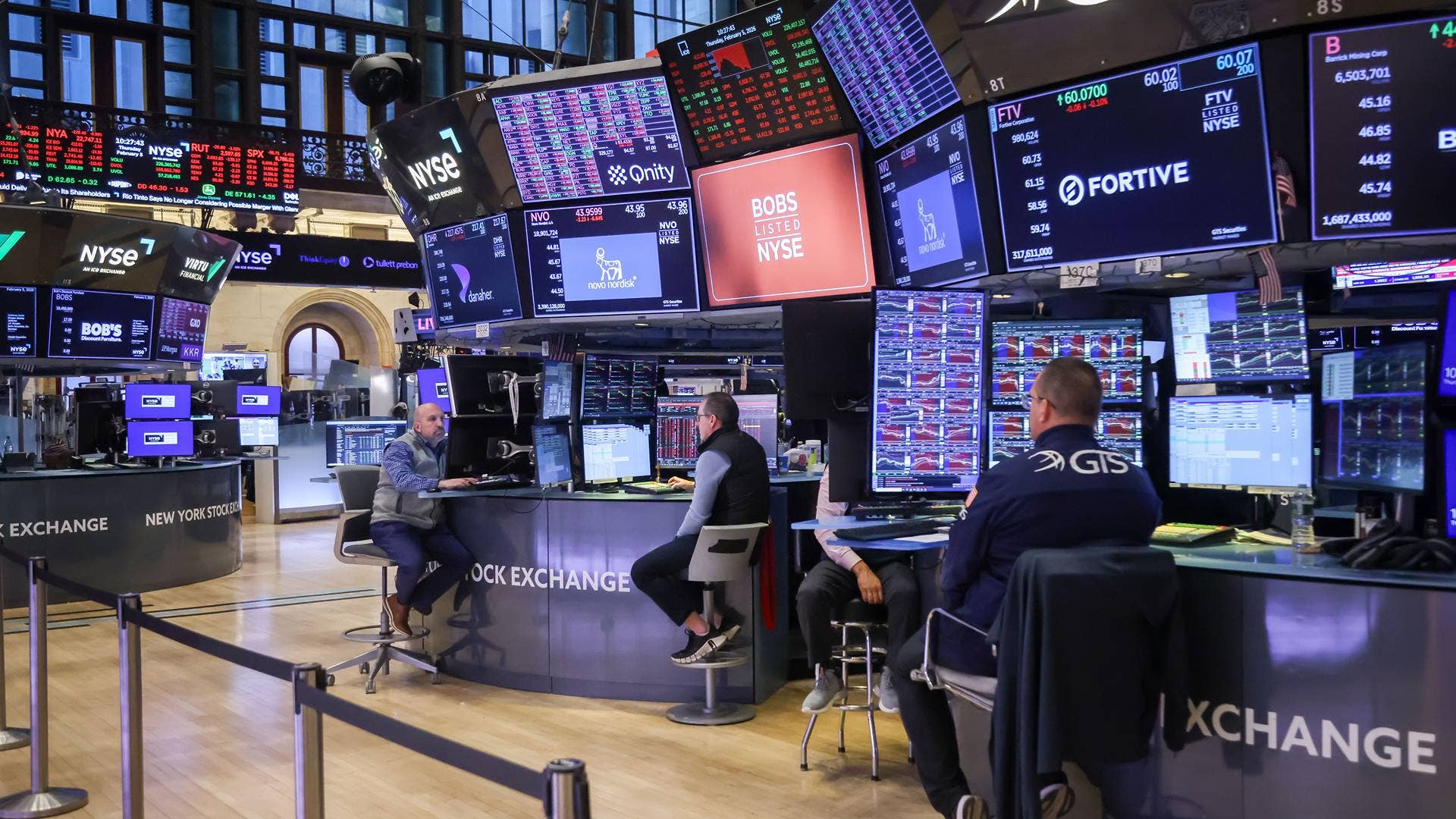 Vanguard data show that most investors stayed calm during the Iran oil shock, with traders buying stocks rather than panicking and selling.
Inflation risks grow as oil supply disruptions stretch into second quarter
The conflict’s impact extends beyond brokerage accounts and into everyday costs that affect your grocery bill and your commute to work.
The annual U.S. inflation rate jumped to 3.3% in March 2026, the highest level since May 2024, according to the U.S. Bureau of Labor Statistics.
Global oil supply dropped by 10.1 million barrels per day in March, with attacks on Middle East energy infrastructure and the cessation of tanker traffic through the Strait of Hormuz combining to create the largest supply disruption in oil market history, the IEA reported.
More Oil and Gas:
- Early Chevron stock investors now earn 12.1% dividend yield
- Chevron, Shell ink more surprising Venezuela deals
- AAA gas prices reveal a new trend for Americans
Researchers at the Federal ReserveBank of Dallas estimated that the oil price surge would raise headline inflation by 0.6 % points in 2026. Core inflation would increase by 0.2% points under a scenario in which the Strait closure lasts one quarter.
Morgan Stanley warned that prolonged conflict could lead to even hotter inflation and greater market uncertainty in the months ahead. A potential energy supply shock could also limit the Federal Reserve’s ability to cut interest rates, increasing the odds of a pause.
Recovery patterns after geopolitical sell-offs favor patient investors
Vanguard’s analysis noted that geopolitical events rarely alter long-term market direction unless they produce a very specific set of conditions.
Those conditions include prolonged disruption of the global energy supply, a pronounced tightening of financial conditions, or a broad economic downturn.
Absent those extreme scenarios, markets have typically recovered, even when geopolitical tensions have persisted over extended periods, the firm indicated.
U.S. stocks have delivered positive average returns six and 12 months after major geopolitical events going back decades, Vanguard noted.
The S&P 500 dropped about 9% from Jan. 27 through March 30 of this year, then snapped back to a record high by April 15. That recovery pattern aligns with historical data showing that strong market reactions to geopolitical crises tend to be short-lived.
“Market swings rarely rattle Vanguard investors,” said Xiao Xu, a Vanguard investment strategy analyst, in the firm’s May 2026 research. “Trading patterns were similar to April 2025 when we dealt with tariff volatility, and equity markets have now returned to record highs.”
Discipline and diversification remain central to navigating Iran oil crisis
“Staying the course continues to be a hallmark of long-term investing success,” said Fiona Greig, Vanguard’s global head of investor research and policy. Greig noted that women were particularly cool-headed during the volatility, with only 11% making trades, compared to 16% of men.
Vanguard’s assessment emphasized that diversification remains important for long-term portfolio resilience, even when it does not eliminate short-term losses.
The firm also highlighted that periods of market volatility can create opportunities for investors to rebalance or invest new dollars.
Morgan Stanley analysts cautioned that geopolitical risk is becoming a persistent part of the investment backdrop rather than an occasional disruption.
The firm suggested that investors may need to account for a world where regional competition drives markets and risk premiums going forward.
Vanguard’s analysis showed that those who stayed invested through the volatility avoided locking in losses and positioned themselves to capture the subsequent recovery.
The real risk, Vanguard concluded, is not volatility itself but abandoning a sound long-term plan when the headlines turn alarming.