
Bernstein’s Stacy Rasgon isn’t holding back on AMD’s (AMD) new path to China’s AI chip market.
The tech giant struck an agreement with Washington, which effectively reopens sales of its high-end MI308 chips to Chinese customers.
It does, however, come at a cost that’s raising eyebrows on Wall Street.
💵💰Don’t miss the move: Subscribe to TheStreet’s free daily newsletter💰💵
The change has the potential to do a lot of things, including shifting competitive dynamics, while setting a new tone for how U.S. chipmakers navigate future trade rules.
Also, it opens up a Pandora’s box on policy, precedent, and long-term strategy.
For AMD, the stakes go beyond quarterly numbers, and Rasgon’s pertinent take hints at broader industry consequences that could play out far beyond a single deal.
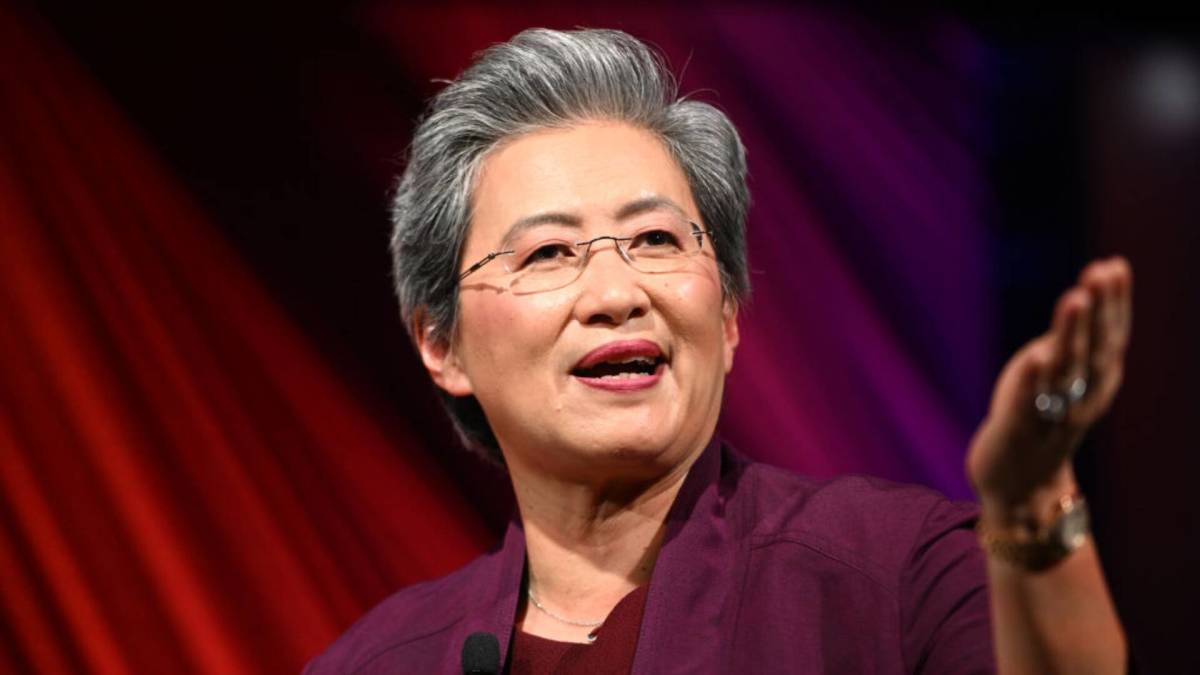 Bernstein’s Stacy Rasgon weighs in on a deal that could reshape AMD’s China future.
Image source: Galai/Getty Images for TIME
Wall Street weighs pros and cons of U.S.-China AI chip deal
The Trump administration struck what many would call an unusual agreement with China in a breakthrough for the AI chip market.
The new deal allows Nvidia (NVDA) and AMD to resume selling certain AI chips (Nvidia’s H20 and AMD’s MI308) in China.
Related: Jim Cramer drops jaw-dropping price target on Palantir stock post-earnings
In return, though, both giants need to pay 15% of those sales back to Washington. President Donald Trump had initially pushed for a 20% cut, with the revised stance showing that the approved chips don’t compromise national security.
Commerce has already begun issuing export licenses.
The market reaction was mostly mixed.
The bars see the arrangement as a “pay-to-play” model, which sets a broader precedent for export-controlled sectors, likening it to an unofficial export tax.
They warn it could significantly impede how businesses allocate capital and plan product strategies.
Supporters, however, argue that gaining back access to the world’s second-largest AI market outweighs the cost.
Tight supply enables Nvidia to pass much of the 15% dent to customers, keeping margin erosion to a minimum while keeping China in its customer base.
Nevertheless, the risks remain, especially if Beijing discourages approved chip purchases, undercutting demand.
On top of that, legal and political hiccups over the constitutionality and long-term wisdom of the policy are also a possibility that can’t be ignored.
Bernstein’s Stacy Rasgon: “Keeping 85% is better than zero percent” in AMD’s China deal
“Keeping 85% is better than zero percent.” That’s how Bernstein analyst Stacy Rasgon frames AMD’s unique deal to resume AI chip sales in China, even if it entails giving up a sizeable revenue cut.
As discussed earlier, the deal green-lights AMD’s MI308 AI chip sales in China again after earlier export restrictions.
Related: Cathie Wood splurges $4.1 million on popular AI stock
It comes with a steep price tag, though: a hefty 15% of a sales cut that goes straight to Washington.
Rasgon sees it mostly as a “mixed bag.”
On one hand, it gives AMD access to a rapidly growing market that’s just too big to ignore.
On the other hand, it could potentially slash 5 to 15 percentage points off gross margins for the affected products, potentially resulting in several hundred million dollars lost each year.
Some of the hits could be passed along to consumers, but Rasgon warns that policy could be a big push for Chinese players like Huawei to supercharge their own AI chip development efforts.
He also flagged a key tactical gap where Nvidia is designing export-compliant chips that could potentially avoid such fees, while AMD is yet to reveal any comparable China-specific products.
For now, Rasgon is sticking with a Market Perform rating and $140 price target, which effectively reflects the current balancing act for investors.
AMD posts record Q2 sales, eyes China as a second-half swing factor
That said, it’s imperative to recap AMD’s mixed Q2 results, spurring investor sentiment in the process.
It did post record revenue of $7.69 billion, up 32% from a year ago, while comfortably beating Wall Street estimates.
However, its Non-GAAP EPS came in at $0.48, while GAAP EPS was $0.54.
The culprit was roughly an $800 million inventory and related charges linked to U.S. export controls on its MI308 data-center GPU.
Strip those charges away, and the non-GAAP gross margin would have been roughly 54% instead of 43%.
More News:
- Tesla just got its biggest break yet in the robotaxi wars with a key permit
- Bank of America drops shocking price target on hot weight-loss stock post-earnings
- JPMorgan drops 3-word verdict on Amazon stock post-earnings
Zeroing in on specific segments, Data Center sales came in at $3.2 billion, up 14% year over year. A big part of that was its strong EPYC CPU sales, which efficiently offset GPU headwinds in China.
Client sales hit a stupendous $2.5 billion, up 67% on Ryzen demand.
Similarly, Gaming rose 73% to $1.1 billion, while Embedded sales were a downer, slipping 4% to $824 million. These results took AMD’s free cash flow to a whopping $1.18 billion.
For Q3, its management guided to about $8.7 billion in sales (±$300 million) and a 54% non-GAAP gross margin, excluding any MI308 sales to China.
Nevertheless, China is set to be the wild card for the rest of the year.
With the export licenses approved, AMD can now offset part of the fee through pricing, resulting in a stronger Q3 showing.
Hence, the bigger picture is clear, which shows that operational strength remains, but China policy will help define AMD’s trajectory for the remainder of the year.
Related: ChatGPT maker quietly shakes the AI landscape and Elon Musk’s xAI