
The S&P 500 has essentially ripped through the year with a relentless bid, printing fresh records and now sitting 12% up YTD on price.
AI-fueled megacaps continue to do the heavy lifting, with the Magnificent 7 (Mag 7) now amounting to a third of the index’s value. That incredible mix of record highs, narrow leadership, and a market banking on Fed-cut hopes has investors eyeing both momentum and the roadblocks ahead.
Into that backdrop, veteran economist David Rosenberg just dropped a massive new take on the S&P 500.
It’s important to note that he isn’t just another talking head. Rosenberg, a former Merrill Lynch chief North American economist, was one of the earliest on the 2008 recession and has cemented his place as a leading Wall Street forecaster.
Hence, when he weighs in, institutions and individual investors listen with urgency.
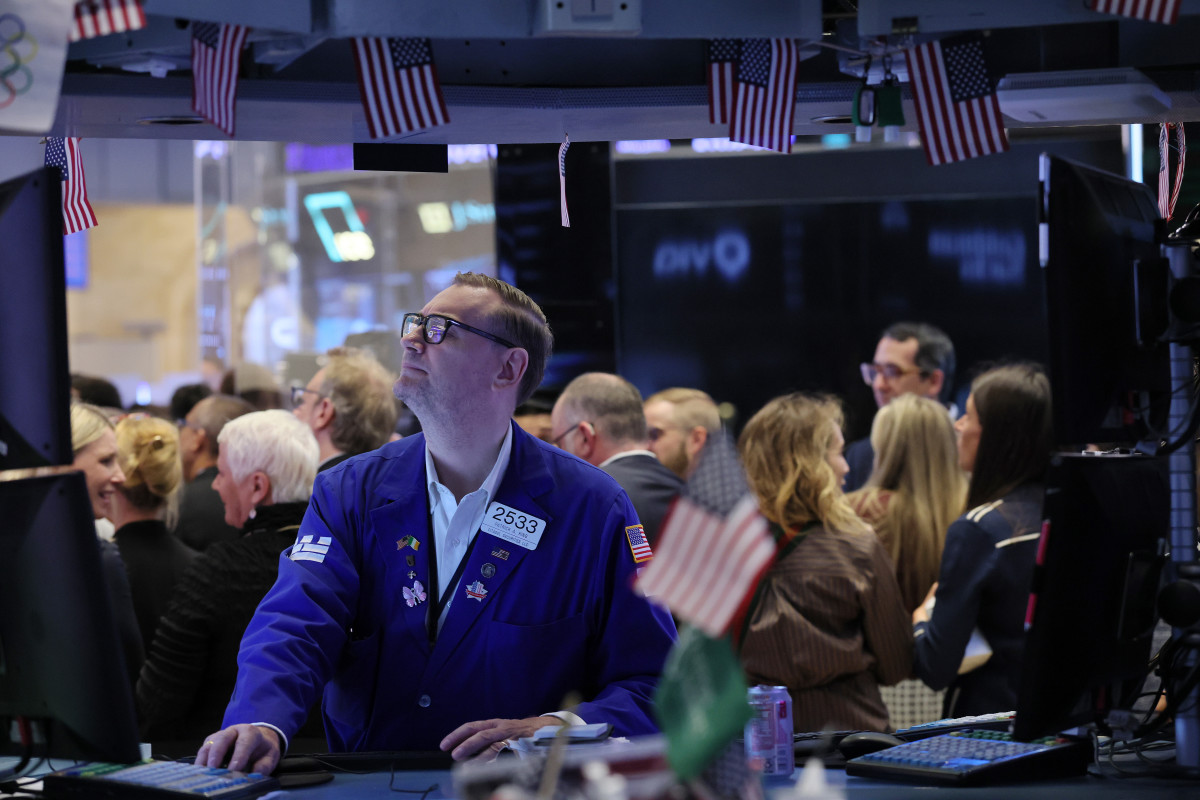 Economist David Rosenberg, who foresaw the 2008 crash, warns of negative returns ahead.
Image source: Michael M. Santiago/Getty Images
David Rosenberg says extreme S&P 500 valuations flag negative returns
Famed economist David Rosenberg says the U.S. stock market is currently in a “gigantic price bubble,” with “extreme valuations” and negative returns ahead.
Rosenberg flags the S&P 500’s Shiller CAPE near 37.5, which is at its third-highest level ever. In his own words, “This is what a euphoric state looks like — we’re seeing it in real time.”
Related: United Airlines CEO drops bombshell on 44-year-old rival
For perspective, the S&P 500’s Shiller CAPE ratio is a stock market gauge that looks at how expensive the market is by comparing current prices to average earnings over the past 10 years (adjusted for inflation).
It efficiently smooths out short-term noise and is often used as a tool to spot bubbles or long-term value.
At past CAPE readings above 35, one-year returns dropped into the red, Rosenberg notes, which marks today’s setup as historically fragile. The last time CAPE jumped this high was back in 2021-2022, followed by choppy to poor forward returns.
Rosenberg also cites a cooling labor market with job growth under 100,000 per month lately, along with a 911,000 downward revision to prior payrolls, with initial claims at 263,000 (tracking above his 240,000 “danger zone”).
More News:
- Jim Cramer flips the playbook on the S&P 500
- Qualcomm just made a massive leap into Tesla’s turf
- Cathie Wood goes biotech shopping, shells out $7.7 million
As we look ahead, it’s important to monitor proceedings with CAPE staying elevated, claims holding above 240,000, and the incredible breadth in megacap-led rallies.
If Rosenberg’s right, stocks that boast high multiples and are profit-light are arguably the most exposed.
Additionally, cash-flow quality and shorter-duration cash or Treasurys will likely cushion the volatility. For traders, it’s imperative to consider hedges as catalysts while tightening risk on rips.
S&P 500 hits danger zone as Mag 7 grip tightens
Based on multiple measures, the concentration risk in the S&P 500 is at a record high.
Apollo’s September deck shows that the S&P 500 concentration across market cap, returns, and earnings is either at or near records. The share of the top 10 names has surged, and leadership has become unusually narrow.
Related: Redfin flags shocking signal in housing market crisis
Moreover, the largest company share belongs to Nvidia (NVDA) , which is trading at 51 times earnings as per the report. Also, the combined weight of stocks with a weight of 3% or more in the index falls in the 30% to 35% range.
That’s important for investors to consider, because when leadership is this tight, index returns hinge on a handful of mega-caps. If those wobble, the whole index gets a hiding.
Here’s how the big houses see the S&P 500 by year-end:
- Deutsche Bank: 7,000 (+6.3%): Reinstated this week
- Goldman Sachs: 6,600 (+0.2%): Sees 2% gain into year-end
- JPMorgan: 6,500 (-1.3%): Constructive but tempered enthusiasm
- Barclays: 6,450 (-2.0%): Hiked this week, yet still below spot
- Bank of America: 6,300 (-4.3%): Raised in July but remains cautious
Related: Housing stock surges over 250% and it could go higher