
Kelly Ortberg didn’t seem too concerned.
The Boeing (BA) CEO spoke with analysts on an earnings call July 29, after the aerospace giant beat Wall Street’s revenue forecasts and posted a narrower-than expected second-quarter loss.
💵💰Don’t miss the move: Subscribe to TheStreet’s free daily newsletter 💰
“It’s clear our recovery plan is taking hold,” he said. “We’re just over halfway through 2025, and I’m pleased with our progress. We’re starting to see real momentum, and the nice thing is that we’re seeing it across the business.”
“At the same time,” he added, “we also have to acknowledge the remaining work ahead of us on this recovery.”
Ortberg took over the top spot at Boeing a year ago with a goal of turning things around, as the company contended with quality-control issues, a flawed safety culture, and financial strain.
“We’re seeing the benefit of our ongoing investments to stabilize our production system as we continue to remain on track with the safety and quality plan that we established and submitted to the FAA,” Ortberg said.
Analysts seemed impressed with what they were hearing from the company.
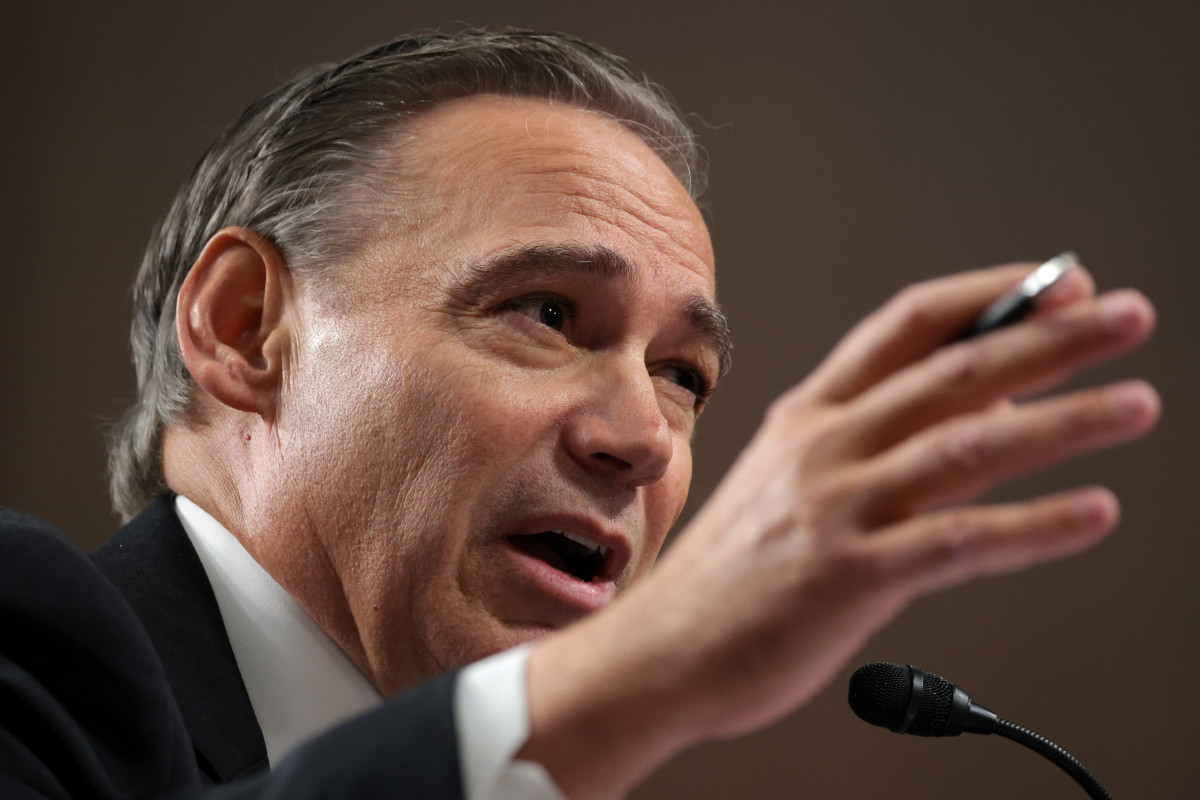 Boeing CEO Kelly Ortberg said the company’s recovery plan was taking hold.
Image source: Win McNamee/Getty Images
Analyst notes Boeing’s clean quarter
In a note entitled “One Big Beautiful Boeing,” Bank of America Securities analyst Ronald Epstein boosted the firm’s price target on the stock to $270 from $260 and affirmed a buy rating on the shares. This after the company reported what he called “one of its cleanest quarters in recent years.”
While the earnings report was good, Boeing shares ended the day down 4%, which the investment firm views as a reaction to Ortberg’s comments that the company will soon request an increase in the 737 production cap.
More Tech Stocks:
- Analyst who correctly predicted Rocket Lab stock surge resets forecast
- Verizon Q2 earnings report surprises with remarks on tax reform
- Fund manager who forecast Nvidia stock rally reboots outlook
Many observers appear to have been expecting a much more aggressive 737 production rate increase by Q3, but “despite the noise, we appreciate the discipline and see further upside ahead,” Epstein said.
“Boeing aircraft have emerged as the favored trade tool for the Trump administration in recent trade deals,” he noted.
Epstein said the defense segment saw solid improvement, with revenue up 10% and margins expanding from a year earlier, “reflecting stronger operational execution.”
“Given the current geopolitical environment, improved execution on existing programs, and a shift toward cost-plus contracts over fixed price, we remain confident in the segment’s outlook and see potential for further margin expansion,” he said.
During the question-and-answer period, Ortberg was asked about a potential strike by Boeing Defense, Space & Security workers.
“The order of magnitude of this is much, much less than what we saw last fall,” he said, referring to a strike by 33,000 machinists that lasted more than seven weeks. “We’ll manage through this. I wouldn’t worry too much about the implications of the strike. …”
The potential job action has become a reality. Several thousand workers at three Midwest manufacturing plants where Boeing develops military aircraft and weapons went on strike early Aug. 4, the Associated Press reported.
TheStreet Pro’s Ponsi: Boeing a buy at current levels
The International Association of Machinists and Aerospace Workers District 837 rejected the latest Boeing offer on Sunday, leading to its first strike in 29 years.
“IAM District 837 members build the aircraft and defense systems that keep our country safe,” Sam Cicinelli, the general vice president of the union’s Midwest division, said in a statement.
Related: Boeing surprises Wall Street with more safety concerns looming
“They deserve nothing less than a contract that keeps their families secure and recognizes their unmatched expertise.”
The vote followed a weeklong cooling-off period after the machinists rejected an earlier proposed contract, which included a 20% wage increase over four years and $5,000 ratification bonuses.
“We’re disappointed our employees rejected an offer that featured 40% average wage growth and resolved their primary issue on alternative work schedules,” said Dan Gillian, Boeing Air Dominance vice president and general manager, and senior St. Louis site executive.
“We are prepared for a strike and have fully implemented our contingency plan to ensure our nonstriking workforce can continue supporting our customers.”
TheStreet Pro’s Ed Ponsi has some advice about the company’s stock.
“If you hold no shares of Boeing, I’d strongly consider opening a position at current levels,” he said.
Ponsi, managing director of Barchetta Capital Management, said that one week after last year’s strike at Boeing, the shares soared, gaining about 30% in less than two months.
“One of my first moves this year was to buy Boeing.” he said. “At the time, the stock was truly despised by Wall Street, as the company struggled to overcome a seemingly endless series of mishaps and unforced errors.”
The professional trader said that Boeing shares lost 30% of their value in 2024, but since his initial recommendation was published, the shares have climbed 29%.
“It was one of those rare occasions when a stock became so disliked that a contrarian play made sense.” Ponsi said.
Related: Fund-management veteran skips emotion in investment strategy