
And to think they used to call it “CrackBerry.”
There was a time when the BlackBerry line of handheld devices was.the leading smartphone platform in the U.S.
💵💰Don’t miss the move: Subscribe to TheStreet’s free daily newsletter 💰
The first BlackBerry device, the 850, which integrated email and paging functions, was released Jan. 19, 1999.
Research in Motion, which made the device, described it as “a breakthrough wireless email solution for mobile professionals.”
The BlackBerry 850 had an LCD display, a 32-bit Intel (INTC) 386 processor, 2MB of Intel flash memory, a wireless modem, and triple-DES encryption technology, all of which could be powered for an entire day by a single AA battery.
The name, one of about 40 potential handles, was coined by the marketing company Lexicon Branding because the Qwerty keyboard’s buttons resembled the drupelets that make up the blackberry fruit.
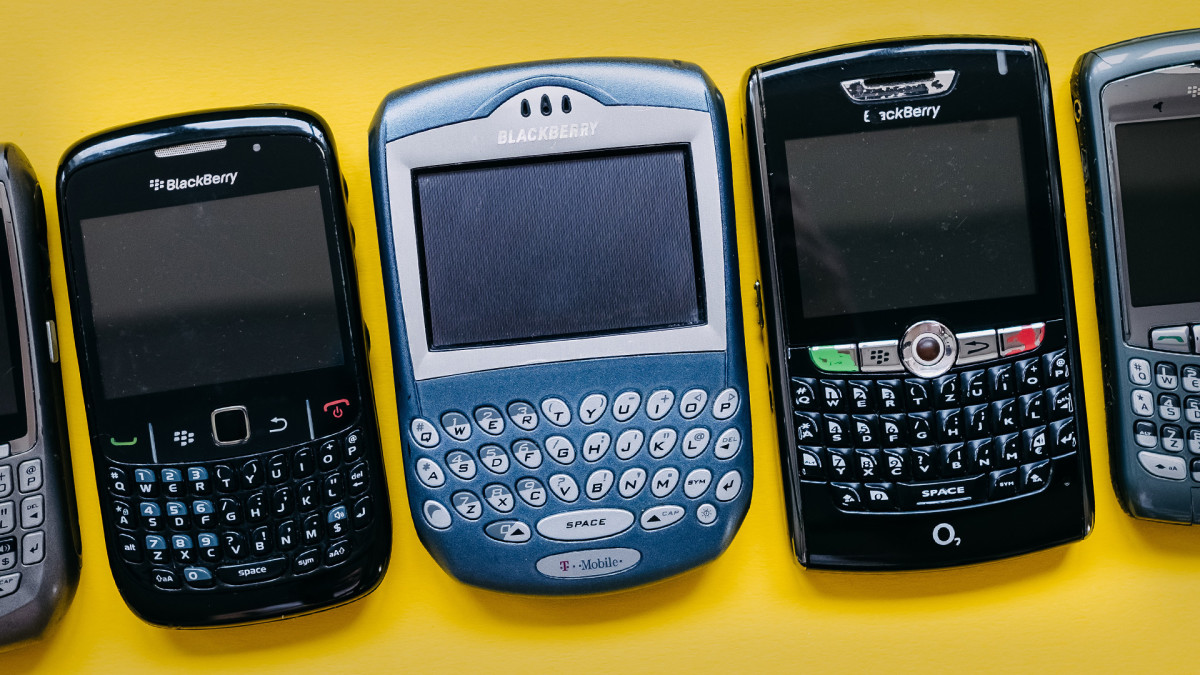 BlackBerry is scheduled to report first-quarter earnings on June 24.
Shutterstock
BlackBerry’s popularity surged
The device quickly became popular on Wall Street, at law firms and among other white-collar office workers.
At its peak in September 2011, BlackBerry had 85 million service subscribers worldwide as the device became known for its highly addictive qualities.
More Tech Stocks:
- Amazon tries to make AI great again (or maybe for the first time)
- Veteran portfolio manager raises eyebrows with latest Meta Platforms move
- Google plans major AI shift after Meta’s surprising $14 billion move
Many celebrities sported BlackBerrys, including President Barack Obama, the actress Sarah Jessica Parker, the influencer and executive Kim Kardashian, and the singers Katy Perry and Justin Timberlake. Alicia Keys, the Grammy-winning singer and songwriter, for a period was named global creative director for BlackBerry.
Then things started to unravel.
BlackBerry began losing popularity after the introduction of Apple’s (AAPL) iPhone in 2007 and Alphabet’s (GOOGL) Android devices.
By 2013, the BlackBerry market share had declined significantly, leading the company to dismiss some 40% of its operating staff and reduce its product line to four models from six.
On Sept. 28, 2016, BlackBerry Ltd., (BB) formerly Research In Motion, said it would cease designing its own BlackBerry devices in favor of licensing to partners.
A year later, BlackBerry Mobile released the last device the company designed internally, the BlackBerry KeyOne, which was known for a physical keyboard below its 4.5-inch touchscreen and for a long battery life.
BlackBerry’s stock price took off in 2021 as part of the meme-stock craze, which included videogame retailer GameStop (GME) and other companies.
Now it seems that the hot tech of yesteryear is connecting with many Gen Z consumers who are ditching modern smartphones in favor of old-timey phones.
Veteran trader weighs risks facing market
The trend is driven by a desire for a simpler, less app-driven experience, as well as a fascination with the tactile keyboard and trackball of the BlackBerry.
“I think there’s a charm to the BlackBerry and older phones and all that kind of retro tech,” Dan Kassim, a 29-year-old writer, recently told The New York Times. “It ties into vinyls and Polaroid pictures and all that.”
Related: Veteran analyst thinks this stock could be the next meme-stock short squeeze
“I feel like people are kind of burned out from notifications and being always on, and [BlackBerrys] and early smartphones feel like a bit of a throwback to when phones were tools but not, like, the center of your life,” he added.
While some users are purchasing old BlackBerrys to use as their everyday phones —even though many of the apps no longer work — others want to see a reimagined version for 2025. But after BlackBerry ended its support for the devices in 2022, and after a company called OnwardMobility made and scuttled an effort to create a 5G version, there’s little hope for a new BlackBerry phone anytime soon.
Meantime, BlackBerry (BB) , headquartered in Waterloo, Ontario, these days focuses on cybersecurity software for automotive and other industrial applications as well as secure communications and other systems.
Shares of BlackBerry, which is scheduled to report earnings on June 24, are up nearly 13% this year and up roughly 90% a year ago.
TheStreet Pro’s Stephen Guilfoyle told his readers in April, after the company had posted fourth-quarter results, that he would be initiating a long position.
“Well, as of Friday’s closing price of $4.23, my long position is up more than 37%, so I hope at least a few of you played along,” he wrote in his June 23 column.
For the first quarter, Guilfoyle, whose career dates back to the floor of the New York Stock Exchange in the 1980s, said Wall Street was looking for BlackBerry to report flat earnings on revenue of about $112.2 million.
“These numbers are in line with the guidance that the firm had provided but would be down one penny per share and down 22% relative to the year-ago comparisons,” he said.
In addition, Guilfoyle noted that all five sell-side analysts he knows who still cover the stock had reduced their earnings estimates for BlackBerry since the start of the quarter.
“Am I expecting upside surprises?” he said. “I don’t think so. … I am thinking that I should protect my gains and take some profits ahead of those earnings, especially with all of the headline risk facing markets this week.”
Related: Fund-management veteran skips emotion in investment strategy