
Paychecks have a price. You pay for the first one with 40 hours a week and a commute.
Very few people ever add up what the second paycheck costs.
For most of the past decade, the answer to money stress sounded simple: Work more.
The 2010s turned the side gig into a badge of honor. Social feeds filled with 5 a.m. routines, “boss” mindsets and the promise that one more income stream would finally put you ahead.
You probably know someone who drives rideshare after a full workday. Maybe that someone is you.
Weekend delivery runs, freelance projects and online resale shops all make the same promise. Stack enough of them, and you will never have to depend on a single employer again.
The logic feels airtight. More hours should mean more money, and more money should mean more security.
One of personal finance’s most-followed voices says the math often runs the other way.
Vivian Tu, the former JPMorgan trader who built a 10 million-follower audience as Your Rich BFF, argues that hustle culture charges you a fee you never see on a bill.
She calls it the burnout tax. And if you are stacking gigs to get ahead, it may already be eating into what you earn.
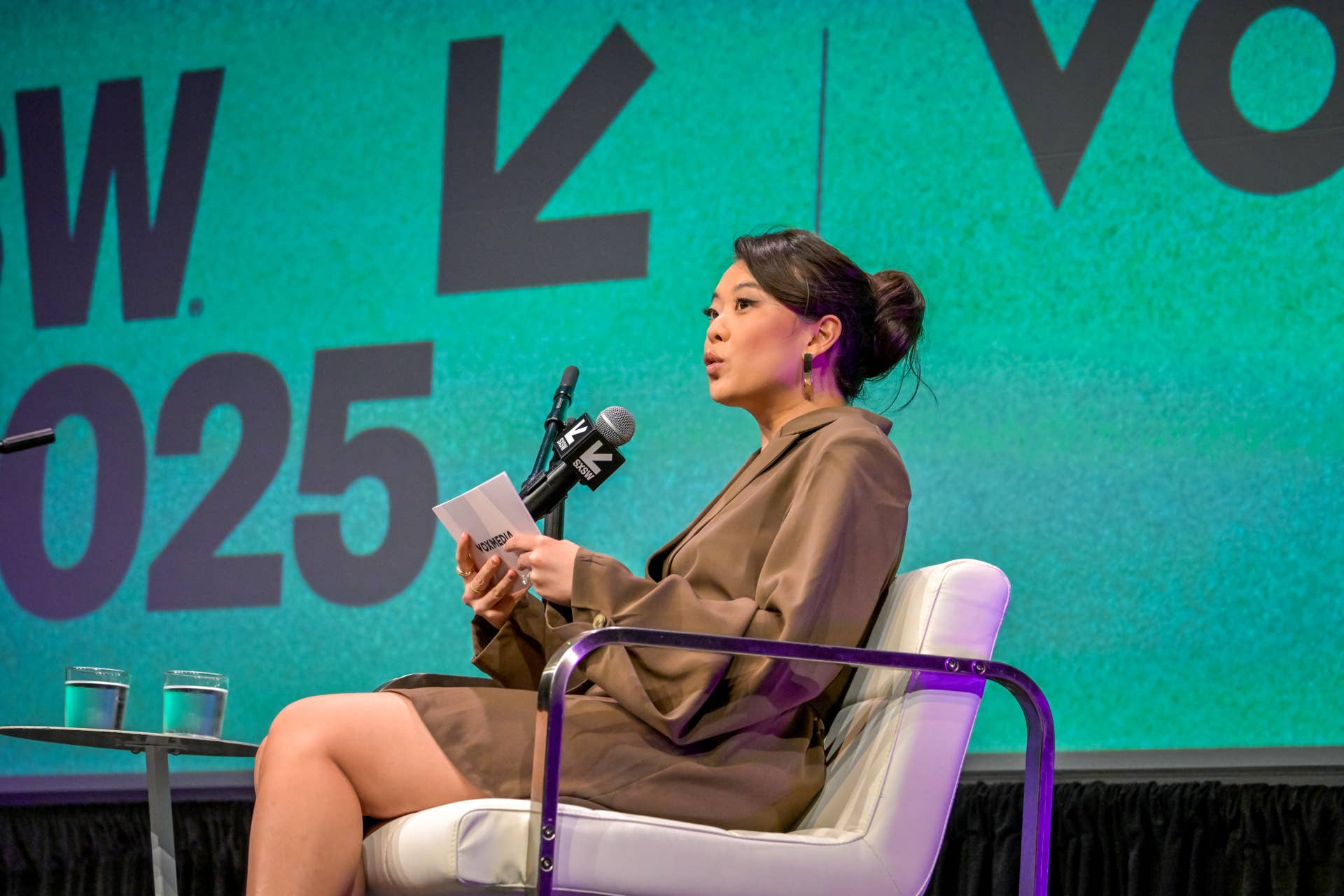 Vivian Tu says the grind raises your spending and slows your career growth.
Why a second income is now the norm for workers
Extra income is no longer a niche habit. Nearly three-quarters of people with a regular job now depend on at least one secondary source of income, according to a MyPerfectResume survey of 1,000 U.S. workers reported by Moneywise.
That 72% figure needs context. Only 4% of respondents said the extra money comes from a second job, while 14% pointed to freelance or gig work and another 14% to investments.
More Personal Finance:
- Dave Ramsey emphasizes key warning on 401(k)s, IRAs
- Inflation frustration boils over as consumer confidence takes an unexpected turn ahead of the holidays
- Your cash now pays 4.10% as Kiyosaki says to dump it
The payoff from classic side hustles is thinner than the hype. Bankrate found that 27% of U.S. adults had a side hustle in 2025, down from 36% in 2024.
The typical side hustler earned a median of just $200 a month. Bankrate senior industry analyst Ted Rossman credited a strong job market and cooling inflation for the drop in participation.
That $200 matters for everything that follows. It is the number your side hustle has to beat after every hidden cost it creates.
How burnout tax eats into side hustle earnings
Tu put a name to those hidden costs on her Networth & Chill podcast episode “Is Hustle Culture Dead? Gen Z’s Smartest Money Move,” published Sept. 2 on YouTube.
“Burnout tax is real and it hits your wallet hard,” she said.
Her argument is straightforward. Add eight hours of side work to a full-time week, and the time for cooking, laundry, commuting and sleep has to come from somewhere.
Related: Lowe’s wants your kid to skip college for a six-figure job
So you order DoorDash (DASH), call a rideshare and send out the laundry. By Tu’s estimate, a relatively cheap weekly routine ends up costing at least double.
Survey data shows how normal that convenience spending has become. A FinanceBuzz survey of 2,000 U.S. adults, conducted with Bank of America (BAC) in August 2026, found:
- 63% of Americans get food delivered at least once a month
- 72% of Gen Z orders delivery monthly, versus 47% of baby boomers
- Gen Z averages 5.1 takeout meals a month, about double the boomer rate of 2.5
- 45% of Gen Z respondents felt embarrassed by how much they spend on delivery
- Convenience memberships cost the average American $264 a year
Here’s what that looks like in dollars. Say a busy week pushes you to swap three home-cooked dinners for $20 delivery orders that would have cost $6 to make.
That is $42 a week, or $2,184 a year. It nearly wipes out the $2,400 a median side hustle earns over 12 months.
The long-term price of chasing short-term cash
Tu’s bigger worry is what you give up. Every spare hour spent on gig work is an hour not spent on new skills, networking or a promotion in your primary career.
“It’s like choosing the immediate $50 now over the potential $500 down the road,” she said.
Stacked gigs also bring income swings. Tu recalled the anxiety of her early days running Your Rich BFF full-time, when one month brought in nothing.
“I had a month where I did not make a single dollar,” she said.
Uneven pay makes it harder to budget, save on a schedule or qualify for a mortgage, since lenders want to see stable income.
I know that rhythm well. As a freelance journalist writing for several outlets, my income arrives in lumps, and a late invoice can throw off an entire month.
Tu’s approach for irregular earners is to budget across a full year. She spreads the money from strong months over all 12, so a slow quarter does not become a crisis.
Gen Z is walking away from the grind
Tu sees a generation opting out of the hustle script entirely. Many young workers are “just quitting the game because they don’t think there’s anything to win,” she said.
The engagement numbers back her up. Just 31% of U.S. employees were engaged at work in 2025, and engagement among Gen Z and younger millennials fell to 32% from 40% in 2020, Gallup reported.
The entry-level job market isn’t helping. The unemployment rate for recent college graduates stayed elevated at about 5.6% through the second quarter of 2026, with underemployment edging up to 42%, according to the Federal Reserve Bank of New York.
In my analysis, many young workers are making a cold-eyed bet. When more hours no longer buy a noticeably better life, protecting your time becomes a financial decision.
Where your savings can earn more than overtime
Tu’s alternative starts where you already work. “You should always, always, always be asking for more money,” she said.
She suggests keeping a running file of your wins through the year, such as a product launch or a process you sped up, to build your case before review season. Union members, she noted, usually negotiate raises through their bargaining committee.
Next, check what your cash is earning. Tu cited a 0.32% rate at traditional banks, and the latest national average is 0.37% as of September 2026, according to FDIC data published by the St. Louis Fed.
Top online accounts pay far more. The best high-yield savings accounts tracked by The College Investor paid up to 4.15% APY as of Sept. 21.
Those rates got fresh support on Sept. 16, when the Federal Reserve raised its benchmark rate by a quarter point to a range of 3.75% to 4%.
On $10,000, a 0.37% account pays about $37 in a year. At 4.10%, the same money earns about $410, and that extra $373 arrives without a single extra shift.
Tu also flagged a costly mistake. Money you put into an IRA or 401(k) can sit in cash if you never pick investments, so check that your contributions are actually invested.
She called health savings accounts a triple tax advantage, since contributions, growth and qualified medical withdrawals can all avoid tax. For 2026, the IRS caps HSA contributions at $4,400 for self-only coverage and $8,750 for family coverage.
Tu is also chief of financial empowerment at SoFi Technologies (SOFI), which offers savings and investing accounts, according to the Associated Press.
What a sustainable money plan looks like now
None of this means you should turn down extra work. If a second job is covering rent, Tu said plainly that she isn’t knocking it.
The question is whether your hustle still pays after the burnout tax. If your side income is shrinking under delivery fees, missed promotions and idle cash, the smarter move may be fewer hours and better-placed dollars.
“Work should be challenging, not hard,” Tu said.
Rates are rising, and the entry-level job market is tight. That makes the next raise you ask for, and the next dollar you move into a 4% account, some of the most valuable work you will do this year.
Related: Vivian Tu’s IPO warning lands as SpaceX buyers split by $1,851
