
Walmart (WMT) , the largest retail chain in the U.S., is once again facing a harsh wake-up call from customers.
Over the past few months, Walmart has found itself in the crosshairs of social and political controversy, and customers have been protesting with their wallets.
💵💰Don’t miss the move: Subscribe to TheStreet’s free daily newsletter 💰💵
In April, the retail giant faced a weeklong boycott from consumers, organized by The People’s Union USA, due to the belief that it contributes to corruption in the U.S. economy.
Related: Walmart has stern response to major boycott from customers
“We’ve been watching prices rise while wages stay the same,” said The People’s Union USA founder John Schwarz in an Instagram post. “We’ve watched these companies rake in billions while families can barely afford groceries, and Walmart, just like the rest of them, has been a part of that problem. So this is where we, once again, draw the line.”
The group encouraged consumers to avoid shopping at Walmart and other entities it operates, such as Sam’s Club, Walmart Pharmacy, Walmart+, and more.
Then in May, The People’s Union USA doubled down on its efforts and launched another weeklong boycott of Walmart.
The following month, Walmart also faced boycott calls from conservative consumers after far-right group Libs of Chicago tweeted a photo of a full-page advertisement that ran in the New York Times in March promoting the No Kings movement, an anti-President Donald Trump protest.
The bottom of the ad states that it was paid for by Christy Walton, the billionaire widow of John Walton, one of the sons of Walmart founder Sam Walton. Christy inherited a portion of her husband’s Walmart shares after he died in 2005.
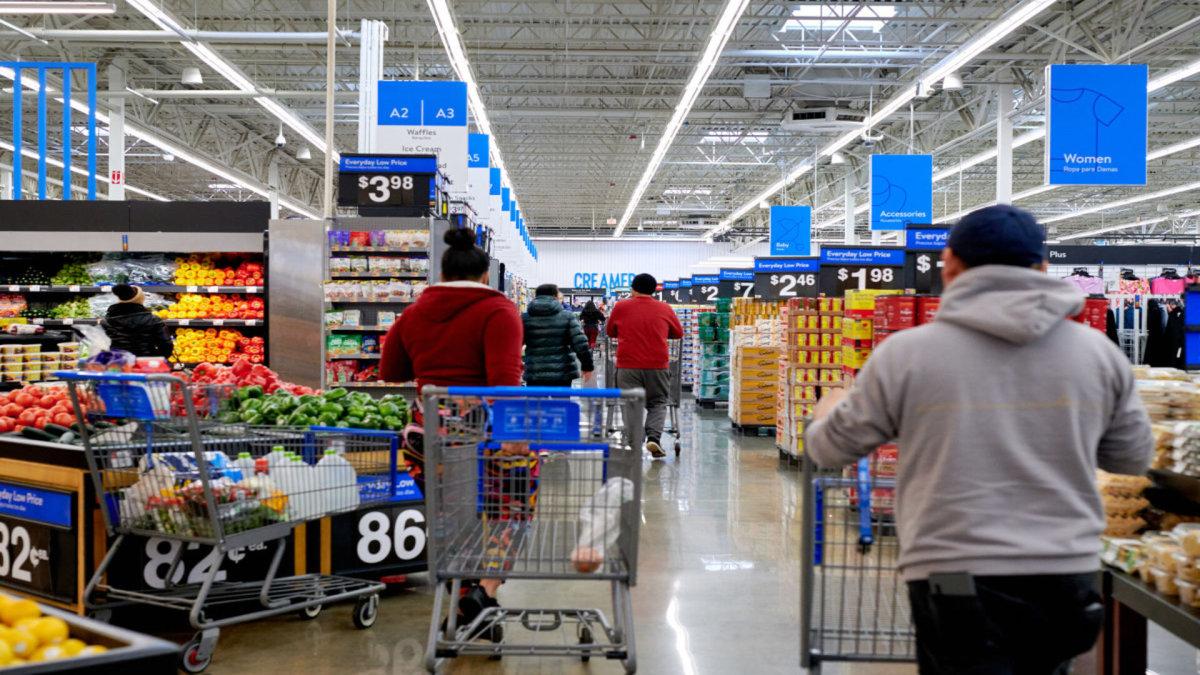 The People’s Union USA has organized another boycott of Walmart.
Image Source: Jones/Bloomberg via Getty Images
Consumers continue to push back against Walmart
Now, Walmart is facing another boycott, which kicked off on Aug. 1, and this time, it is set to last until the end of the month. Once again, this boycott is being organized by The People’s Union USA, which has also called for a boycott of Lowe’s and McDonald’s this month.
In a recent video on Instagram, Schwarz said that over the next few months, his group will target Walmart and other large corporations “harder than ever.”
“Since February, we have been shaking the foundations of the very corporations that fund this corrupt, treasonous and evil administration, companies that exploit the people, companies that laugh in the face of our struggle,” said Schwarz. “We have shown them. We have shown them our strength, and they have felt it. But my friends, we are far from done. July, August and September, we are hitting them harder than ever. These are major companies with massive impact.”
Related: Lowe’s has another major customer problem amid declining sales
The People’s Union USA has been organizing boycotts of large companies such as Amazon, Starbucks, and Target since February, shortly after President Trump took office in January and enforced drastic policy changes such as tariffs, a strict immigration crackdown and cuts to diversity, equity, and inclusion.
On its website, the group states that it aims to “expose corruption and exploitation,” “hold corporations accountable,” and “lead local and national economic resistance” through these boycott efforts.
Many consumers nationwide have been participating in boycotts amid heightened social and political tensions. According to a recent survey from LendingTree, 31% of Americans have boycotted a business for various reasons, such as the company condoning discrimination, its political donations, affiliations, or religious messaging or practices.
The last thing Walmart needs is another boycott
The latest Walmart boycott comes after the retailer’s foot traffic declined by 1.3% in June, according to recent data from Placer.ai. Its foot traffic also decreased during the weeks of July 7 and July 14.
Walmart is currently battling the threat of the president’s tariffs (taxes companies pay to import goods from overseas), which could cause prices to go up in its stores.
More Retail:
- Target has another big problem amid alarming customer behavior
- Dollar General announces big store change to win back customers
- Amazon pulls the plug on a free service for customers
“We never want to raise prices,” said Walmart Chief Financial Officer John Rainey when discussing tariffs in an interview with CNBC in November. “Our model is everyday low prices. But there probably will be cases where prices will go up for consumers.”
In the first quarter of the year, Walmart’s comparable sales increased by 4.5% year-over-year. However, during an earnings call in May, Walmart CEO Doug McMillon warned that the company is noticing customers scaling back their spending in several categories.
“Health and wellness sales increased high teens, reflecting higher prescription volumes and over-the-counter sales, while general merchandise sales declined slightly with softness in electronics, home products, and sporting goods,” said McMillon during the call.
Related: Amazon pulls the plug on a free service for customers