
Over the past few months, Walmart (WMT) has had its hands full battling the growing threat of tariffs, which are taxes companies pay to import goods.
The retail giant has warned consumers over the past few months that President Donald Trump’s tariff policy, which enforces tariffs on over 60 countries, could increase prices in its stores, potentially driving away low-income customers.
💵💰Don’t miss the move: Subscribe to TheStreet’s free daily newsletter 💰💵
Walmart even warned during an earnings call last week that despite Trump’s recent efforts to lower tariffs, it still won’t be able to fully absorb all of the extra costs it will face to import goods, and will have to raise prices in its stores.
Related: Walmart CEO has a harsh warning for customers
“We will do our best to keep our prices as low as possible,” said Walmart CEO Doug McMillon during the call. “But given the magnitude of the tariffs, even at the reduced levels announced this week, we aren’t able to absorb all the pressure given the reality of narrow retail margins.”
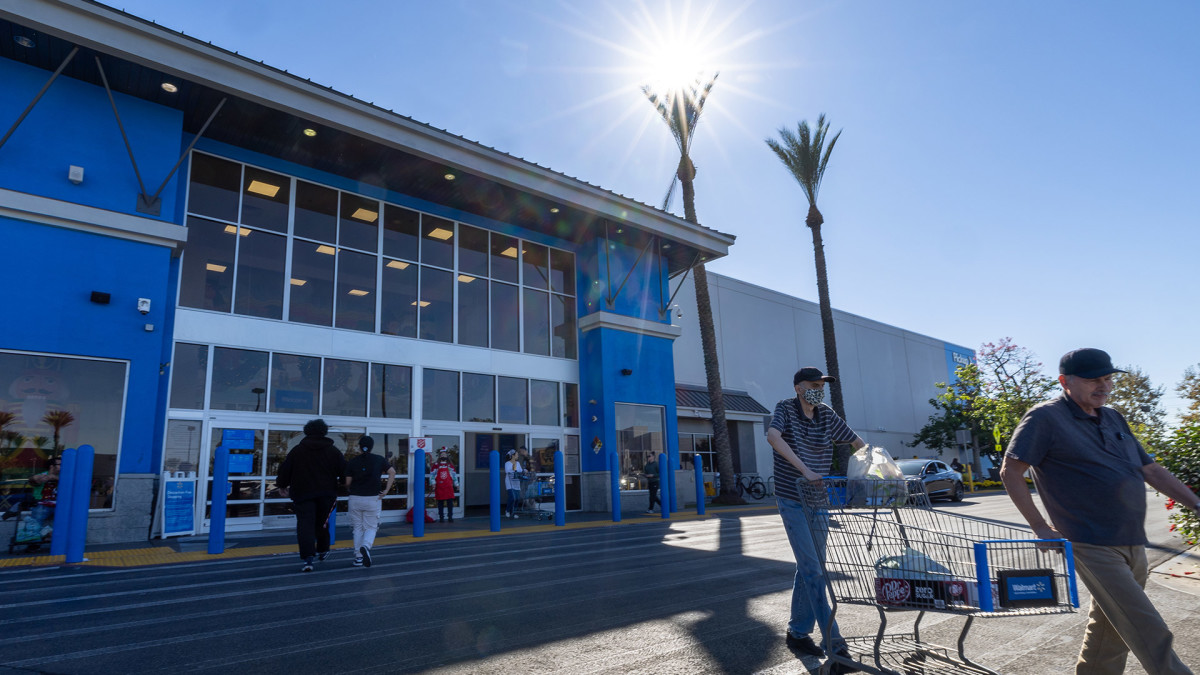 A Walmart boycott adds one more challenge for the retailer.
Image source: Getty Images
Consumers fight back against Walmart
As Walmart fights to minimize the impact of tariffs, it has another major problem brewing.
The retail giant faces the threat of another nationwide boycott, organized by The People’s Union USA, which begins on May 20 and ends on May 26.
The last time the group organized a weeklong boycott of the retailer was in April. It encouraged consumers to avoid shopping at Walmart and other entities it operates, such as Sam’s Club, Walmart Pharmacy, Walmart+, etc.
The group encouraged consumers to boycott Walmart because it believes the retailer has contributed to economic corruption.
“We’ve been watching prices rise while wages stay the same,” said The People’s Union USA founder John Schwarz in an Instagram post last month. “We’ve watched these companies rake in billions while families can barely afford groceries, and Walmart, just like the rest of them, has been a part of that problem. So this is where we, once again, draw the line.”
Related: Target CEO admits a major mistake amid boycotts from customers
The People’s Union USA has been organizing “economic blackouts” of large corporations since February this year. So far, it has organized specific boycotts aimed at Amazon and General Mills. After the current Walmart boycott concludes, Target and McDonald’s are next on its list.
According to the group’s website, it aims to “expose corruption and exploitation” and “hold corporations accountable” for unethical business practices that have kept Americans “divided, distracted, and struggling for decades.”
“We’re using the one tool that always makes them listen, money,” said The People’s Union USA on its website. “Economic resistance is our frontline weapon. And behind that, we’ve got something they’ll never understand: resilience, strength, and the will to endure. They raise prices, we stop spending. They ignore our voices, we cut their profits. They divide, we unite.”
In an Instagram post last week, Schwarz emphasized that the boycotts will become more aggressive if the corporations that his group targets refuse to adjust their business practices.
“What we can do is hold these companies accountable for not paying their fair share of taxes, for price gouging and for inequality,” said Schwarz. “And not until they do pay their fair share in taxes, and alleviate federal income tax from the citizen, not till they hold manufacturers accountable for a reasonable profit margin cap, and not until they accept equality across the board, will we stop. And after the Fourth of July, we are coming back to every single one of these companies even harder and even longer.”
Walmart shoppers are already pulling back
The last thing Walmart needs is another boycott. As the retailer battles the looming threat of tariffs, shoppers are pulling back on their spending in several categories amid economic uncertainty. This is despite it recently seeing a 4.5% year-over-year increase in comparable sales during the first quarter of this year.
More Retail:
- Costco quietly plans to offer a convenient service for customers
- T-Mobile pulls the plug on generous offer, angering customers
- Kellogg sounds alarm on unexpected shift in customer behavior
“Health and wellness sales increased high teens, reflecting higher prescription volumes and over-the-counter sales, while general merchandise sales declined slightly with softness in electronics, home products, and sporting goods,” said McMillon during an earnings call last week.
Walmart’s foot traffic also recently took an unexpected dip during the quarter. According to recent data from Placer.ai, the retailer’s foot traffic in stores during the first few months of the year declined by 2.4% year-over-year.
In February, Walmart visits dropped by 5.9% year-over-year, and in March, visits fell by 4%. However, visits spiked by 4.5% in April, aligning with the Easter holiday.
Despite this concerning trend, Walmart earned $5.7 billion in U.S. operating income during the first quarter, which is 7% higher than what it earned during the same time period in 2024.
Related: Veteran fund manager unveils eye-popping S&P 500 forecast