
Over the years, major brick-and-mortar chains have crept the start of the holiday season earlier.
What used to begin on Black Friday now starts essentially the moment Halloween ends. In fact, I went to Target on the day after Halloween, and only a small amount of leftover candy was discounted, while new Christmas merchandise was being put on shelves and stores were being decorated.
“Christmas creep, said Wharton marketing professor Stephen Hoch on the Wharton Business School website, has been a topic among consumers and retailers for some years now, much like complaints about the National Football League season extending into February and baseball’s World Series being held so late in the fall that cold temperatures at game time have become the norm.
“It’s like a mini-arms race. The competition among retailers means nobody wants to be second. That moves the shopping season up a little bit more each and every year. Are consumers going to revolt against it? No. Will it get people in a holiday mood? No; people will get in the holiday mood during the holidays,” he said.
“Does it give retailers a chance to set displays up sooner? Sure. Does it make stores more crowded? Yes. Decorations and special displays tend to make stores cluttered and hard for shoppers to move around.”
Christmas creep isn’t going anywhere
The extended Christmas season has become a sort of sell-fullfilling prophecy.
“Once one of these sales happens, it will happen forever,” Hoch shared. “If you had a sale last year, you pretty much have to have the same sale again this year to see if you exceeded what you sold last year. This may be why retailers are putting up Christmas decorations and displays earlier and earlier. They’re looking not just at the quarter or month but every week and every day.”
By extending the Christmas season, however, retailers have accomplished a few things:
- Sales are more spread out, which reduces crowds.
- Many sales are digital, too, which reduces the mad dash for the best prices.
- A lengthy season becomes challenging for consumers who must balance hopes that a price drops versus fear of an item selling out.
Wharton Marketing Professor Patricia Williams said most consumers spread out their shopping, but still wait until closer to the holidays because Black Friday often no longer has the best deals.
“Of course, because they know they can wait and let prices go down even more. So pushing Christmas sooner probably helps in some ways and probably not in other ways. It might help with small purchases and impulse purchases. Everyone knows the stress from last-minute shopping, and an earlier season may make people say, ‘I’m going to finish my shopping earlier this year,’” she shared.
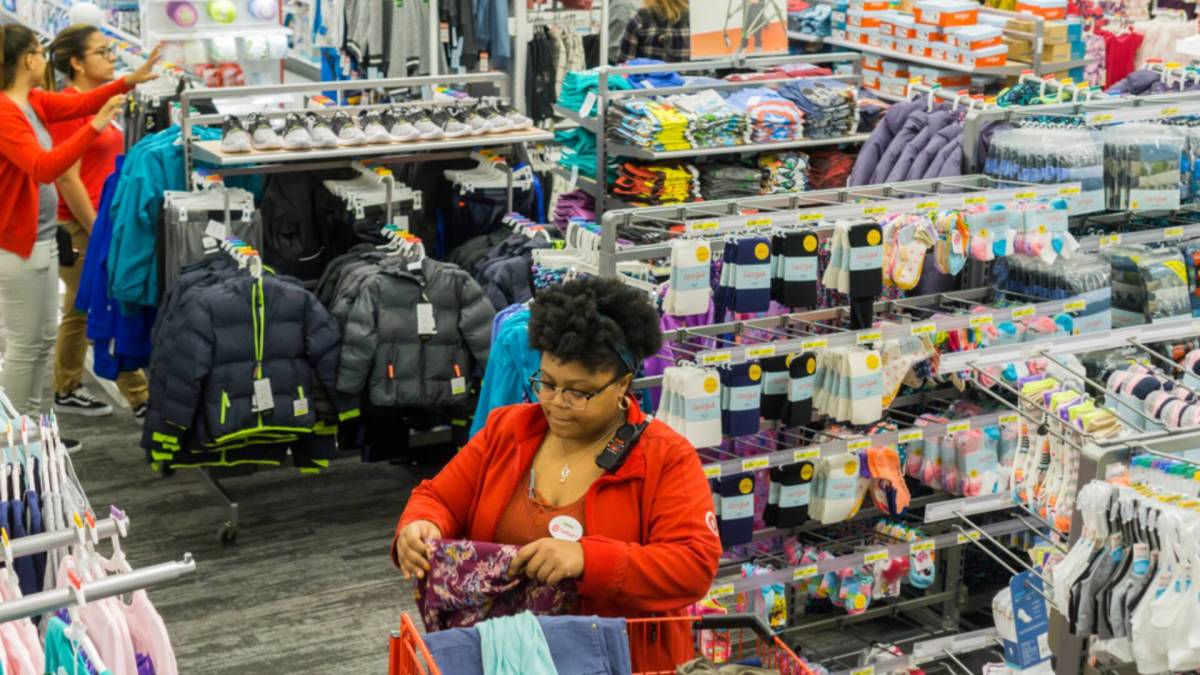 Target expects to mostly leverage its existing worker base.
Target shares its seasonal hiring plan
Traditionally, Walmart and Target added tens of thousands of workers to their workforce over the holiday season. This was a good way for new people to get their foot in the door, and many of these jobs turned into permanent opportunities.
That’s not going to be the case this year.
Target shared its holiday hiring plans on its website.
“We start by offering additional hours to current team members, and we tap into our On-Demand team — a flexible group of about 43,000 store team members who pick up shifts that work for their schedules,” the chain shared.
More Retail:
- Costco CFO makes rare pricing promise
- Home Depot faces growing consumer boycott calls ahead of holidays
- Target’s efforts to make amends with customers hit a snag
- Amazon lawsuit could be a warning to other employers
That doesn’t mean it won’t be doing any holiday hiring. The chain will add workers as needed.
“We also hire seasonal team members across our nearly 2,000 stores and 60-plus supply chain facilities to meet local demand and ensure fast, consistent service in every community we serve,” the company added.
What does Target pay seasonal workers?
- Our team members, including seasonal team members, earn a starting wage of $15 to $24 an hour, depending on role and location, and receive benefits from day one.
- That package includes early pay access, a 10% discount (plus 20% off wellness items), and access to 24/7 virtual health care and mental health support.
- Many also find opportunities for growth and development that lead to longer-term roles at Target.
- Last year, more than half of our seasonal store team members were offered the chance to stay on with Target after the holidays, and nearly 20% of our field leaders began their journey in seasonal roles.
Walmart is taking a similar hiring approach
Walmart is currently not taking seasonal hiring applications.
“This role is not currently open, but if it opens in the next 30 days, your application will be submitted. After 30 days, applications must be renewed to be submitted to future openings,” the chain shared on its website.
What Walmart pays seasonal workers
- Walmart lists starting pay as between $14 and $28.
- The chain also offers performance-based incentive awards.
- Health benefits include medical, vision, and dental coverage. Financial benefits include 401(k), stock purchase, and company-paid life insurance.
- Paid time off benefits include parental leave, family care leave, bereavement, jury duty, and voting. Other benefits include short-term and long-term disability, company discounts, Military Leave Pay, adoption and surrogacy expense reimbursement, and more.
- You will also receive PTO and/or PPTO that can be used for vacation, sick leave, holidays, or other purposes. The amount you receive depends on your job classification and length of employment.
- Live Better U is a Walmart-paid education benefit program for full-time and part-time associates in Walmart and Sam’s Club facilities. Programs range from high school completion to bachelor’s degrees, including English Language Learning and short-form certificates.
Tuition, books, and fees are completely paid for by Walmart.
Source: Walmart
Amazon makes a holiday hiring push
“Amazon is creating 250,000 jobs in the U.S. this holiday season, including in rural areas across the country. Regular full- and part-time employees earn an average of $23 per hour with benefits, and seasonal employees can earn over $19 per hour on average,” the company shared on its website.
The company shared that applicants should act fast.
“We find that our seasonal roles are really popular — often filling up within minutes of being posted—because they meet different needs for so many different people. For some, it’s a few months of extra income to support their families during the holidays. For others, it’s the first step in building a new career path,” the company shared.
Here’s what Amazon’s seasonal workers earn
- U.S. regular full- and part-time employees earn an average of $23 per hour with benefits, and seasonal employees can earn an average wage of more than $19 per hour.
- Roles will be posted weekly from October through December on hiring.amazon.com.
- For those who then stay on in regular full-time roles, the opportunities expand even further, with access to a range of benefits including health care and education programs like Career Choice — where Amazon pre-pays tuition for its workers to earn college degrees or certificates.
- Seasonal employees also see their pay go up significantly as they grow with Amazon. Someone who’s been with the company for three years has already seen their pay go up an average of 18%.
- “Every year, we meet employees who started as seasonal hires and go on to become managers, trainers, or leaders across our buildings, and we love that people everywhere can make these jobs what they want them to be,” the company shared.
Overall seasonal hiring looks bleak
“Seasonal hiring brushed off a slow start and accelerated in October, with the level of seasonal job postings rising to 11% above 2024 levels as of November 14. But the surge in demand may ring a bit hollow — last year was the weakest seasonal hiring year in recent Indeed data, and this year’s demand still pales in comparison to stronger years recorded in 2020, 2021, and 2022,” according to data from Indeed’s Hiring Lab.
Challenger, Gray, & Christmas has an even more bleak read on the data.
“Seasonal hiring announcements from U.S. employers have been limited so far this year, with only a handful of companies making public commitments to holiday staffing. Following a summer of subdued hiring, Challenger, Gray, & Christmas expects seasonal retail hiring in 2025 to fall to its lowest point since the recession-hit season of 2009,” the research firm shared.
Retailers added 543,100 jobs in the final quarter of 2024, down nearly 4% from 2023, as companies waited until late in the season to boost staff. In contrast, Challenger projects Retailers may add under 500,000 positions in the last three months of 2025, marking the smallest seasonal gain in 16 years.
Seasonal employers are facing a confluence of factors this year: Tariffs loom, inflationary pressures linger, and many companies continue to rely on automation and permanent staff instead of large waves of seasonal hires,” said Andy Challenger, senior vice president of Challenger, Gray, & Christmas.
He does, however, leave some room for optimism.
“While we could see a late hiring push if holiday sales surprise to the upside, the cautious pace of announcements so far suggests that companies are not betting on a big seasonal surge. This year may be more about doing more with less,” he added.