
Warner Bros. Discovery said “more than 93%” of shareholders who have voted so far have rejected Paramount Skydance’s hostile offer and backed the company’s planned sale of its studios and HBO Max assets to Netflix, according to Variety.
The company disclosed the figure in an update timed to Paramount’s latest move to stretch its tender offer and keep campaigning against the Netflix transaction.
In its statement, Warner added that investors had already turned down Paramount’s “subpar proposal” even before the tender deadline was pushed out to Feb. 20, presenting the vote count as proof that holders “have spoken clearly about which transaction they prefer.”
This fight looks different once I factor that detail in. Instead of two clean bids chasing undecided holders, I see a hostile suitor trying to pry loose investors who already lined up behind a board‑backed Netflix plan, which helps explain Warner’s increasingly hard “inferior scheme” line.
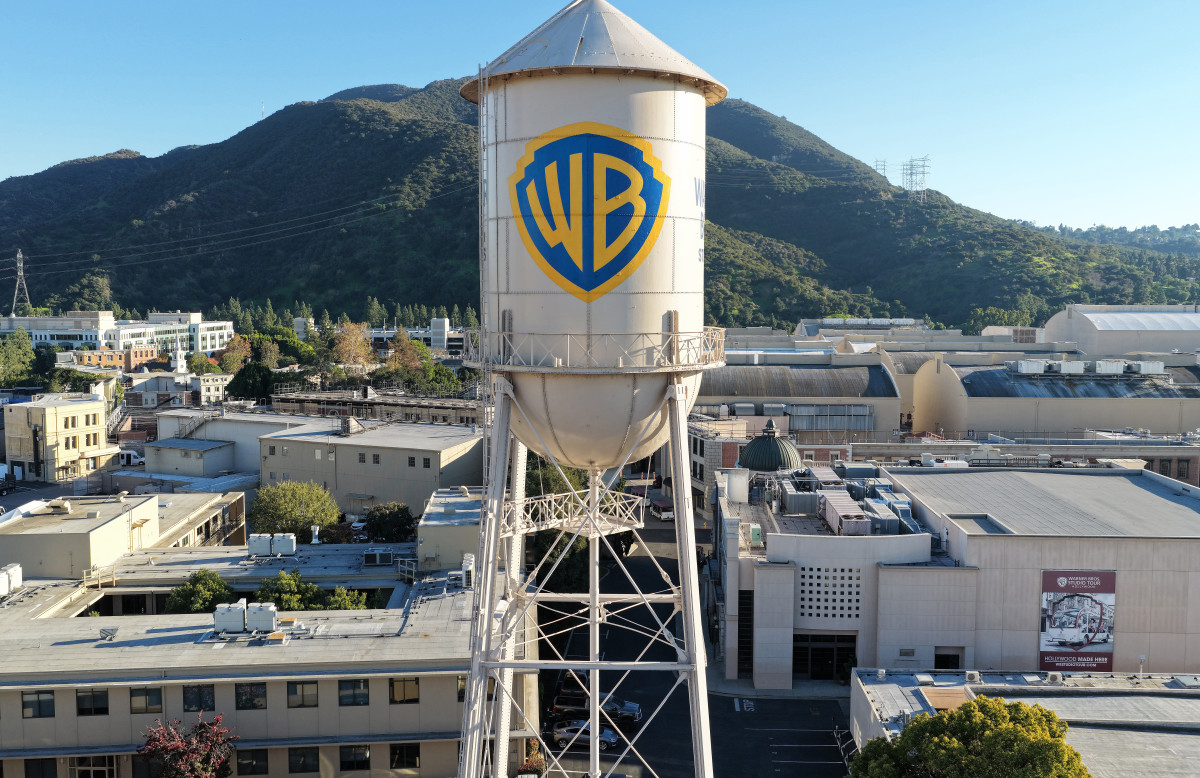 Warner Bros. Discovery investors slam Paramount’s ‘inferior scheme.‘
Photo by Mario Tama on Getty Images
Why Warner Bros. board calls the bid an ‘inferior scheme’
Warner’s board said Paramount’s latest offer “remains inferior” to the merger agreement with Netflix “across multiple key areas,” including value, debt load and protections for shareholders. In an open letter filed with the Securities and Exchange Commission, the directors wrote that Paramount’s bid “continues to provide insufficient value, including terms such as an extraordinary amount of debt financing that create risks to close and lack of protections for our shareholders if a transaction is not completed.”
Related: Netflix customers angry over cancellation news
The same letter laid out a series of concrete costs that Warner investors would face if they walked away from Netflix now and then saw the Paramount deal fall apart later, including a $2.8 billion break‑up fee owed to Netflix, a $1.5 billion charge tied to a blocked debt exchange and roughly $350 million in additional interest expense.
The board said those numbers mean Paramount’s proposal is “materially inferior to the Netflix merger when viewed on a risk‑adjusted basis,” even before factoring in the implied value of the Discovery Global cable and news business that will remain public.
More Streaming:
- Paramount Warner Bros. hostile bid has a catch for cable networks
- Apple TV adds key feature Netflix dropped
- Facebook makes daring move to challenge Disney, Netflix
- Box office is booming in 2025 but Netflix’s $82.7 billion surprise raises alarms
For me, that risk‑adjusted framing is key to understanding why Warner is willing to publicly antagonize Paramount instead of trying to extract a sweeter counteroffer. If directors truly believe the hostile bid could leave shareholders exposed to billions in break‑up‑fee damage with no deal to show for it, then calling it an inferior scheme is not just spin; it becomes part of their defense if anyone later accuses them of underselling the company.
What Paramount is pushing and how the messaging has shifted
Paramount Skydance is offering $30 in cash for each Warner Bros. Discovery share in a full takeover, and it has moved to extend its tender in an effort to win over more holders and block the Netflix transaction at an upcoming special meeting.
In its own public statements and filings, Paramount has described its proposal as “richer” on headline value and argued that an all‑cash structure gives Warner investors a cleaner exit than a combined cash‑and‑stock package tied to Netflix shares and a spin‑off.
Warner responded to the extension by again labeling the Paramount bid an “inferior scheme,” saying Paramount was “persist[ing] in presenting the same proposal that our Board has consistently unanimously rejected in favor of [a] superior merger with Netflix,” UPI reported.
This is at least the second time in a month that Warner’s directors have told shareholders to dismiss an updated Paramount offer as “subpar” compared with the Netflix arrangement, even after Paramount tweaked some terms and clarified parts of its financing, the BBC noted.
Paramount’s decision to move the tender deadline gives it more time to lobby institutional investors who have not yet voted, and to pitch its case that regulators might look more kindly on a studio‑to‑studio deal than on Netflix securing control of Warner’s premium content library, Deadline said. Skydance backers still believe “deal fatigue” and market volatility could push some shareholders to reconsider the perceived certainty of Netflix’s offer if headlines turn against the streaming giant in coming weeks, the trade outlet added.
How the bid lines up with Netflix’s earlier ‘bold move’
In an earlier piece for TheStreet, I walked through how Netflix tweaked its Warner bid to lean more heavily on cash and dial down stock‑price uncertainty for Warner investors who were already nervous about volatility in the streaming trade.
That adjustment did not radically change the headline economics but made the contrast sharper between Netflix’s negotiated structure and Paramount’s hostile pitch, particularly around execution risk and clarity on who bears the cost if something goes wrong.
I argued then that Netflix’s move was “bold” because it framed the decision less as a simple price comparison and more as a choice between two very different risk profiles for the same set of assets. Warner’s board has now picked up that framing, telling shareholders that the Netflix combination “is more advantageous than Paramount Skydance’s cash offer of $30 per share when taking into account Discovery Global’s implied value and execution risks,” as summarized in my earlier coverage.
For investors who followed that earlier analysis, the current 93% vote figure almost reads like a real‑time verdict on that bet.
What analysts and outside voices are seeing in the numbers
Warner’s directors have privately described the Paramount Skydance offer as “illusory,” arguing that the Ellison‑backed group “has consistently misled WBD shareholders” about how fully its financing is backstopped and how insulated they would be if the deal hit a regulatory wall, TechCrunch said.
The board has also highlighted the absence of any Paramount commitment to cover the multibillion‑dollar costs of breaking the Netflix agreement if regulators or lenders later derailed the hostile bid, calling that gap a major reason the cash headline looks better than the underlying math, Fortune reported.
Warner’s public statements are now clearly aimed at “locking in” the early voting momentum it has with the 93% figure while Paramount continues to lobby unvoted institutional holders and proxy‑advisory firms, Bloomberg noted.
Paramount Skydance’s decision to extend its tender shows it still believes it can pry loose more support, but Warner’s current shareholder base “has already rejected” the hostile approach in large numbers, at least in the preliminary counts disclosed so far, Variety said.
What I’d watch next if I owned the Warner Bros. Discovery stock
If I held Warner Bros. Discovery today, I’d be tracking three things above everything else:
- The final vote count
- Fresh regulatory signals
- Whether Paramount sweetens its offer or adds stronger protections for existing Warner holders.
The 93% figure gives Warner and Netflix a powerful narrative, but only the official tallies from the tender and the special meeting will confirm whether that early margin holds once every big institution has weighed in.
I’d also keep a close eye on how regulators respond to Netflix’s argument that spinning off Discovery Global and avoiding foreign ownership should ease antitrust and national‑security concerns. If regulators start signaling unease with the structure, that could narrow the perceived certainty gap between Netflix and Paramount, even if the economics on paper do not change immediately.