
Warren Buffett built one of the largest fortunes in history by picking stocks. Yet the advice he has given ordinary investors for decades sounds almost boring next to his own record. It is advice that has outlived countless market fads. His instruction has stayed remarkably simple: buy a low-cost S&P 500 index fund and hold it.
That boring advice keeps giving. The S&P 500 set a fresh record high in early October, and Buffett’s go-to recommendation continues to pay off for patient investors. The bigger story is how many people have taken his words to heart.
The advice Buffett never stopped giving
Buffett has made the same point in almost every format he uses. “My regular recommendation has been a low-cost S&P 500 index fund,” he wrote in his 2016 letter to Berkshire Hathaway shareholders, published on Berkshire’s website. He has also said he gave similar guidance to the trustee who will manage the money he leaves to his wife.
Also read: Warren Buffett has a stark message for stock market investors
The details of that plan are telling. In his 2013 letter, Buffett said the trustee should put 90% of the cash in a very low-cost S&P 500 index fund and 10% in short-term government bonds, and he suggested Vanguard’s fund. A man who could hire any manager in the world chose an index fund for his own family.
He repeated the message at Berkshire’s 2020 annual meeting. “In my view, for most people, the best thing to do is owning the S&P 500 index fund,” Buffett said. He added that nobody knows what the market will do tomorrow, next week or next year.
Timing, in his view, should not decide when people invest. In a 2017 CNBC interview, Buffett said the trick is to buy all the big companies through the S&P 500 and to do it consistently, according to The Motley Fool. He also urged investors to keep buying through thick and thin, especially through the thin times. Downturns, in other words, were buying opportunities rather than reasons to sell.
The bet that proved his point
Buffett did more than talk about it. In 2007, he bet Protégé Partners $1 million that an S&P 500 index fund would beat a basket of hedge funds over 10 years, and he won. His Vanguard fund returned 7.1% a year, compared with an average of 2.2% for the hedge funds, as CNBC reported.
Fees help explain the gap. “Costs really matter in investments,” Buffett has said. And index funds still keep those costs low while spreading money across many companies instead of one. A small fee difference can also add up to a large sum over decades of compounding.
The data keep backing him up. In the first half of 2026, 67% of actively managed large-cap funds trailed the S&P 500. Over the 15 years through June 30, 90.49% of them underperformed, and over 20 years the figure rose to 92.61%. Funds that were merged or closed count as underperformers in that tally.
The full-year picture was even worse. In 2025, 79% of active large-cap funds lagged the S&P 500, which tied the result to the low-cost index case Vanguard founder Jack Bogle made decades ago. In other words, the professionals Buffett warned about are still mostly losing to the benchmark.
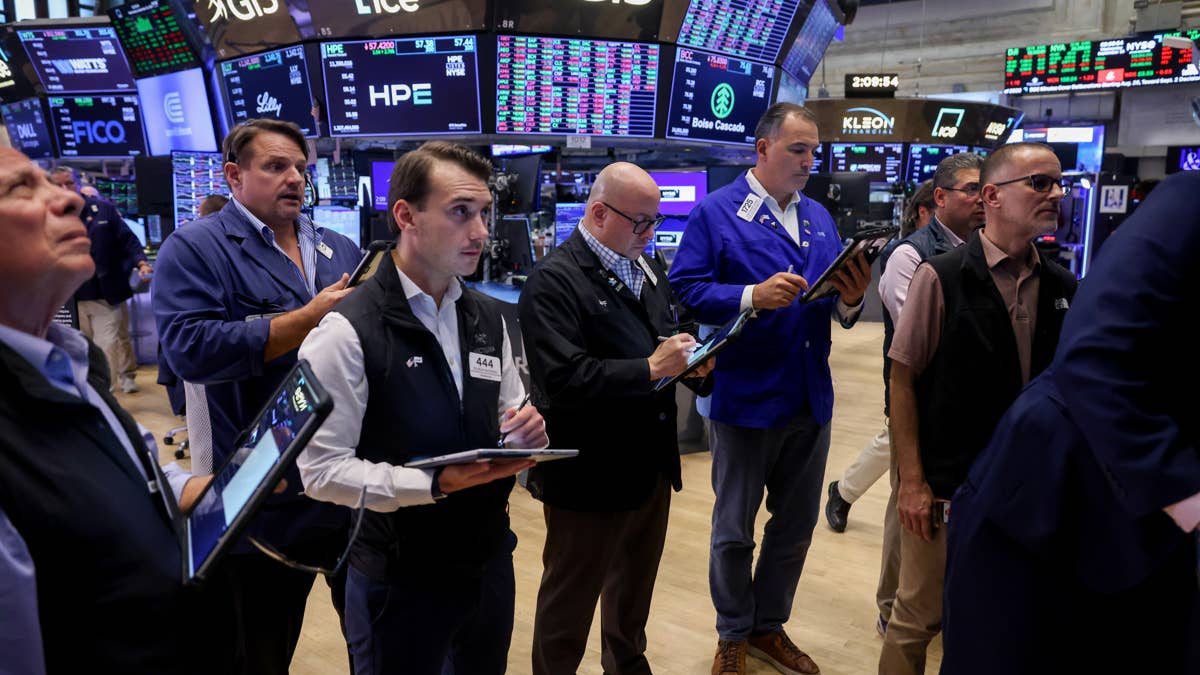 Warren Buffett built one of the largest fortunes in history by picking stocks, especially those in one particular category.
How his advice is shaping portfolios in today’s market
Investors appear to be listening. The Vanguard S&P 500 ETF, part of the same Vanguard fund Buffett pointed his trustee toward, crossed $1 trillion in assets on June 3, becoming the first ETF ever to do so and overtaking State Street’s SPDR S&P 500 ETF Trust as the world’s largest ETF, as reported by Reuters. Its parent mutual fund was the first index fund offered to retail investors.
Those who followed the advice have been rewarded. The Vanguard S&P 500 ETF has roughly quadrupled an investment over the past decade. That required no stock research at all, just patience. Reinvested dividends were part of that result, a reminder that staying invested matters.
More Warren Buffett:
- Warren Buffett’s $142 billion fortune hits a new milestone
- Warren Buffett’s farewell letter has 4 words for every investor
- Warren Buffett shares a simple rule for surviving a market crash
Part of the appeal is how little work it takes. Buying an S&P 500 index fund does not require investors to judge whether a business or its management team is outstanding, according to The Motley Fool. The outlet also noted that the S&P 500 and its predecessors have consistently delivered positive total returns over 20-year periods.
Simple advice that still holds up
The irony is that Buffett’s own company beat the market for decades. Berkshire posted a 19.7% annualized share-price gain from 1965 through 2025, compared with 10.5% for the S&P 500, yet Buffett still recommended index funds for family wealth, according to TheStreet. Few investors have the time, skill or temperament to repeat that record.
His plan was never meant as a one-size-fits-all formula. The 90/10 split he described was for his estate, and investors should build an emergency fund before putting money into an S&P 500 fund. An S&P 500 fund also holds no foreign companies, so some investors add an international fund alongside it.
What remains is the core idea. “If you bet on America and sustain that position for decades, you’d do far better than buying Treasury securities,” Buffett said in 2020. Markets will still have rough years along the way. For investors willing to stay patient and keep costs low, that bet is still paying off.
Related: Warren Buffett doubles down on stock market message for 2026
