
You wouldn’t typically see Warren Buffett unloading a stock like this, let alone one he’s held for more than a decade.
This week, though, VeriSign (VRSN) finds itself at the center of what’s an uncharacteristically sharp trim. Berkshire Hathaway (BRK.A) , (BRK.B) significantly cut its position in the stock, just as it posted another rollicking quarterly report.
💵💰Don’t miss the move: Subscribe to TheStreet’s free daily newsletter💰💵
On the surface, nothing seems broken, which has investors wondering — why now?
Perhaps a regulatory move, a valuation call, or something deeper?
One thing is for certain, though: In a market that’s chasing flash, Buffett’s choice to cut a high-performing player is anything but casual.
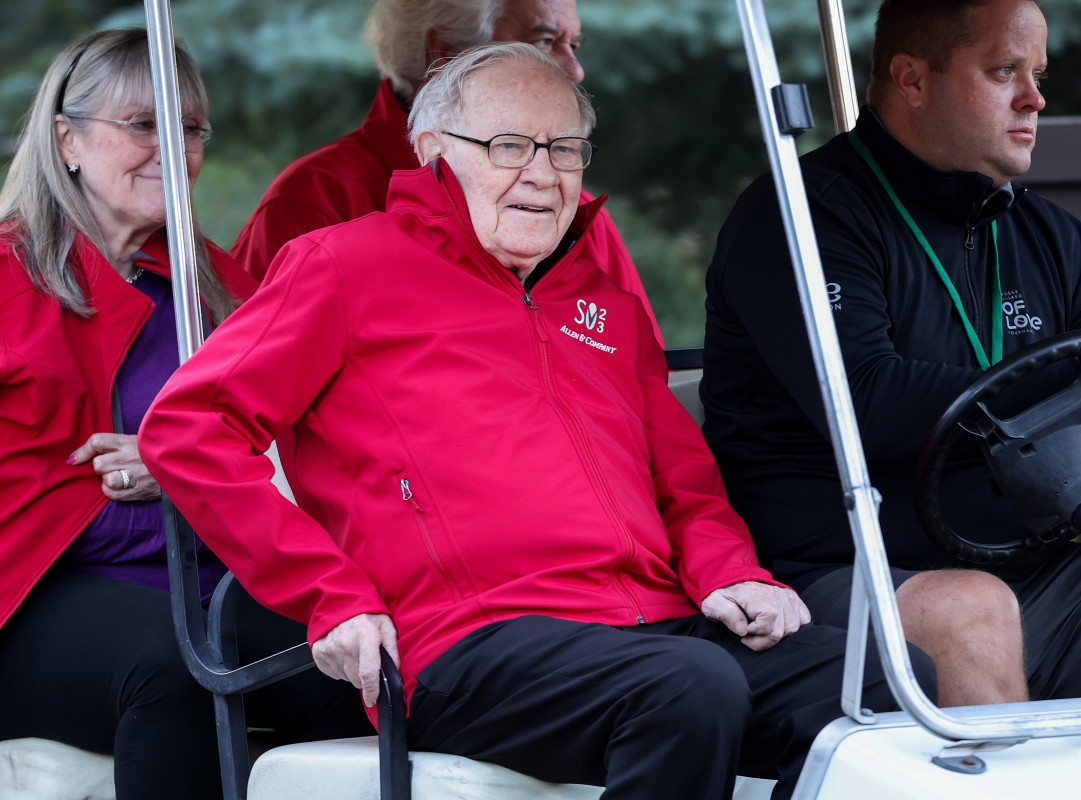 Warren Buffett’s Berkshire Hathaway trims its stake in VeriSign, selling $1.2 billion worth.
Image source: Kevin Dietsch/Getty Images
The evolution of Buffett’s tech playbook
Warren Buffett’s early apprehension of tech is the stuff of legend.
He famously stayed away from the sector for decades, once admitting he couldn’t understand it, and barely used a computer himself.
Related: Morgan Stanley names tech stock winner from One Big Beautiful Bill Act
However, that stance quietly changed in 2016, when Berkshire began loading up on Apple. By 2018, the position had swelled to over $36 billion. Today, Apple alone accounts for over 25% of Berkshire’s public holdings.
Still, Buffett hasn’t gone full Silicon Valley.
His tech playbook favors digital infrastructure over disruption. Businesses like VeriSign, with their recurring cash flows and healthy renewal rates, along with broader investments in data centers or AI-related chip pipelines, fit a more classic mold.
At this point, over 30% of Berkshire’s public-stock portfolio leans into tech, but not the kind with moonshot promises.
His goal has been to focus on companies with durable digital moats, redefining the tech space on his own terms.
Buffett’s cash pile signals patience in the stock market
That said, it’s also imperative to look at Warren Buffett’s latest moves, which mostly exude patience.
In his 2024 annual letter, published this past February, The Oracle put it bluntly by saying, “Often, nothing looks compelling; very infrequently we find ourselves knee-deep in opportunities.”
That theme of restraint has mostly been Berkshire’s posture throughout the year.
By the end of Q1 this year, Berkshire’s cash stockpile surged to a record $347.7 billion, up from $334.2 billion at year-end.
Related: Bank of America flags 3 breakout stocks to watch ahead of earnings
That mountain of dry powder shows a few stocks seem attractively priced, despite the AI-driven market frenzy.
At Berkshire’s May shareholder meeting in Omaha, Buffett laid investor fears to rest, calling recent volatility “not a dramatic bear market or anything of the sort.”
Instead, he felt it was best to avoid focusing on the noise and staying rational in the process.
That said, Berkshire has been a net seller for 10 consecutive quarters. Buffett is waiting for more value and moats, along with opportunities when markets overshoot and capital allocation really pays off.
Buffett’s $1.2 billion sale slashes Berkshire’s VeriSign stake below 10%
Warren Buffett isn’t one to make moves casually, and his $1.2 billion sell-off of VeriSign has investors buzzing.
Berkshire Hathaway trimmed its stake from 14.2% to 9.6% in the stock, triggering over a 6% drop in pre-market trading on Tuesday.
Naturally, there’s always logic behind any Buffett sale, but it also raises real questions.
Let’s begin with the rationale: The move isn’t exactly a sudden vote of no confidence in VeriSign.
By slipping behind the 10% ownership threshold, Berkshire effectively sidesteps the extra SEC filings like Schedule 13D amendments. That’s a regulatory perk that gives it greater privacy and flexibility going forward.
Also, this kind of stake-trimming isn’t new.
In 2024, Berkshire made a similar move with Bank of America, reducing its stake just under 10% while pocketing $10 billion.
Also, with its record cash pile, Buffett’s looking to redeploy capital elsewhere.
However, that doesn’t mean it’s all fine and dandy with VeriSign. The stock was sold at $285, a considerable 7% discount to the market, and the offering could grow even bigger, with another 515,000 shares still on deck.
That discount, along with a massive one-third reduction in Berkshire’s position, naturally raises a ton of questions.
Also, trimming a stake this sharply suggests there might be a shift in priorities, or perhaps less conviction in VeriSign’s long-term potential.
More News:
- Top economist drops 6-word verdict on Trump tariffs, inflation
- Amazon’s quiet pricing twist on tariffs stuns shoppers
- Nvidia avoids White House crackdown; Trump softens on AI giant
On top of that, every dollar from this deal goes to Berkshire’s affiliates, and naturally, VeriSign gets no capital infusion, no growth bump, or any strategic upside.
Why VeriSign still fits Buffett’s long-term playbook
That said, despite Buffett’s trimming, his decade-long interest in VeriSign is no accident.
VeriSign sits quietly at the core of the internet, being the official registry for .com and .net domains.
Every time someone registers or renews a domain, VeriSign collects a fee. That robust model generates subscription-like sales, with renewal rates north of 70%, backed by incredible pricing power due to agreements with ICANN.
It’s exactly the kind of steady, capital-light businesses Buffett loves.
It’s essentially high margin, low operating costs, and recurring cash flows, which effectively makes it an excellent example of a durable economic moat.
Berkshire Hathaway first scooped up VeriSign back in 2012, and as of March 31, 2025, it held 13.29 million shares valued at over $4 billion.
Even as Berkshire sold down the position, it was picking up new shares as recently as January.
On top of that, VeriSign is up more than 49% year to date, backed by a Q2 showing that blew past expectations.
Related: Billionaire drops bold housing market reset prediction