
The S&P 500 is up roughly 19% over the past six months. The Nasdaq has gained about 26% over the same period. Both indexes hit record highs this week.
Those numbers look good on paper. The mood behind them is a different story. Price gains that outrun earnings attract a certain kind of buyer. History has a record of how that ends.
Warren Buffett has a name for what he is watching. He compared the current market to a church with a casino attached, and he was not flattering the casino side.
Also read: Warren Buffett doubles down on stock market message for 2026
What Buffett said and what he meant by the casino
Buffett made the remark during a CNBC interview at Berkshire Hathaway’s annual meeting. The church, in his analogy, represents long-term investors buying businesses based on what they are actually worth. The casino is the other side, where rising prices, rather than the value underneath, drive the buying.
“We’ve never had people in a more gambling mood than now,” Buffett told CNBC.
He added that this does not mean “investing is terrible,” but that “prices for an awful lot of things will look very silly.” That is a warning from someone who has watched markets for more than seven decades.
The number that shows how expensive stocks really are
One figure puts the current market in context. The S&P 500 Shiller CAPE ratio has been above 40 since May 2026. The ratio measures the index’s price against its average inflation-adjusted earnings over the prior 10 years. A higher number means investors are paying more per dollar of earnings.
The long-term average sits at approximately 17. The ratio hit a record 44 in late 1999, shortly before the dot-com bubble burst in March 2000. The current reading does not guarantee a crash. It does mean that stocks are priced at levels that have historically left very little room for disappointment.
Buffett has repeated this warning throughout 2026. Berkshire Hathaway has also been sitting on cash rather than putting it to work. That is its own signal.
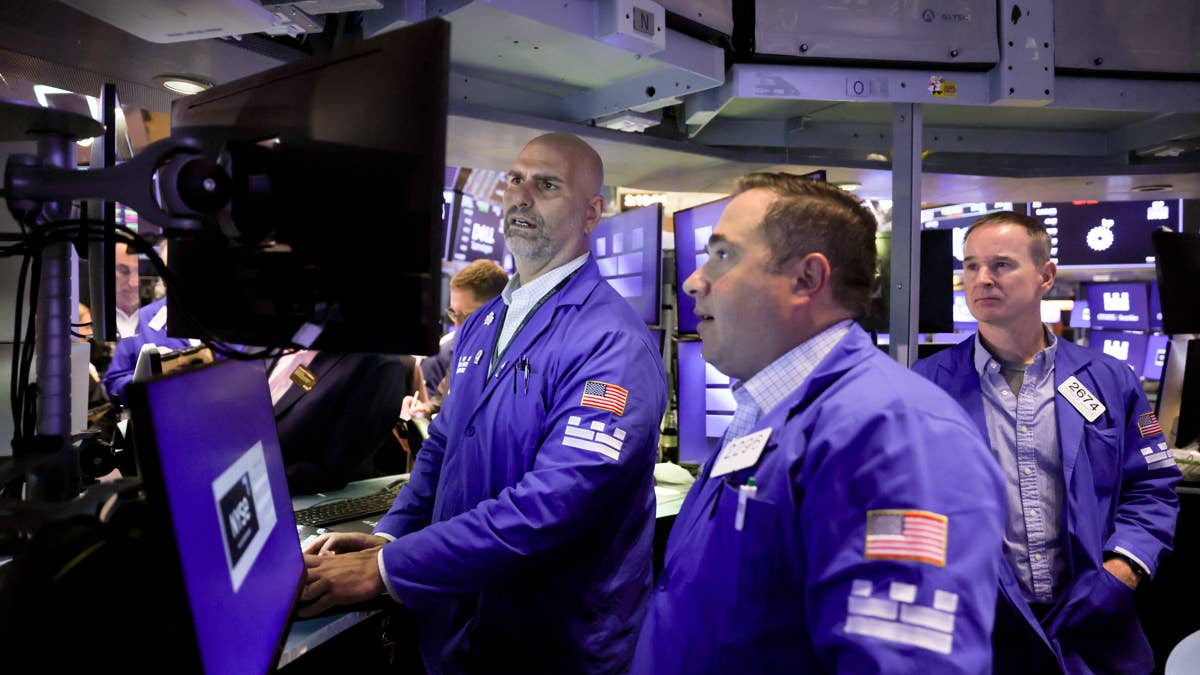 Buffett has repeated his warning that rising prices, rather than the value underneath, have driven the buying throughout 2026.
The 1990s already showed where this tends to go
The dot-com era is the closest modern comparison. Hundreds of technology companies saw their shares climb through the 1990s on enthusiasm alone. Many collapsed when the bubble burst in early 2000, and the worst performers were companies with weak balance sheets, unsustainable models, and little behind the stock price besides a rising chart.
The companies that held up were the ones with real earnings, manageable debt, and competitive advantages that were hard to copy. A rising stock price made a lot of businesses look successful. It did not keep them alive when sentiment turned.
That lesson applies now, too. The names driving today’s rally may be more fundamentally sound than 1999’s crop of dot-com stocks.
But the behavior Buffett is describing, buying because prices are rising rather than because the business is worth the price, is the same behavior that has always ended the same way.
How to tell hype from real value in your portfolio
You do not need to sell everything because Buffett is cautious. You do need to look harder at what you own.
Start with earnings. A company that generates consistent cash flow has something to fall back on when sentiment turns. A company that depends mostly on investor enthusiasm does not. Check whether the businesses you hold are actually profitable, not just growing revenue.
Look at debt. Companies carrying heavy debt face more pressure when credit conditions tighten or revenue slows. A clean balance sheet gives a business room to survive a downturn that a leveraged one does not have.
More Warren Buffett:
- Warren Buffett’s $142 billion fortune hits a new milestone
- Warren Buffett’s farewell letter has 4 words for every investor
- Warren Buffett shares a simple rule for surviving a market crash
Check the valuation. A stock at a high multiple needs a business that can actually grow into its price. If the growth story leans heavily on what might happen, that is worth a second look. High expectations are not the problem. Paying for them before the company earns them is.
Consider your concentration. If a handful of high-flying names account for most of your gains and most of your exposure, that is a risk worth understanding before conditions change.
Buffett’s concern is not that stocks are bad investments, Fortune reported. It is that a speculative mood tends to inflate prices across the board, including the prices of things that do not deserve them.
What to do when an investor this experienced raises a flag
You do not need to predict the top. Trying to time the market costs most investors more than the correction they were trying to avoid.
What you can do is review your risk. A portfolio that made sense before a six-month rally may look different now. Rebalance before a correction rather than after one. Selling at a loss to get to a sensible allocation is harder than doing it while you are still up.
Keep investing regularly. Dollar-cost averaging works because it takes the guessing out. When prices are high, you buy fewer shares. When they pull back, you buy more. You do not have to call the top.
Money you will need in the next two or three years should not be in stocks. That is true at any valuation level. It matters more right now.
Buffett’s warning is not a prediction of what happens next week. It is a reminder that markets do not stay detached from fundamentals forever. The investors taking that seriously now will be better prepared than the ones who are not.
Related: Michael Burry doubles down on his stock market stand
