
Anthropic did not acknowledge guilt in a landmark case, instead arguing that the law was on its side.
On the surface, it looks simple: Anthropic got sued, and now it’s settling.
But the real story runs deeper – and every AI company knows it. That’s why market watchers are reacting to the news with tremendous interest.
Anthropic, a rising star in the AI world backed by Google (GOOGL) and Amazon (AMZN) , built its Claude chatbot to rival ChatGPT. Like others in the space, it trained that model on mountains of text scraped from the internet. Some of that material, according to a group of authors, came from pirated copies of their books.
Unsurprisingly, the authors took the AI startup to court. Anthropic fought back, arguing the use was fair under copyright law – and in June, a judge mostly agreed. But he also drew a hard line: Downloading pirated material? Still illegal.
That murky middle ground – legal-ish, but risky – may be what pushed Anthropic to settle, providing some much-needed clarity for the AI space. And with a $1.5 billion price tag, it’s the kind of deal that gets the attention of every other company building AI on scraped content.
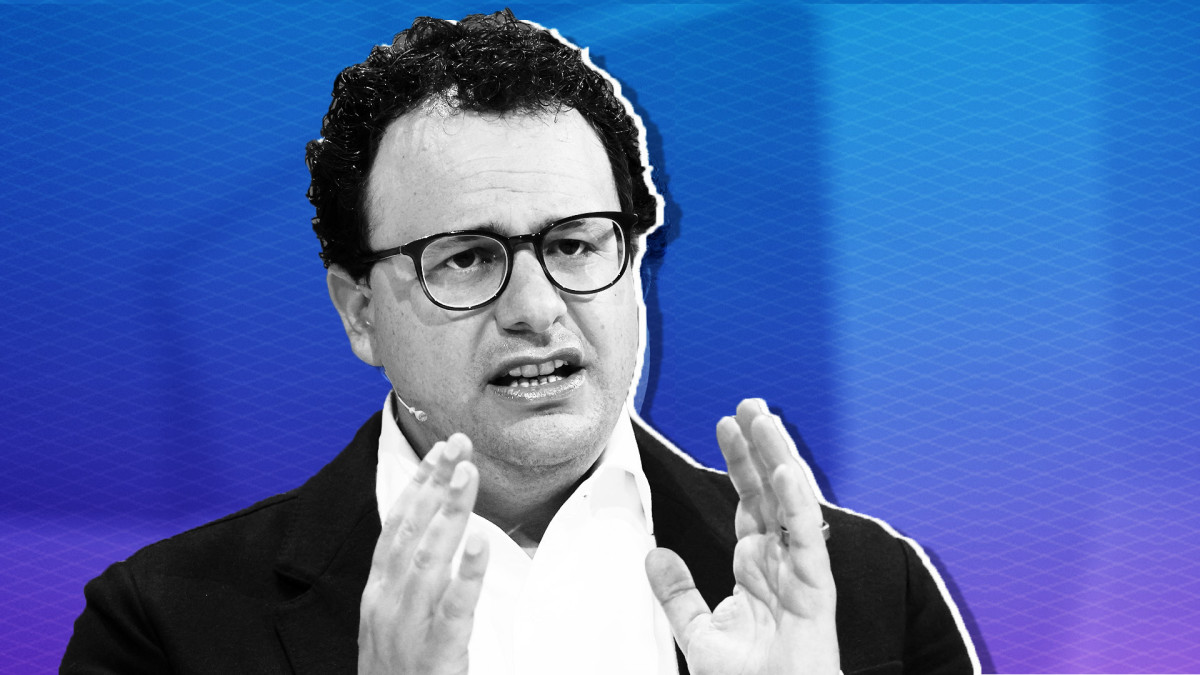 Anthropic CEO Dario Amodei is among the AI leaders to watch as his company demonstrates growth.
Image source: Getty/TheStreet
Why Anthropic’s copyright settlement matters now
The Anthropic copyright settlement set off alarm bells throughout the publishing industry.
In 2024, three writers — Andrea Bartz, Charles Graeber, and Kirk Wallace Johnson — sued Anthropic, saying that their work had been stolen and used to help make a commercial AI product.
Anthropic fought back fiercely, contending that fair use made the activity legitimate. A federal court mostly agreed in June, saying that the company’s training approach was “exceedingly transformative.”
Related: Paramount’s return to office mandate sparks fear of mass layoffs
But there was a catch to that ruling: It was still against the law to download pirated content, even if it was for a good reason, such as training AI.
That legal murky area may have been what led to the historic settlement, and it’s also why other AI businesses are keeping a close eye on all of these developments.
The Anthropic settlement’s ripple effect across Silicon Valley
The takeaway from the Anthropic case goes beyond three authors and one new business. It may have put a price on something the whole sector has been treating as free: the words that teach robots how to do things — essentially the lifeblood of AI-focused enterprises.
Companies such as OpenAI, Meta (META) , and Google should be worried about it. All of them are being sued by popular writers in the same way.
Related: Mark Zuckerberg drops $600 billion surprise at White House dinner
And now judges and attorneys will use a standard of $3,000 per book to figure out how much harm was done. It’s not inexpensive to set the bar.
It also makes one think about what will happen to smaller AI companies that don’t have Google or Amazon on their side. A billion-dollar payoff would be okay for a firm that has big tech companies behind it, but for a small startup, it’s the end of the line.
The settlement isn’t simply a legal matter; it’s also about who will remain in the AI race.
Why Amazon and Google might actually like the Anthropic settlement
Anthropic lost a billion dollars on paper. But its biggest backers, Amazon and Google, may think it’s money well spent.
Both digital giants have invested billions of dollars in the company, hoping that Claude can compete with ChatGPT and Gemini. A long, complex copyright legal fight may have slowed things down and frightened off investors.
Anthropic cleared the way by paying the bill, showing that it is eager to collaborate with publishers.
That’s important, because the next big fight for the business isn’t only in courtrooms; it’s also in Washington. Regulators are watching, and lawmakers are wondering who owns the information that makes AI work.
Amazon and Google know that a settlement that sets a precedent might give Anthropic some breathing room, which means they too could benefit.
What does it all come down to? The age of “free” training data is almost over. Companies that can afford it will keep building, while those who can’t may never get off the launchpad.