
Fasten your seatbelts, people, we’re heading for the future.
Specifically, McKinsey analysts took a ride to the year 2040 and shared their insights about the future of autonomous vehicles
Now, there are probably a bunch of you rolling your eyes at the very thought of another story about the future of driverless cars, which always seem to be just around the corner.
But before you scoff, McKinsey cited statistics showing that Europe has been home to more than 35 autonomous-vehicle pilots to date, and that the U.S. and China each see more than 450,000 and 250,000 commercial rides per week, respectively.
In a recently released video series about self-driving cars, the consulting firm said that ultimately, the story of AVs “will be less about the cars and more about the new patterns of life and work that they enable.”
“When I think about 2040, what really excites me about AVs is the way that they will have affected urban planning,” said Ali Rizvi, a partner in McKinsey’s Bay Area office.
“If you think about the way that AVs are starting to operate within our urban cities already—take San Francisco as an example—what you’re starting to see is how efficiently they communicate with each other and the way they follow the rules of the road.”
“Ten years, 15 years down the road, I imagine there’s no more need for driver’s licenses,” said Mingyu Guan, a senior partner and the managing partner of McKinsey’s Beijing office. “All the vehicles on the road will be autonomous driving equipped. This will free up our time to do something else.”
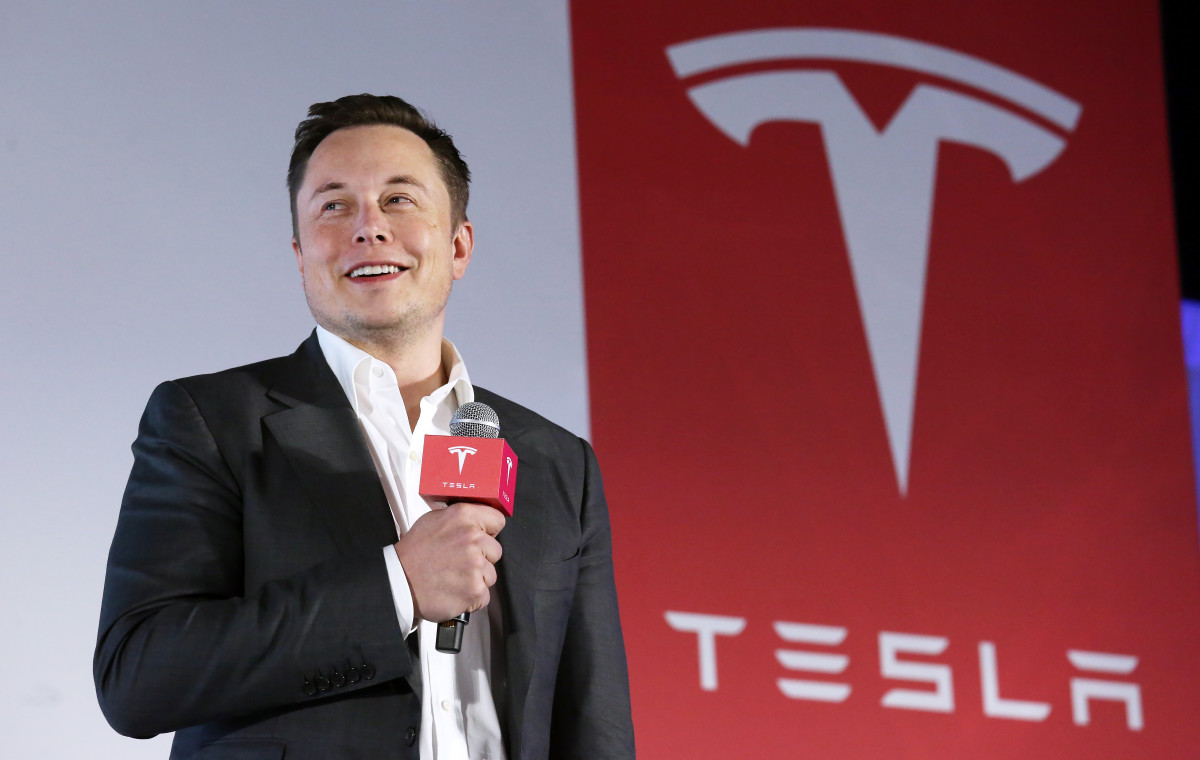 Tesla CEO Elon Musk has promised autonomous vehicles for years.
Photo by South China Morning Post on Getty Images
Driverless vehicles coming slower than expected
The firm acknowledged that, according to its biannual survey, adoption timelines for AVs have slipped by one to two years on average compared with a 2023 report.
L4 robo-taxis—which do not require human interaction in most circumstances—are now operating in select U.S. and Chinese cities, but a large-scale global rollout is now expected in 2030, rather than 2029.
More automotive:
- Tesla investors may miss game-changing move
- Key auto parts and services company files Chapter 11 bankruptcy
- Top-rated analyst drops curt 8-word take on Tesla stock
- U.S. car maker wins 2025 sales race with 2.8 million vehicles sold
- Ford turns a setback into a win
McKinsey said that urban pilots for private autonomous cars are likely to be delayed until 2032, with fully autonomous trucking reaching viability that same year instead of 2031.
“Overall, experts expect that robotaxis will be the first commercial application for L4 in mobility—not privately owned cars,” the firm said.
Still, transportation regulators and safety researchers have cautioned that large-scale deployment will depend as much on regulatory approval and public trust as on technical progress.
The World Economic Forum (WEF) said in a study published last year that it is becoming apparent that large-scale rollout of AVs will be slower than once anticipated, “given the many challenges and inherent technological, regulatory and economic complexities.”
“Despite this, the rationale for AV adoption remains compelling, driven by substantial potential benefits including enhanced safety, improved efficiency and lower costs,” the international advocacy organization said.
Tesla (TSLA) CEO Elon Musk has been promising fully autonomous vehicles since Barack Obama was president and has been coming up short.
Nevertheless, the world’s richest man, who once called himself “the boy who cried FSD,” came to the WEF’s recent annual meeting in Davos, Switzerland, to declare that self-driving cars are “essentially a solved problem at this point.”
Related: History of Tesla & its stock: Timeline, facts & milestones
Tesla earnings on deck
He also said the electric-vehicle giant’s robotaxi service is expanding and that he expects it to be “very, very widespread by the end of this year within the U.S.”
In addition, Musk stated that he was looking to get Supervised Full Self-Driving approval in Europe, hopefully next month, and then maybe a similar timing for China,” although China Daily, citing a Chinese government source, said that reports of an imminent approval in the world’s largest auto market are “inaccurate.”
Tesla recently said that it had begun using a handful of autonomous vehicles without safety monitors in its robotaxi ride-hailing service in Austin, Texas.
The company is scheduled to report fourth-quarter and full-year results on Jan. 28, and the artificial-intelligence and robotics plans, including the Optimus humanoid robot, “are front and center of investors’ questions for the company,” Morningstar reported.
Related: Prediction markets like Kalshi are monetizing reality & the gaming industry is pushing back
The company allows investors to submit and vote on questions to be raised at Tesla’s quarterly earnings call.
The quarter’s top question was related to Musk’s aerospace company SpaceX, which is preparing for a potential Initial Public Offering, but investors also asked Tesla to elaborate on the bottlenecks currently limiting the company’s ability to boost its deployment of robotaxis.
They also want to know about the economics of Tesla’s initial robotaxi efforts, with service so far available only in Austin and the San Francisco Bay Area.
The company said in April that it plans to begin production of the Cybercab, a vehicle that lacks pedals and a steering wheel.
Tesla also plans to scrap the option for customers to buy FSD through a one-time payment, which would leave interested consumers locked into a subscription plan that currently costs $99 per month.
Related: The AI megatrend: What 2026 holds for tech stocks and productivity