They can decide your freedom, your finances — and in some cases, whether you live or die.
They are a jury of your peers, 12 of your fellow Americans who play a vital role in a system dating back to ancient times that has evolved over centuries to become what Thomas Jefferson once described as “the only anchor ever yet imagined by man, by which a government can be held to the principles of its constitution.”
Citizens are picked at random and summoned to court, where they undergo a questioning process by judges and attorneys known as voir dire — French for “to speak the truth” — to determine suitability, impartiality, and eliminate bias.
Some attorneys work with jury consulting firms to analyze and select jurors, aiming to improve case outcomes.
These companies employ social scientists, psychologists, and legal professionals who use such techniques as mock trials, witness preparation, and real-time monitoring of court proceedings.
The 1971 Harrisburg Seven trial — in which anti-war activists faced a failed conspiracy charge — is widely recognized as the landmark beginning of modern jury consulting and “scientific jury selection.”
Jay Schulman, a sociologist from Columbia University, signed on with the defense team, and he and his colleagues surveyed over 1,000 Harrisburg residents and conducted follow-up interviews.“They came up with a demographic profile of individuals most and least likely to sympathize with the defense and used this profile to guide jury selection,” according to a 2004 report by Villanova University.
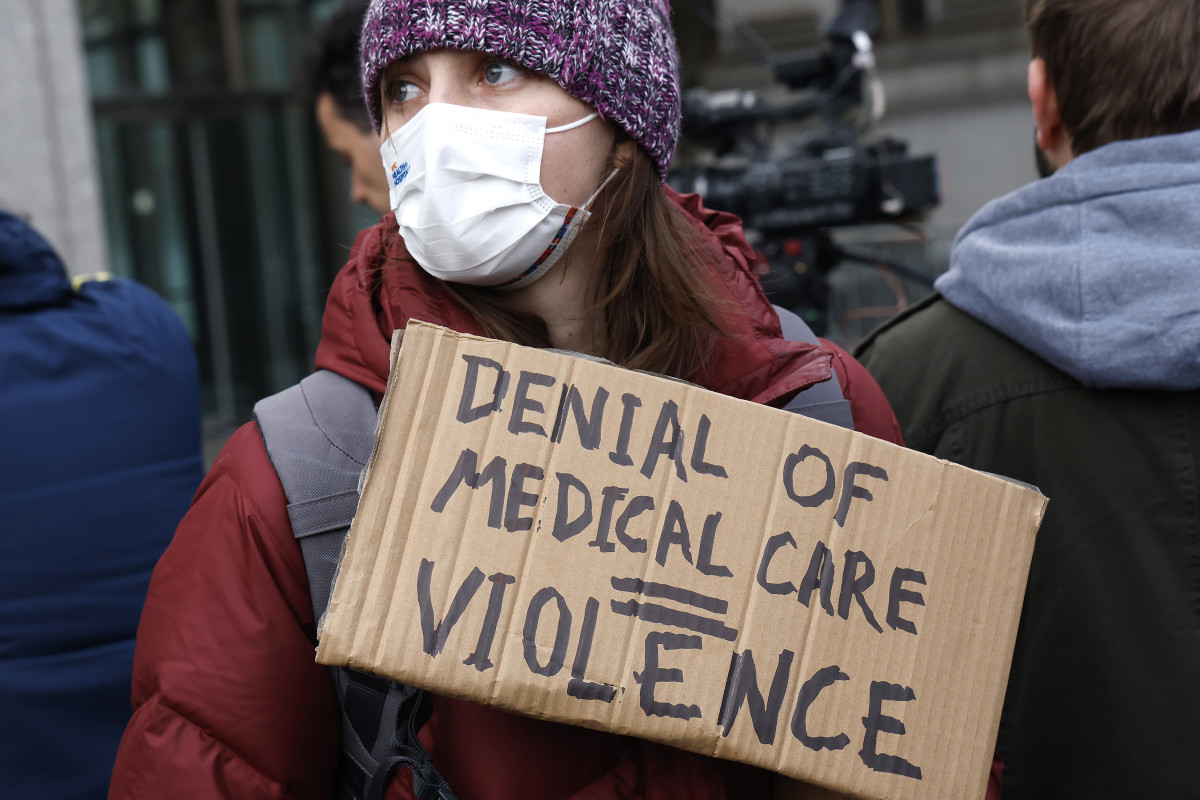 The trial of Luigi Mangionehas stirred up strong emotions.
John Lamparski/Getty Images
Jurors: The ultimate triers of fact
“The defense achieved a victory: the jury hung on most charges, delivering only a minor conviction (for smuggling letters out of prison).”
A jury consultant also played a prominent role in the 1994 O.J. Simpson murder trial, according to the University of Missouri-Kansas City School of Law.
More analysis:
- Ernst & Young drops blunt reality check on the economy
- Federal Reserve official blasts latest interest-rate pause
- IMF drops blunt warning on US economy
In a case that garnered worldwide attention, consultants coordinated large amounts of information about prospective jurors — including questionnaire responses, reactions, and body language during voir dire, and other background data gathered by the defense.
The information was entered into a computer, and each juror was ranked based on their likely sympathy for the defense. Simpson was acquitted of all charges.
DOAR, a litigation strategy consulting firm, has advised on numerous cases, including one on behalf of the City of Baltimore against Hanover Armory, LLC.
A jury awarded the city $62 million in damages after finding that the firearms manufacturer and retailer had supplied unserialized, untraceable weapons — often referred to as “ghost guns” — that were linked to a surge in violent crime.
“Our approach to jury research [is] to test the case before a representative sample of the ultimate triers of fact, the jurors,” said DOAR CEO Paul Neale.
“The idea here is to basically look more deeply at how potential jurors respond to certain themes and make sure that whatever case you’re presenting to a jury will ultimately be persuasive, understood, and ultimately resolve in your favor.”
Neale said a great deal of DOAR’s work involves high-profile white-collar criminal cases and civil litigation.
“There’s always that factor of what does each juror bring into the case?” he explained.
He noted that it is impossible to find a jury pool that does not know about high-profile cases such as Luigi Mangioni, who is charged with killing UnitedHealthcare (UNH) CEO Brian Thompson, and Sean Combs, who was convicted in federal court last year on two prostitution-related counts.
“That would be a significantly higher hurdle that you would have to deal with, as opposed to a civil case where only a few jurors might know about it,” he said.
Steve Wood, a senior litigation consultant and director of research with Courtroom Sciences, said that he always tells clients that no jury is ever going to be perfect.
Impact of social media history
“The goal from both the plaintiff and the defense perspective is to find those jurors who have beliefs and attitudes that may be against you, but it’s the level of the intensity of those attitudes,” he said.
“We get rid of the ones who have strong opinions against us, and then what we have is a middle ground of individuals who may have those attitudes and beliefs, just not to the extent that the others did.”
Related: Fake cards, real money: The rising threat to high-value collectibles
Wood said that his company works on many catastrophic cases that elicit a lot of emotion in jurors and even the parties themselves.
“One of the ways to address it is, first and foremost, from the defense perspective, you have to have empathy,” he said, “and not come in and appear to be the cold, callous, nameless, faceless organization.”
Both Neale and Wood cited the importance of social media in jury selection.
“During jury selection, we look at their jurors’ social media history and other sources of information to understand, for instance, what political affiliation they have,” Neale said. “What their occupation is, what attitudes they may have regarding a very specific party, particularly if it’s a well-known person or company.”
Wood said prospective jurors may hold back their stronger feelings when being interviewed in court.
“The social media helps to supplement that because you see what they are liking on Twitter, what are they retweeting,” he said. “That’ll give you a peek behind the curtain that you may or may not hear in open court.”
Some legal experts have raised concerns that jury consulting firms create a potential advantage for wealthier clients who can afford their services.
“We do a good amount of pro bono work,” Neale said. “I reach out to public defenders to tell them that we’re interested and available to work with them on a case-by-case basis. Some of them take us up on it, but surprisingly most don’t.”
Wood said there are many ways to make jury consulting more cost-effective, adding that many things can be done online.
“The entry doesn’t necessarily always have to be a $100,000 in-person mock trial,” he said. “There are also online options using focus groups that have become more common and cost-effective. In addition, approximately 50% of our time is preparing witnesses for deposition, and that, in and of itself, is a fraction of the cost in comparison to the jury research.”
“If your witness goes in and performs well in their deposition, that may be enough to change the tenor of the case so that you can settle it before it even gets to trial.”
Related: Greed, deepfakes & dirty Money: Financial crime enters the AI age