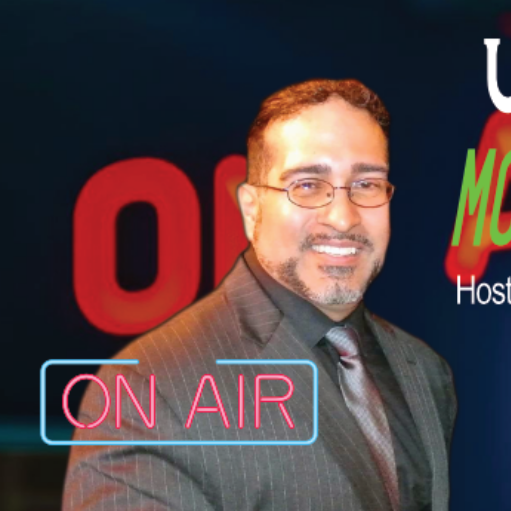
Investing in artificial intelligence can look like a choice between sticking with familiar mega-cap winners and hunting for the next overlooked name. Ashim Mehra, managing director and portfolio manager at Baron Capital, argues that view is too narrow: The build-out still needs established leaders, while companies using AI to change their products may offer a separate source of returns.
In recent weeks, Mehra said the asset management firm’s Baron Technology ETF added to semiconductor positions after the AI selloff. He described purchases of Micron Technology and Nvidia as an opportunistic response to stocks he believes have been unfairly beaten up, even as concerns about funding and electricity supply have grown.
The approach is designed for investors willing to assess different kinds of AI exposure over years, rather than chase a singular short-term theme. It also requires accepting that a balanced portfolio can lag a concentrated index for extended periods.
Here is how Mehra, who spoke in an interview with TheStreet’s Caroline Woods, separates AI infrastructure from AI applications while weighing both in one portfolio.
Note: The market musings expressed herein are those of the interviewed guest and should not be treated as professional investment advice. Readers should consult a certified financial planner (CFP) for individualized advice based on their available capital, goals, risk tolerance, and time horizon.
Why AI infrastructure and AI applications can belong together
Mehra divides AI into layers: power, semiconductors, AI infrastructure, model makers such as OpenAI and Anthropic, and the application layer, in which businesses turn AI into customer products or operating tools. His framework calls for exposure to established companies supplying the build-out and to selective investments in companies whose products gain a clearer edge from AI.
Spotify illustrates the application-layer case. Mehra said the company is using proprietary data alongside its own and third-party models to create features, including an AI DJ, podcast summaries, and tools for creators. The investment test is not whether a company mentions AI, but whether the technology supports new products, stronger retention, or additional revenue.
We do think that the application layer represents the greatest upside or maybe areas where not everyone is looking as much.
Ashim Mehra, when asked whether the biggest technology winner could be a company that is not primarily an AI investment
Mehra’s point doesn’t suggest that every software or consumer-facing business becomes an AI winner. He said investors need to look for financial evidence that AI is central to the business, including incremental revenue and products that have an impact in the marketplace. That would give investors a way to distinguish operational progress from marketing hype.
Why the Baron Technology ETF added semiconductor stocks after the selloff
Infrastructure in AI is still in the early stages, according to Mehra, and his fund increased its semiconductor holdings during the recent pullback. He cited Micron and Nvidia as compelling opportunities, noting that their valuations sit near multi-year lows even as their growth profiles remain strong.
Mehra also pointed to SiTime, a small semiconductor company that makes timing chips, which are components that generate and synchronize the clock signals electronic systems use. SiTime uses MEMS, or tiny mechanical structures built into chips, to replace quartz-based timing technology. He sees growing demand from AI data centers, low-Earth-orbit satellites, and autonomous driving.
Why Baron Technology ETF avoids neocloud stocks
The fund’s willingness to buy semiconductors doesn’t extend to neoclouds, specialized providers that rent AI computing capacity. Mehra said the Baron Technology ETF, which also goes by its ticker symbol BCTK, owns none. Instead, it favors larger capacity providers, including Amazon Web Services through Amazon, Alphabet, and SpaceX, which he views as more established businesses with an advantage in terms of cost of capital, or the price of borrowing and raising money.
Mehra didn’t rule out a future for every neocloud, and he expects winners and for companies to leave the business. He said troubled operators with access to power, land, or data-center shells could become attractive acquisitions. The trade-off is for investors to decide whether a company would be able to finance capacity before its debt burden becomes a larger problem.
Why small- and mid-cap exposure can change an AI portfolio
Mehra said about 24% of BCTK was invested in small and mid-cap companies as of the prior quarter. That differs from the Nasdaq-100 and many technology funds, which he characterized as largely large-cap portfolios. The goal is access to companies before they become significant index holdings, as well as access to businesses whose results are less tied to a single AI infrastructure cycle.
He named Spotify, Axon, and Hinge Health as examples of companies with their own distinct growth stories. Still, there remains the risk of a portfolio whose holdings move in lockstep during a downturn. Mehra’s diversification case rests on owning individual companies he considers strong while reducing reliance on one shared market narrative.
The takeaway for AI investors building a long-term portfolio
For your portfolio, first decide whether you want long-term exposure to established AI leaders, a smaller-company opportunity, an application-layer investment, or a mix of those roles. Keep each role distinct rather than assuming every AI stock offers the same potential reward and risk.
Then revisit the evidence. Watch whether AI spending translates into power availability, sustainable demand for chips, and measurable product gains for application companies. If those conditions change, the case for a holding can change with them.
Sources
Ashim Mehra on ETF Spotlight · watch the full segment
Cited segments:
- “We do think that the application layer represents the greatest upside or maybe areas where not everyone is looking as much.” (15:44–17:47)
- Baron Technology ETF added to semiconductor positions during the recent AI selloff. (2:08–2:51)
- BCTK holds no neocloud stocks. (6:54–8:05)
- Small- and mid-cap exposure was about 24% of the fund as of the prior quarter. (18:36–18:53)
Some or all of this content may have been generated by AI. While we strive for accuracy, AI can occasionally produce incorrect information. If you buy something via one of our links, we may earn a commission.
