
Loneliness and social isolation remain persistent challenges for many older adults.
I know this firsthand, partly because I eat, breathe, and sleep all things retirement, and partly because I also serve as the chair of my town’s Council on Aging, where we witness the adverse effects of isolation and loneliness on seniors.
According to research, social isolation and loneliness are major public health crises, with roughly one in six people globally experiencing loneliness. Research indicates these conditions increase the risk of premature death by 26-29%, a risk comparable to smoking 15 cigarettes a day, while also raising the risk of dementia, heart disease, and stroke.
Also worth reading
- Retirees may want to rebalance as markets broaden, volatility rises
- Why “breaking even” on Social Security is the wrong goal
- The $83,250 secret every solo entrepreneur needs to know for 2026
We know that some older adults turn to endless scrolling on phones, tablets, or computers to cope, hoping that time online will fill the gap.
But a new study, Purpose in life mitigates digital disconnection in older adults, suggests that strategy often falls short.
Researchers Yichen Wang and Anthony Ong found that spending more time online does not, by itself, reduce loneliness. While technology can help older adults stay connected, simply logging on is not enough to ease feelings of isolation.
What matters more, they found, is whether older adults feel a sense of purpose in life. Participants with clear goals, meaningful roles, or strong reasons to stay engaged reported significantly less loneliness, even when their level of digital contact matched that of others.
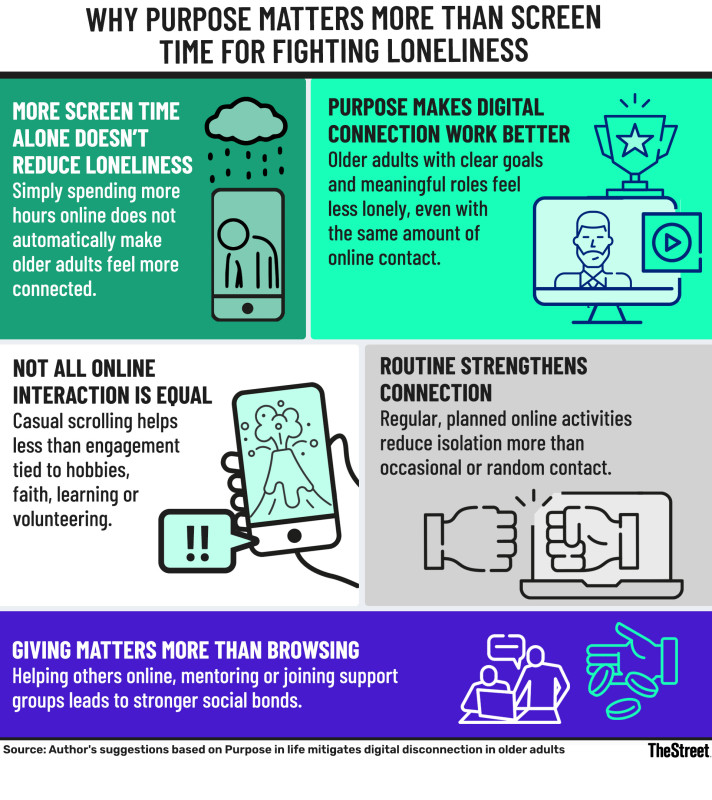
In effect, purpose acted as a catalyst. Older adults with a stronger sense of purpose were far less likely to feel lonely and were better able to turn online interactions into genuine social connection.
To be fair, Wang and Ong aren’t the first researchers to note that purpose is the key to a successful retirement. But their take adds to the body of knowledge on the subject: Digital tools can support connection, but purpose is what makes those connections meaningful.
What can older adults do to find purpose?
If you’re an older adult, here are some strategies to help you discover purpose.
Use technology around meaningful activities, not just casual scrolling
Instead of relying on random texts or social media, join online groups tied to hobbies, faith, volunteering, or learning. Schedule regular video calls around shared projects or interests. Take virtual classes or join discussion groups. The goal is connection with intention.
Build routines that create structure
Purpose grows when days have shape. Consider scheduling weekly family calls. Volunteer online by mentoring, tutoring, or supporting nonprofits. Participate consistently in clubs or community forums. Consistency, experts suggest, matters more than volume.
Focus on contribution, not just contact
Loneliness drops when people feel useful. Help grandchildren with homework on Zoom. Offer your skills through online volunteer platforms. Participate in peer-support communities.
Digital time works best when it involves giving, not just consuming.
What families can do to reduce loneliness of older adults
Tie technology use to what already motivates your parent or loved one
If they love:
- Houses of worship: Consider streaming services or online groups
- Gardening: Consider online clubs, forums, and seed exchanges
- History: Consider virtual museum talks and courses
Help set up recurring connections
One-off calls fade fast. Standing dates to connect build both purpose and anticipation.
What financial advisers and elder-planning professionals can do
Ask purpose questions, not just money questions
Consider asking:
- What gives your days meaning now?
- Who depends on you?
- What would you like to stay involved in as you age?
Frame technology as a tool for engagement, not just communication
Instead of asking, “Do you use FaceTime?” consider asking, “How could technology help you stay involved in things that matter to you?”
Incorporate purpose into elder plans
Alongside housing, health care and finances, include discussions about social roles, volunteer or learning goals, and digital tools that support those roles.
The bottom line
The study points to a simple but powerful shift: Don’t just increase digital contact. Increase meaningful digital engagement tied to purpose.
Related: Elon Musk says stop retirement saving: Experts call it ‘nonsense’