
The average new car now costs $48,766. The national average for a gallon of gas hit $3.94 on March 22, its highest point since 2023. For millions of Americans, the math on car ownership has never been harder. But something is changing in the used market that buyers need to know about.
A wave of electric vehicles is coming off three-year leases in 2026. These are 2022 and 2023 models, typically with around 25,000 miles, battery warranties still intact, and prices that have fallen sharply from where they were two years ago. For buyers who have been priced out of new cars, this may be the best opening the used market has offered in years.
Why there are suddenly so many used EVs
The surge in supply traces directly back to the Biden-era federal EV tax credit. Between 2022 and early 2025, automakers used a provision in the Inflation Reduction Act that allowed leased EVs to qualify for the full $7,500 federal credit regardless of sourcing requirements.
That made leasing dramatically cheaper, and EV lease rates jumped from 15% in 2022 to 67% by March 2025.
More Automotive:
- Hyundai admits deadly defect caused more injuries than previously known
- Consumer Reports names 5 popular EVs with the best real-world range
- Uber targets 50,000 robotaxis in major Rivian, Nvidia deals
Those leases are now expiring. Recurrent estimates up to 500,000 EVs will come off lease in 2026, with nearly double that number possible in 2027.
Most lessees are not buying out their leases. Residual values set in 2022-2023 often exceed what the cars are worth today, so drivers are returning them instead. That means a flood of low-mileage, recently built electric vehicles is hitting the used market all at once.
According to Edmunds, battery electric vehicles are projected to rise from 2% of all lease returns in 2025 to 8% in 2026. That is a significant supply shift. And more supply in a market with cautious demand means lower prices for buyers.
Best values for EV buyers right now
Used EV prices have dropped about 35% since their 2022 peak, according to CarGurus and reported by Guessing Headlights, settling around an average of $34,600. Nearly one in three used EVs is now listed under $25,000. Some of the best values on the market today include the following.
- Chevy Bolt EV/EUV: The most affordable mainstream option, with many 2022-2023 models listed in the high teens to low $20,000s. Post-recall battery fix. Up to 259 miles of range.
- Nissan Leaf: Among the cheapest used EVs available, with the Plus edition offering up to 212 miles. Prices range from around $12,000 to $16,000 in volume markets.
- Tesla Model 3 (2021-2023): Average used listing around $25,300, per CarGurus. Access to Tesla’s Supercharger network is a meaningful advantage.
- Hyundai Kona Electric: Frequently listed in the low $20,000s, with an eight-year battery warranty that transfers to the new owner.
Most of these vehicles are still covered by the federally mandated eight-year, 100,000-mile battery warranty, Recurrent noted. For first-time EV buyers worried about battery health, that coverage matters.
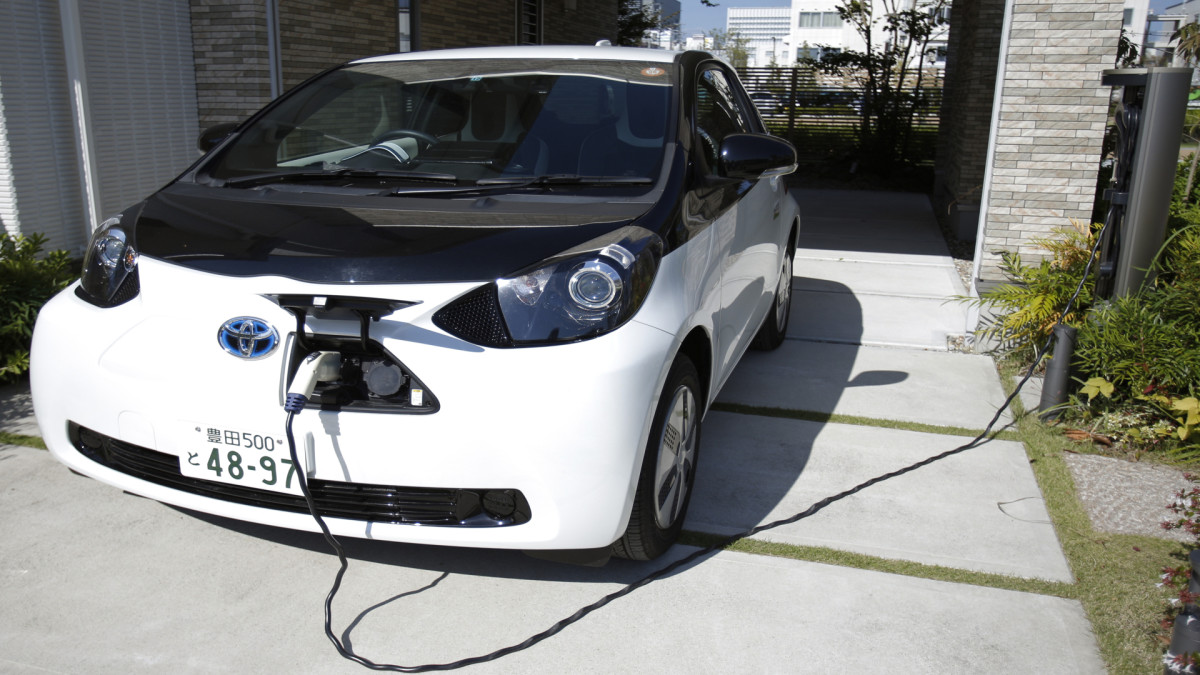 The average American can save more than $1,300 a year by switching from a gas-powered car to an EV.
Ota/Bloomberg via Getty Images
The fuel savings case at current gas prices
At close to $4 a gallon, the case for switching gets harder to ignore. The average American drives about 230 miles per week. In a gas car getting 28 miles per gallon, that works out to roughly $1,700 in fuel per year at current prices.
Charge the same 230 miles weekly in an EV at the national average electricity rate, and the annual fuel cost drops to around $370. That is more than $1,300 in savings every year.
Gas prices after major geopolitical shocks tend not to fully recover. The Middle East conflict driving current prices shows no signs of quick resolution. For buyers planning to hold a car for several years, locking in lower fuel costs now has real long-term value.
What to check before you buy an EV
Used EVs do require a different kind of due diligence than gas cars. Here are a few things to verify before signing anything.
- Battery health report. Services like Recurrent offer battery condition reports for many EV models. Ask for one before buying.
- Warranty transfer. Most factory battery warranties transfer to new owners. Confirm this for the specific vehicle before purchase.
- Charging access at home. About 80% of EV charging happens at home. If you live in an apartment without a dedicated charger, factor in the cost and logistics before committing.
- Supercharger or public network access. Tesla buyers get Supercharger access. For other brands, check which public networks are available in your area and whether the car supports fast charging.
Why the EV supply surge timing matters now
The supply surge in 2026 is a narrow window. By 2027 and 2028, the lease return wave begins to normalize. Industry data show the 2026 wave represents a more than 200% increase over 2025 lease returns, CBT News noted. That kind of supply concentration does not repeat every year.
Used EV sales are already climbing. Cox Automotive data cited by EVShift revealed nearly 31,000 used EVs sold in February 2026, up almost 29% year over year. That was before gas prices spiked to current levels. Demand is likely to rise further.
For buyers who have been waiting for the right moment to go electric without paying a premium to do it, 2026 may be the year that window is finally open.
Related: Tesla rival inspires Ford CEO Jim Farley’s push for EV profitability