
Like millions of Americans, I like a good deal. With sticky inflation and rising layoffs, finding bargains has become a new American pastime, which should be great news for discount retail chains like Dollar Tree.
After all, it’s arguably tough to find a better price than at Dollar Tree, which sells many items for $1.25. You may not get as much, and the quality may not match items at higher-priced stores, but for basics, that’s a pretty compelling price point.
Yet, Dollar Tree may not hit the mark with everyday shoppers in 2026, at least not according to Wall Street.
BNP Paribas just surprisingly cut its rating on Dollar Tree’s stock to underperform, which, in stock market lingo, is about as close to saying “sell” as most analysts will get.
That’s not an encouraging sign for the discount chain, which, according to the bank’s retail analyst, faces a slate of headwinds, ranging from inflation to immigration to GLP-1s, even as deeper-pocketed big-box rivals like Walmart cut prices to woo its customers, threatening its future.
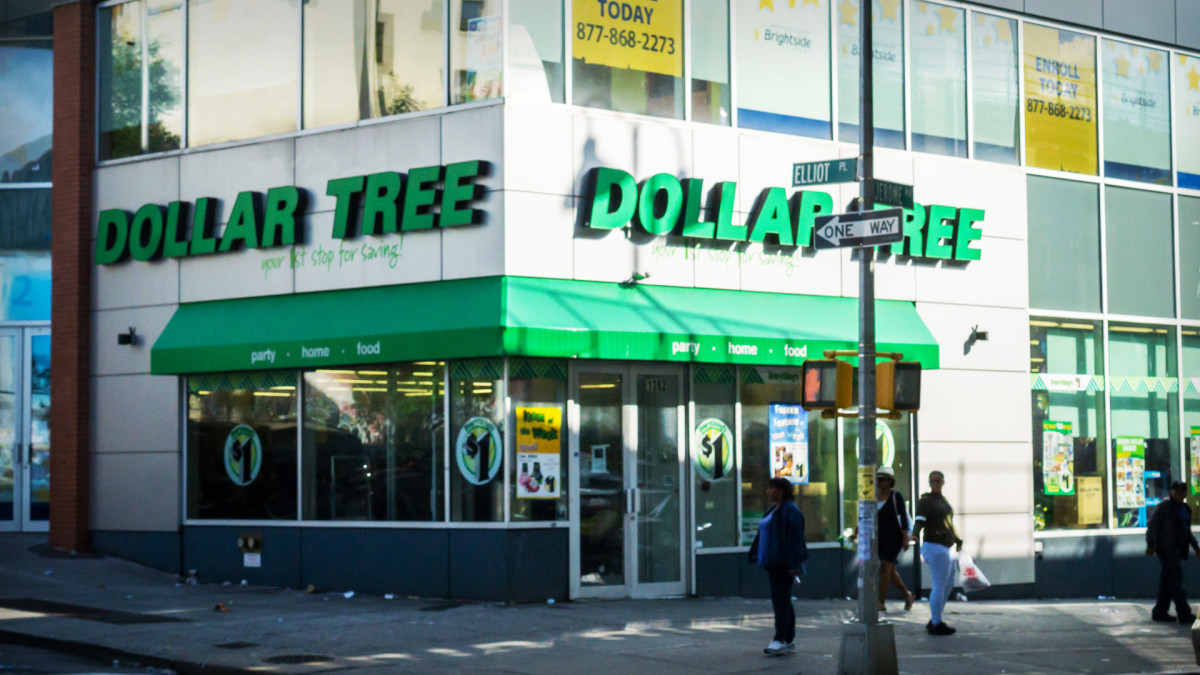
Shutterstock
Analyst sounds warnings at Dollar Tree
BNP Paribas’ roots date back 200 years, so it’s navigated plenty of boom-and-bust periods in the economy and seen its fair share of retail trends come and go.
While the U.S. economy appears solid on the surface (GDP growth was 4.3% in the third quarter), an emerging K-shaped economy is creating a big gap between winners and losers heading into 2026.
“The gap between higher- and lower-income spending growth was substantial and persistent through 4Q 2025,” wrote Bank of America analysts in a research note shared with me. “The divergence between the two income cohorts started in late 2024 and widened over the course of last year.”
More Retail:
- You won’t believe what Coca-Cola just did with its coffee brand
- Costco reveals a new approach that could reshape the chain
- Shoppers furious at grocery chain’s new anti‑theft rule
- Costco makes bold promise on prices that affects all members
Overall, 1.2 million Americans were laid off last year, according to Challenger Gray & Christmas, ranking it among the worst years recorded since 1989.
Meanwhile, inflation increased after tariffs took effect, prompting many shoppers to rein in discretionary purchases and shift spending toward essentials at lower-cost retailers.
Worst years for layoffs since 1989:
- 2020: 2.3 million
- 2001: 1.96 million
- 2002: 1.47 million
- 2009: 1.29 million.
- 2003: 1.24 million
- 2008: 1.22 million
- 2025: 1.21 million. Source: Challenger, Gray & Chistmas.
On paper, more cost-conscious shoppers should be good news for Dollar Tree (DLTR), given its roots as a dollar store. Yet BNP Paribas painted a dire picture of the challenges facing the retail chain, saying tailwinds are falling short of offsetting a slate of bigger problems, including:
- More competition from peers and bigger rivals, such as Walmart.
- A drop in sales of consumables, the everyday items that most households need to buy regularly.
- Declining volume as customers buy fewer items to offset the pain of higher prices.
Those shifts in customer behavior aren’t the only problems, either. BNP’s analyst also says the other challenges include changes to SNAP benefits, the growing use of GLP-1 weight-loss drugs, and the launch of agentic commerce.
Stricter work requirements for SNAP eligibility are kicking in for older Americans, potentially reducing some customers’ budgets. Also, some states have initiated SNAP junk-food bans, including soda, that could crimp store sales. Furthermore, as more people use GLP-1 weight-loss drugs, they’re spending less on snacks and impulse buys. The rise of agentic commerce, or using AI to purchase items online, poses new competition, too.
Altogether, those could further ding Dollar Tree’s sales.
Dollar Tree faces business challenges
Changes in customer spending are only one side of the coin. Dollar Tree also faces business challenges that its management and shareholders may underappreciate.
Merchandise margins have grown 2% since 2019. Still, BNP Paribas believes that additional profit growth will be harder to come by as Dollar Tree’s lower-cost inventory is sold and replaced with higher-cost inventory, and freight costs increase.
Last year, Dollar Tree spent more on workers to reprice items after raising prices, a process called red-stickering that aggravated some shoppers. Now that most of the previously priced inventory has been sold, management believes costs will fall as it reduces hours for some stores. That may be true, but BNP Paribas’ analysts think the move may be off the mark.
“We believe they could be underestimating the tangential benefits of increased store labor and increased demands of middle to upper income consumers that would be attracted to multi-price products,” wrote BNP Paribas.
Dollar Tree may also be underappreciating risks to its expenses, given that immigration policies may push worker wages higher while store remodeling costs keep expenses elevated.
Overall, the combination of fewer tailwinds from customers as they rethink their spending and business risks led BNP Paribas to think 2026 may not be as rosy for the company as some think. As a result, it lowered its Dollar Tree stock price target to $87 from $118 previously.
Related: Walmart makes bold move to challenge Amazon for customers